Style Icon: Gaia Repossi
06/10/2011 § Leave a comment

I spied Gaia a few times whist meandering through all the fashion week photos, but this picture of her from the Paris YSL spring 2012 show blew my mind. Of course, wear a suit and tie to YSL, of course, this would have sat well with Monsieur Saint Laurent… I love how Gaia frequently favors the masculin féminin, but she also seamlessly shifts — chameleon-like — to a decidedly more feminine look.
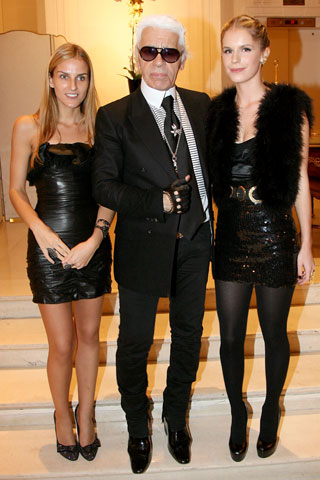 Wearing Balmain, with Karl Lagerfeld and Eugenie Niarchos in 2009.
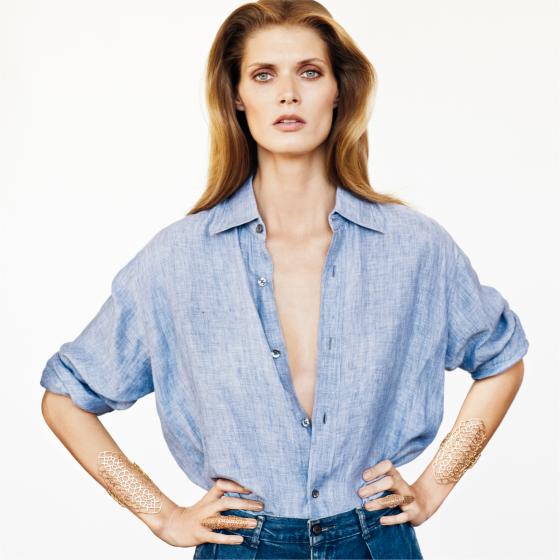
Only twenty five years old and a member of the Repossi family , fine jewelery makers since 1920, Gaia has been the artistic director of Maison Repossi since the age of twenty and designed her first collection in 2007.
 At Chanel spring 2012
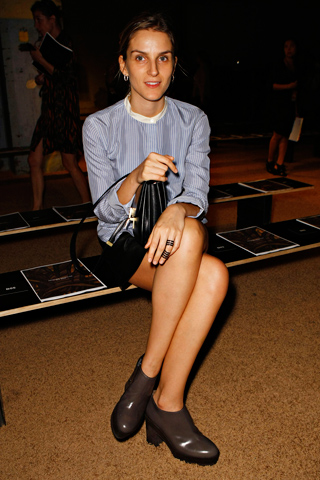 At Proenza Schouler spring 2012


Perhaps it’s the mix of the two—an Italian background and a French way of life—that helped transform the rebellious Monte Carlo—raised teenager into a budding fashion icon. (She has unofficially been ordained the new face of chic, minimalist style.) Notes Altuzarra, “She mixes a kind of French nonchalance with Italian glamour and femininity.” [Derek Blasberg for Harper’s Bazaar.]
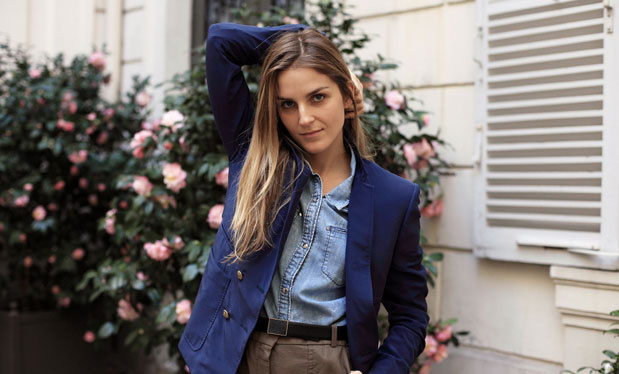
Décris-nous ton style:
Androgyne simple et élégant. J’aime les classiques que je casse.
Tes icônes de mode?
Yves Saint Laurent pour sa vision intemporelle et son univers. Annie Hall, Verushka… [Vogue Paris: Dans le dressing de Gaia Repossi.]
How could I not adore Gaia?
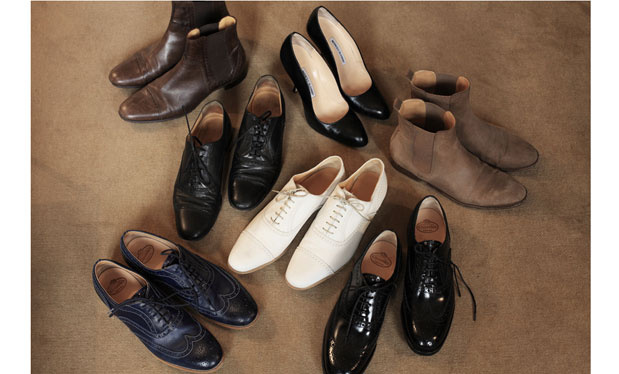 Especially with a closet full of shoes like this…

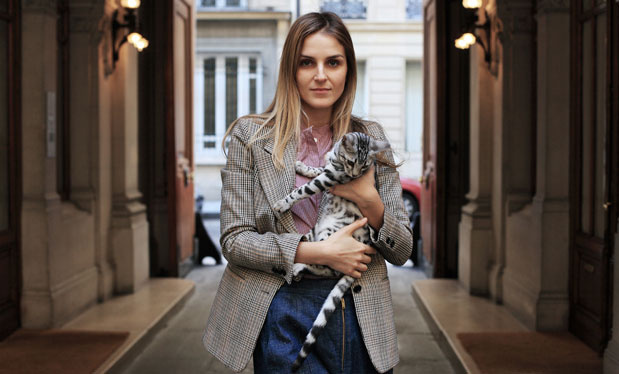
To create her personal style, which she described as “strict,” she often mixes vintage and more current designer pieces, many of them menswear-inspired…”I don’t like anything too glamorous—it’s just not me”…Ms. Repossi arrived at our meeting looking like a modern Annie Hall, in baggy men’s jeans, Hermès oxfords from the 1970s and a well-cut plaid blazer by one of her favorite brands, Céline. [Rachel Dodes for WSJ.]

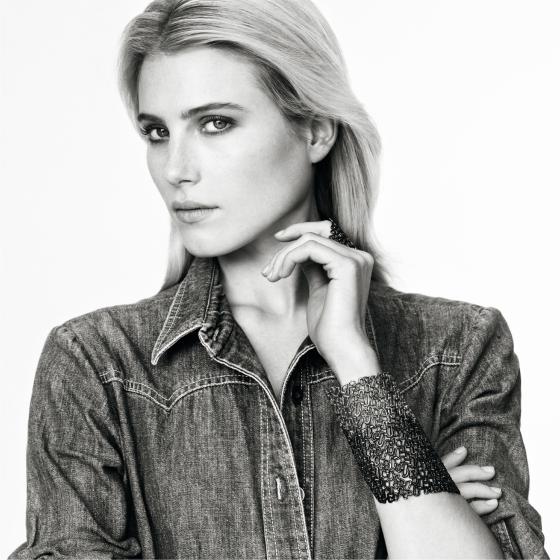
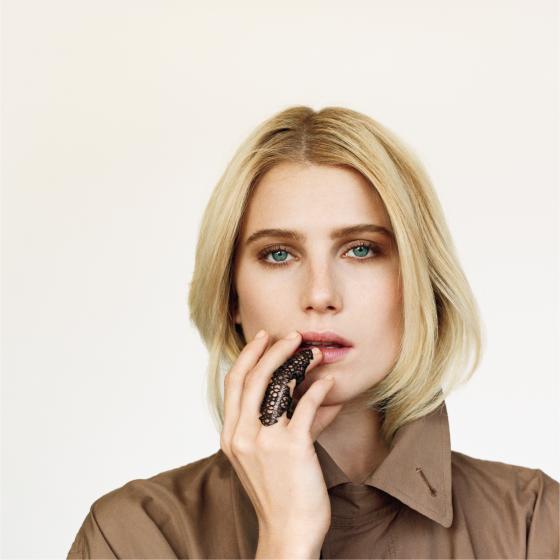
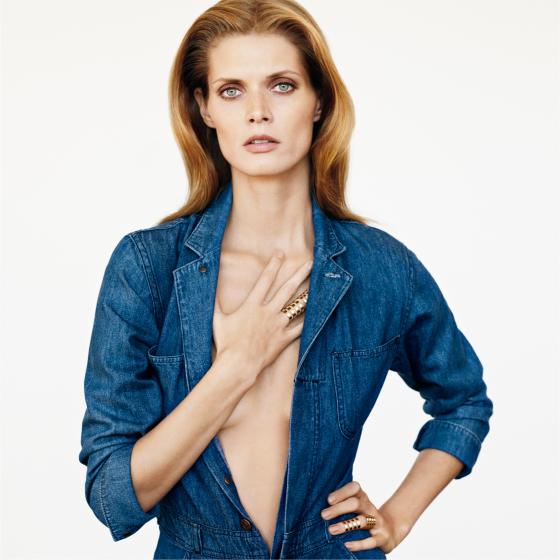
I love how her aesthetic is all over the Repossi 2011 campaign.
Of course, she gets extra brownie points for using Dree Hemingway…




Images 1-4 via Style.com. || Image 5 via TMagazine. || Images 5 & 6 via Harper’s Bazaar. || Images 7-10 via Vogue Paris.
Image 11 via WSJ. || Images 12-19 via REPOSSI.
Rabbit Hole: Vintage Ralph Lauren
06/10/2011 § Leave a comment
You might hate me after this.

…but I just happened upon The Style Registry’s treasure trove of classic Ralph Lauren campaigns, and I couldn’t resist. Could you really expect me to? So much inspiration. If you hate Americana, ladies in ties, boats and/or classic supermodels, it would probably be best to just skip along to the next post. I’d also question our friendship, but I am very open-minded. For your perusal, a few classic RL images — many shot by Bruce Weber — dating from 1981 through 1997.


 Oh. My. God.
 Shades of Out of Africa. It’s almost too much.
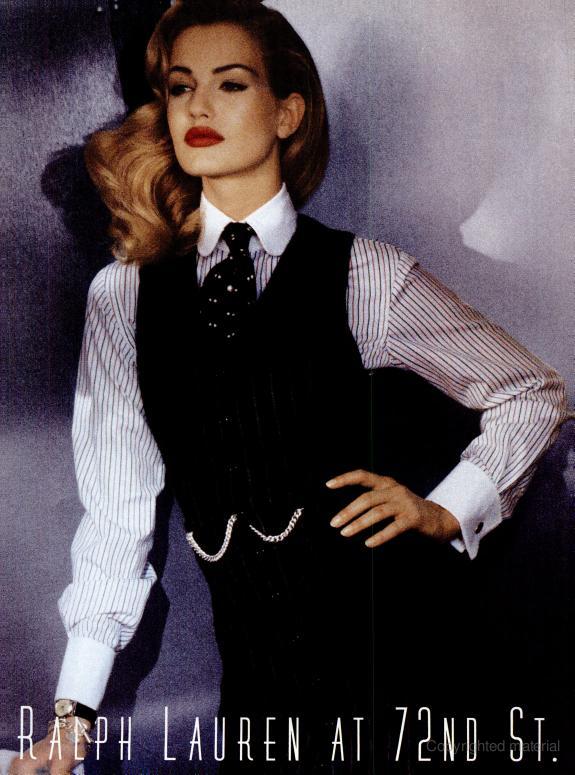


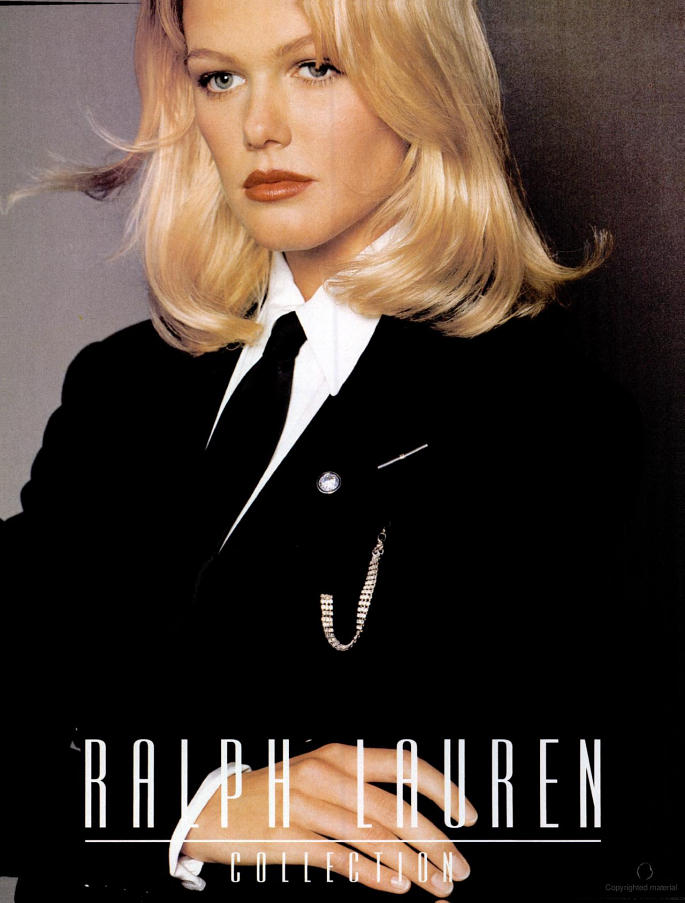
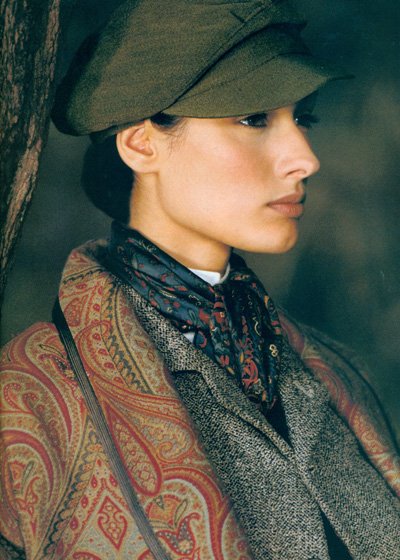


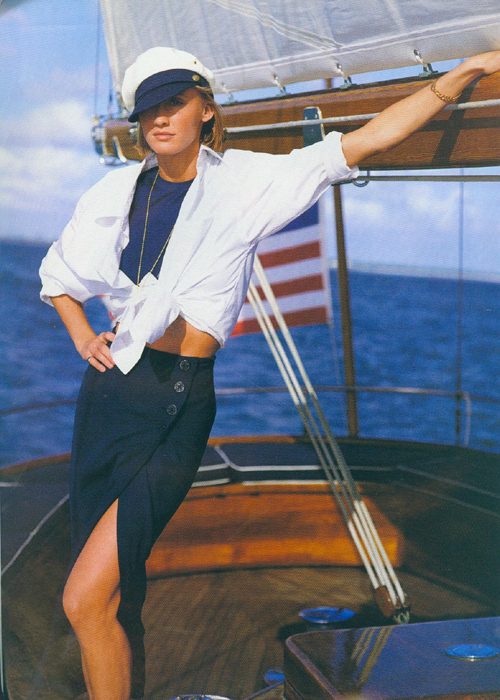

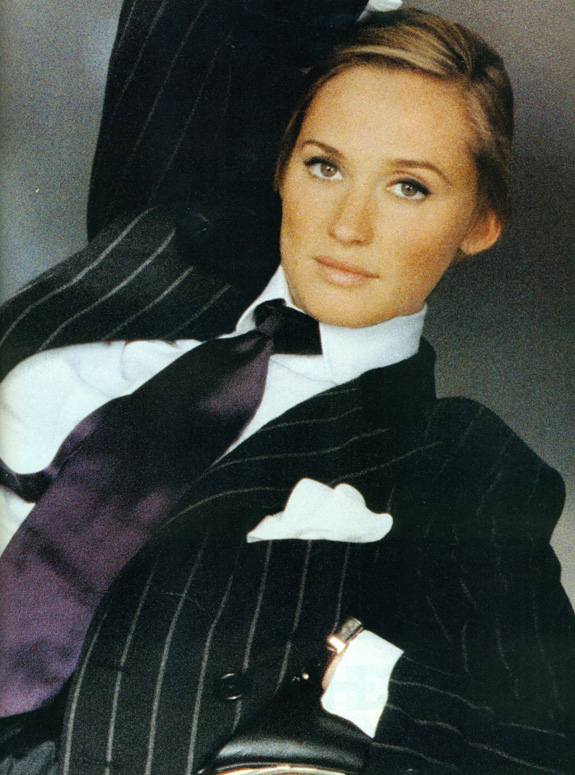
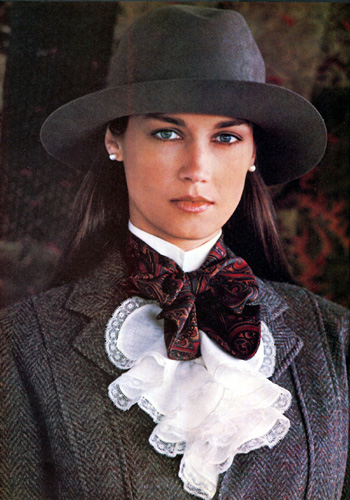

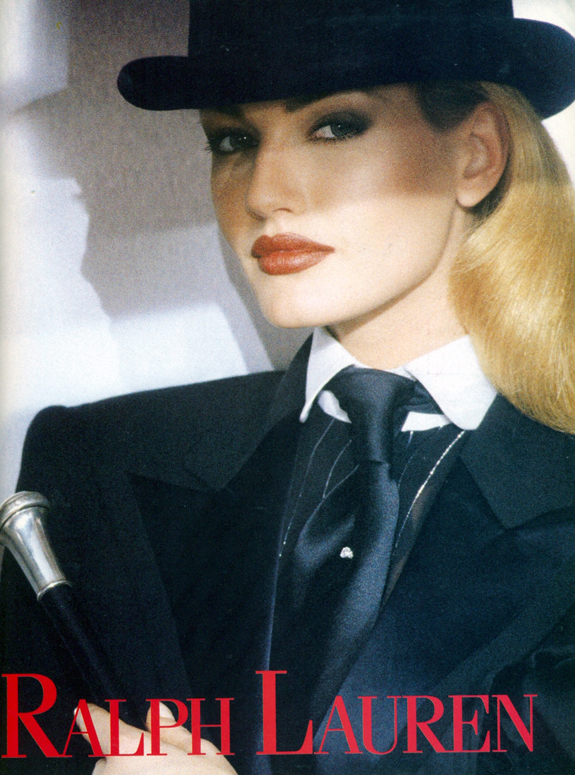
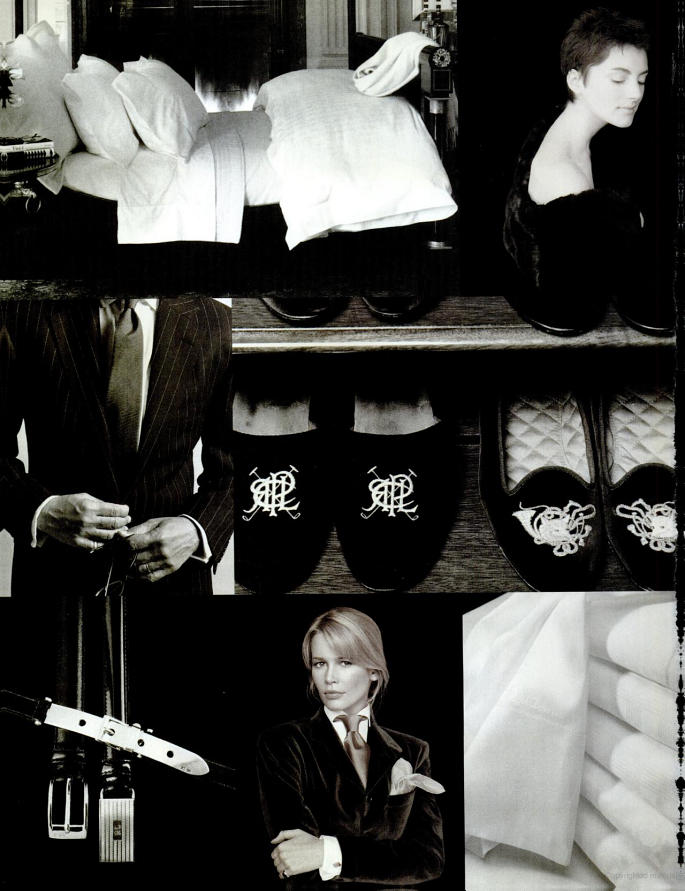
 All images via The Style Registry.
Reading List || WSJ Magazine: The Beau Brummels of Brazzaville
04/10/2011 § 1 Comment
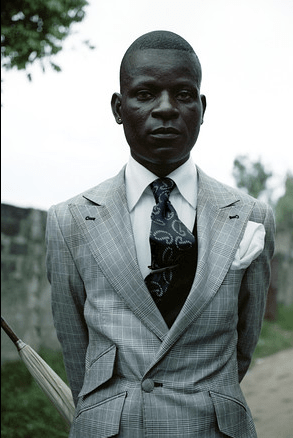 Image via WSJ

The current “State of Man” issue of the Wall Street Journal Magazine has a fascinating article written by Tom Downey about Congolese dandies, or “Sapeurs.” In the two Congos, the Democratic Republic of the Congo and its neighbor the Republic of the Congo, it is still a struggle for many to meet their own basic human needs. Violence is a daily part of life. Severe poverty is rampant. And yet, impossibly, there exists a small group of men who make it the main priority of their lives to outdo each other with exceedingly extravagant (and sometimes bordering on outlandish) suiting and accessories.
On their idiosyncratic and highly ritualized approach to their individual style:
The general rule for Brazza Sapes is said to be that they wear no more than three colors at a time. In fact what this seems to mean is three tones, not counting white. Pocket squares aren’t folded but stuffed in and left to spill out, rakishly. Patch pockets abound, an unconventional feature on most jackets. The outfits are dandyish, but they don’t come off as costumes. Some Sapes boast of their brands, especially their shoe brands, of which J.M. Weston, a fine and expensive French shoemaker, seems to be the most prominent. But most Sapes agree that brand isn’t everything—it’s about fit, confidence and, as Hassan Salvador tells me, art: “We need to paint with colors, patterns and textures,” he says. “All week I mull over the different possible combinations of jacket, trousers, pocket square, tie, tie pin, scarf, umbrella and suspenders before I actually put on the clothes.”
On how Congolese society perceives these men:
“The Sapeurs can only exist in peacetime,” Atipault told me. “To me they’re a sign of better things: stability, tranquility. They indicate that our nation is returning to normal life after years of civil war.”
Burning Bright
28/09/2011 § Leave a comment
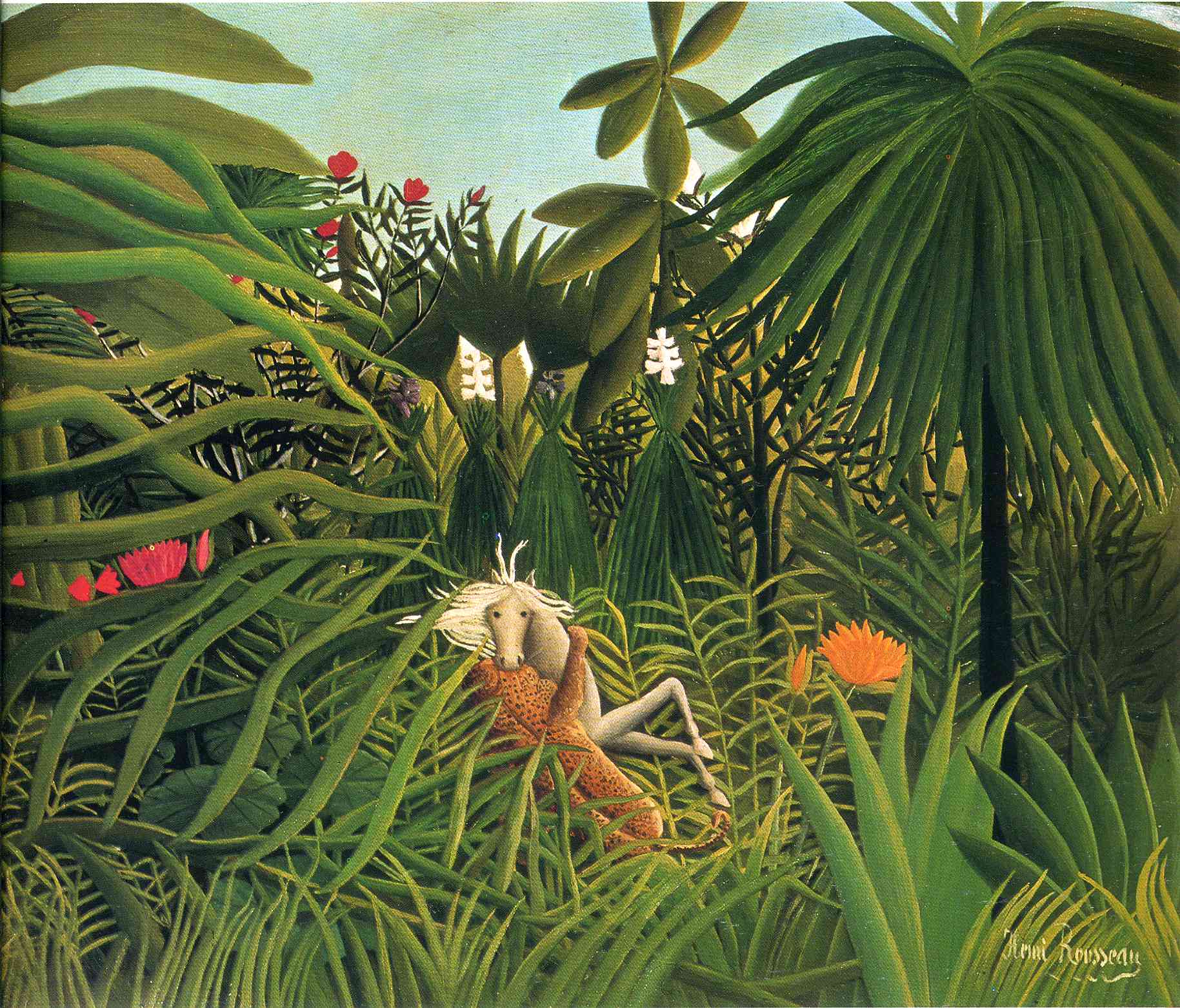
Dreams of Rousseau’s jungle scenes and Blake’s tyger.
Is it all this talk of travel and adventure…?
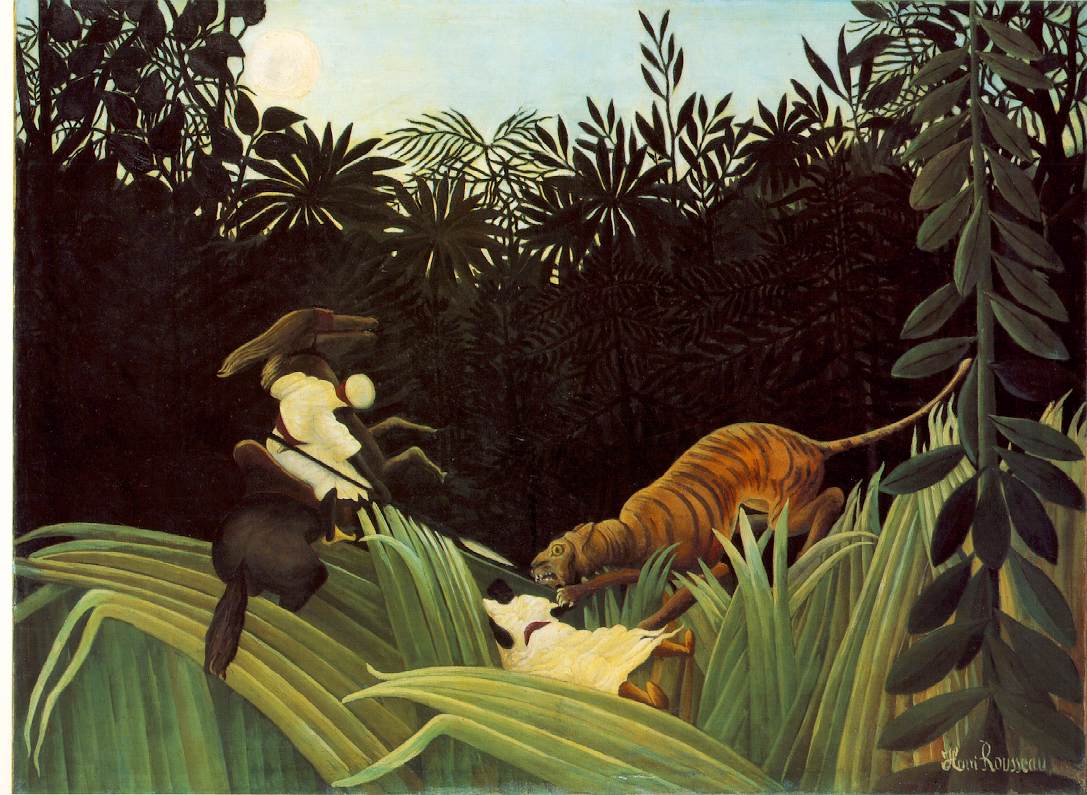
French painter Henri Julien Felix Rousseau (May 21, 1844 – September 2, 1910) is the most celebrated of the naïvist artists. Largely ridiculed in his lifetime for his simplistic style, Rousseau’s fame came posthumously.
“Picasso could never have painted Guernica without that gentle innocent, Henri Rousseau.” (See: When Henri Met Pablo)
From the verdant density of the jungle, to the wide eyes of the wild cats, to the streaming mane of the woman, of the gypsy, of the horse…it is like Rousseau has a secret window into my sleeping mind. Rousseau paints my dreams, dreams that are always just slightly too surreal to be real…
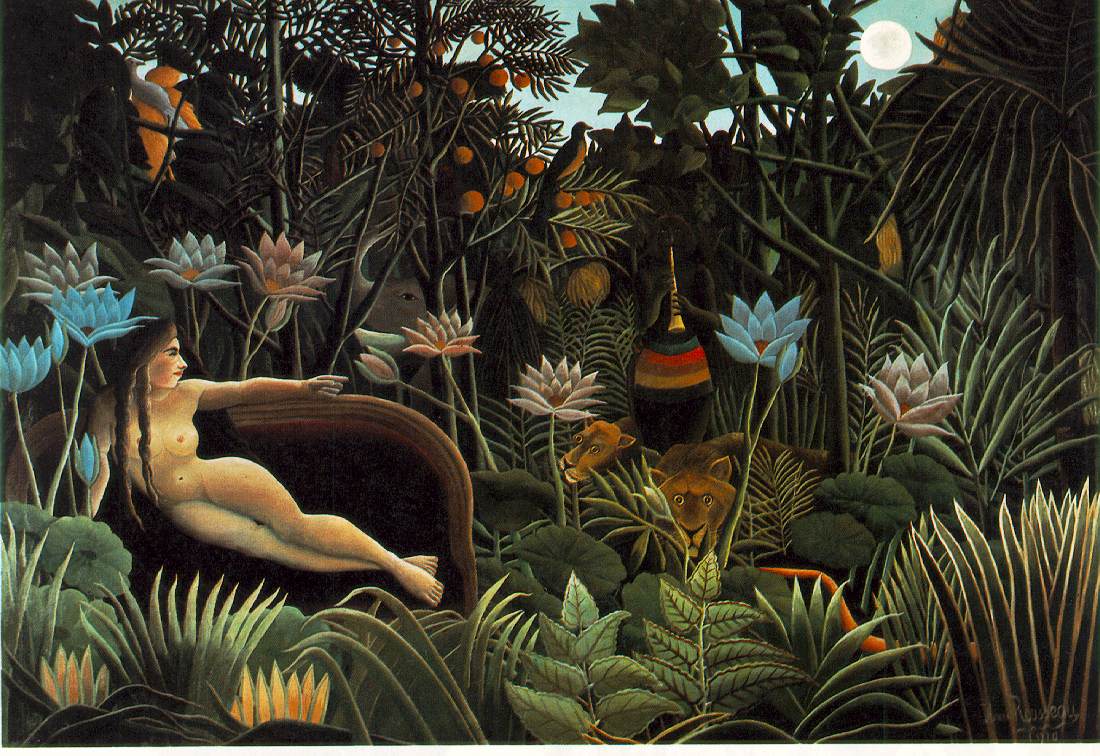 Rousseau’s final masterpiece, The Dream (1910).
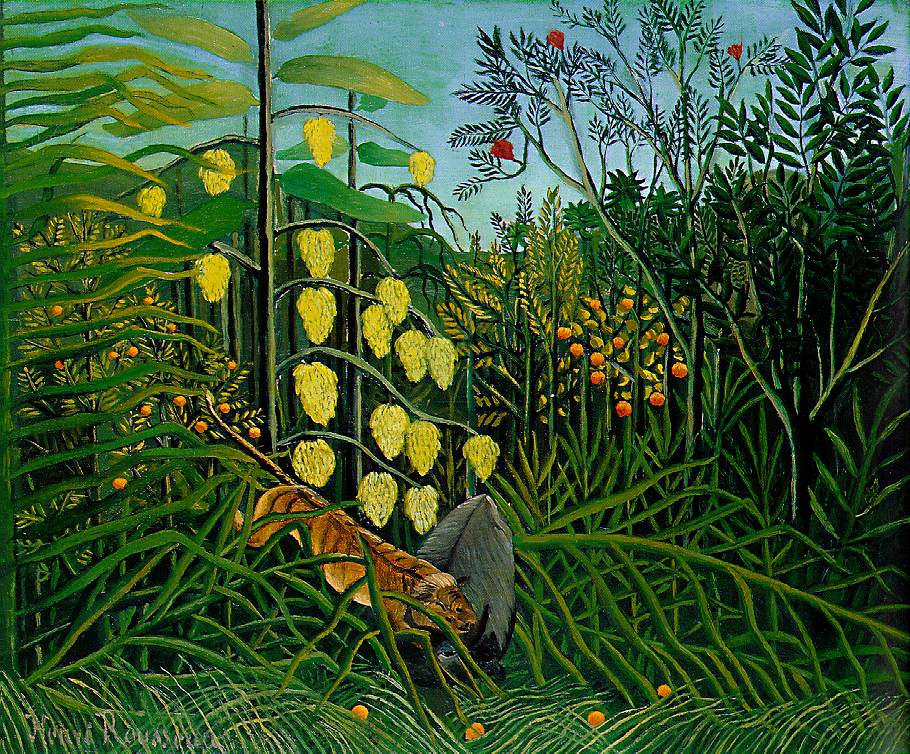
[Rousseau’s] …best known paintings depict jungle scenes, even though he never left France or saw a jungle. Stories spread by admirers that his army service included the French expeditionary force to Mexico are unfounded. His inspiration came from illustrated books and the botanical gardens in Paris, as well as tableaux of “taxidermified” wild animals. He had also met soldiers, during his term of service, who had survived the French expedition to Mexico and listened to their stories of the subtropical country they had encountered. To the critic Arsene Alexandre, he described his frequent visits to the Jardin des Plantes: “When I go into the glass houses and I see the strange plants of exotic lands, it seems to me that I enter into a dream.“
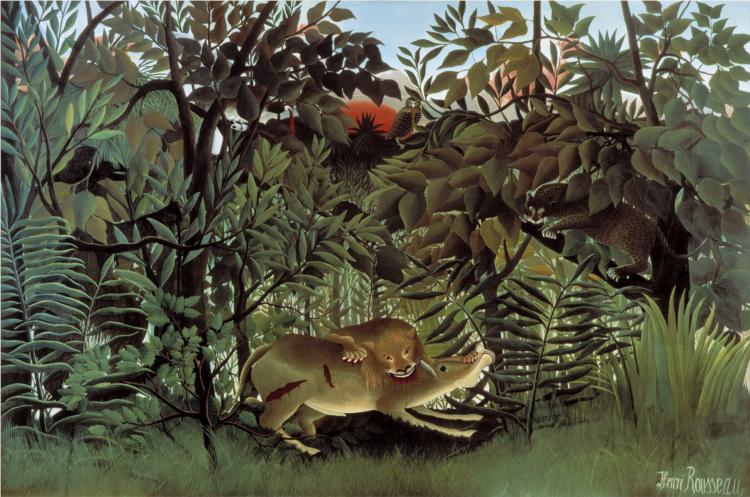

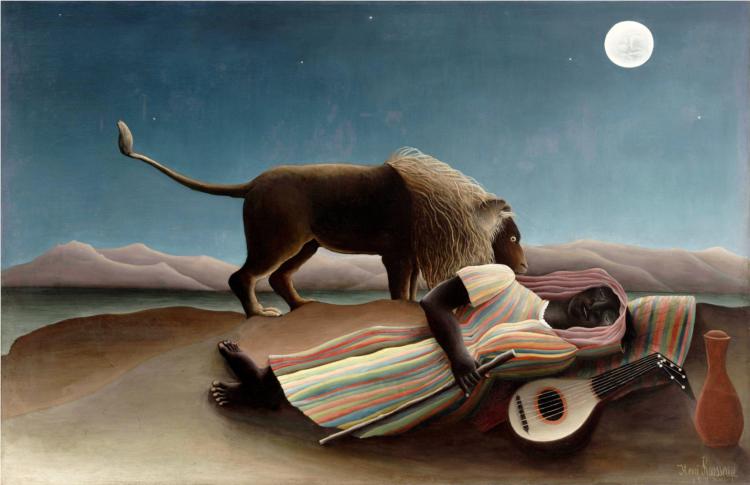
Rousseau’s big cats have been stalking my mind.
The leopard, the lion, the tyger…

The Tyger
Tyger! Tyger! burning bright
In the forests of the night,
What immortal hand or eye
Could frame thy fearful symmetry?
In what distant deeps or skies
Burnt the fire of thine eyes?
On what wings dare he aspire?
What the hand dare sieze the fire?
And what shoulder, & what art.
Could twist the sinews of thy heart?
And when thy heart began to beat,
What dread hand? & what dread feet?
What the hammer? what the chain?
In what furnace was thy brain?
What the anvil? what dread grasp
Dare its deadly terrors clasp?
When the stars threw down their spears,
And watered heaven with their tears,
Did he smile his work to see?
Did he who made the Lamb make thee?
Tyger! Tyger! burning bright
In the forests of the night,
What immortal hand or eye
Dare frame thy fearful symmetry?
William Blake, 1794
Like Rousseau, English poet William Blake (November 28, 1757 – August 12, 1827) was largely unrecognized during his lifetime. He has since been recognized as an important member of the Romantic Movement.

Man of the Hour: Briggs Swift Cunningham II
26/09/2011 § 2 Comments
 Briggs Swift Cunningham II

“…the millionaire amateur who devotes his time and money,
his enthusiasm and his burning energy to the pursuit of a breakneck sport.”
TIME Magazine, 1954
Briggs Swift Cunningham II was born to race. Hailing from a wealthy Ohioan family — his father had interests in railways, meat-packing, commercial real estate, founded Citizens’ National Bank, and was the chief financier of two young developers named William Cooper Procter and James Norris Gamble (perhaps you’ve heard of them?) — Cunningham, or “Mr. C,” was a moneyed sportsman who dedicated his life to dominating gentlemanly pursuits, and did it with the kind of style rarely seen today. Born in 1907, he left his mark most notably in the realms of auto and yacht racing. Were he born today, I still have a hard time imagining him doing anything else. Cunningham doesn’t strike me as the kind of man who would base jump. Just doesn’t have the same elegance.
As a child Cunningham summered in the Northeast, where his love for sailing was born. After his family relocated to Southport, CT he joined the Pequot Yacht Club at the age of 17, thus beginning a love affair with yachting that would last over 30 years. He entered Yale to become an engineer, but it didn’t stick. He left university and married first wife Lucy Bedford, daughter of a Standard Oil heir, whose enthusiasm for sport and yachting — and money to burn — matched his own and on their honeymoon they travelled the world, attending regattas and watching the Monaco Grand Prix. Monaco would spark the beginning of Cunningham’s love of auto racing. He spent the years before WWII racing the seas and cars and getting his pilot’s license. He was also an excellent shot. When he was turned down by the US Navy on account of his age and asthma, he just bought his own aircraft and flew anti-submarine patrols along the eastern seaboard with the Civil Air Patrol and US Coast Guard throughout the war instead. The man wasn’t one to take limits — or the word “no” — seriously.
After the war, he turned his attention to auto racing, with an eye on competing — and winning — in the 24-hour races at Le Mans, France with American cars and drivers, a feat never performed. In 1950 he entered the race with two modified Cadillac Coupe de Villes against a field of Ferraris, Aston Martins and Jaguars and still managed to come in 10th and 11th. The next year he returned with a car he designed and built himself. That car failed to finish in 1951, but the design he introduced the 1952 season was his most successful and considered by many to be the first true American sports car: the Cunningham C-4R. The C-4R finished fourth at Le Mans — Cunningham himself drove 20 of the 24 hours because his partner was ill! — with Cunningham (and American automotive manufacturing) earning the esteem of the European racing establishment. Americans were no longer merely hot rodders.
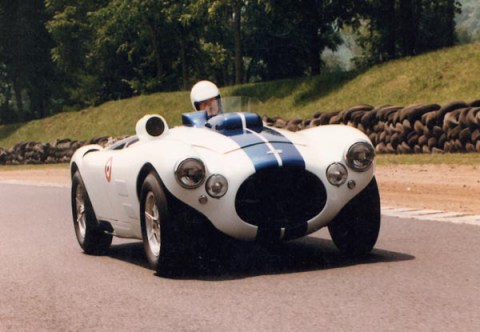 Cunningham C4R. Image via Team Quail.
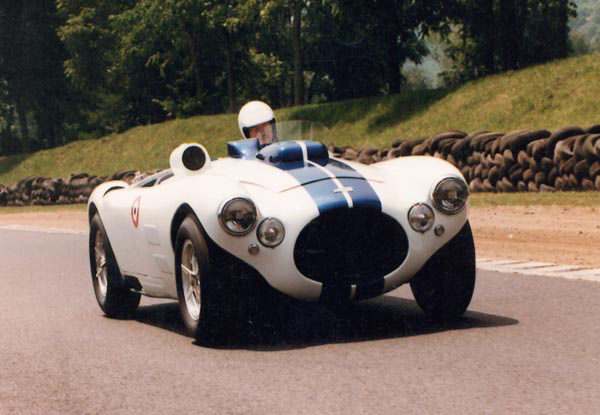
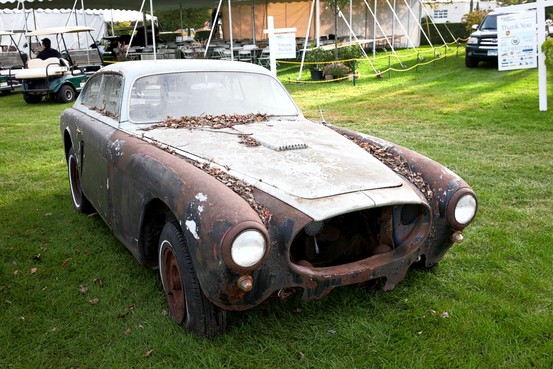
We also have Cunningham to thank for the familiar racing color scheme shown above. In 1950, when he entered his first race at Le Mans, America did not yet have an established national racing color, so he picked one — white with two broad blue stripes that stretched the length of the car. The stripes were called “Cunningham stripes” for years. Cunningham continued to manufacture cars until 1955 and they remain highly prized by collectors, as evidenced by the excitement surrounding the discovery of the final missing C-3 — one of only 25 cars manufactured — in a Connecticut barn just a few weeks ago.
 Missing C-3. Image via WSJ.
Cunningham would also excel in the realm of yachting in the 1950s. In 1958, he was tapped to skipper the American yacht Columbia in the America’s Cup, leading to a rout of the British challenger, Sceptre, 4-0. In September of that same year, LIFE photographer George Silk captured some amazing images of the yacht race and teams in Newport, Rhode Island.
 Skipper of the Scepter, Graham Mann, with Cunningham.
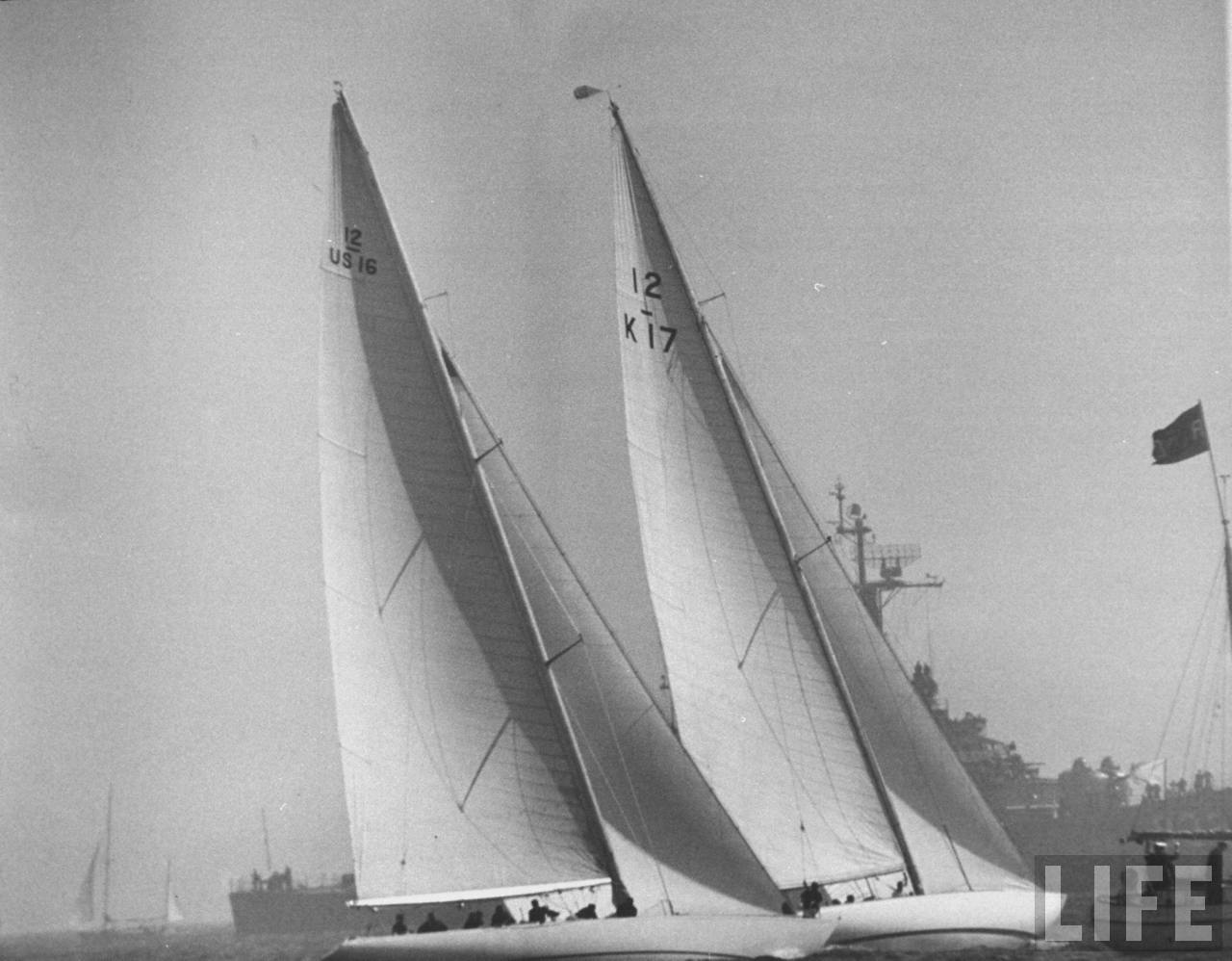 The Columbia, left, and the Scepter.
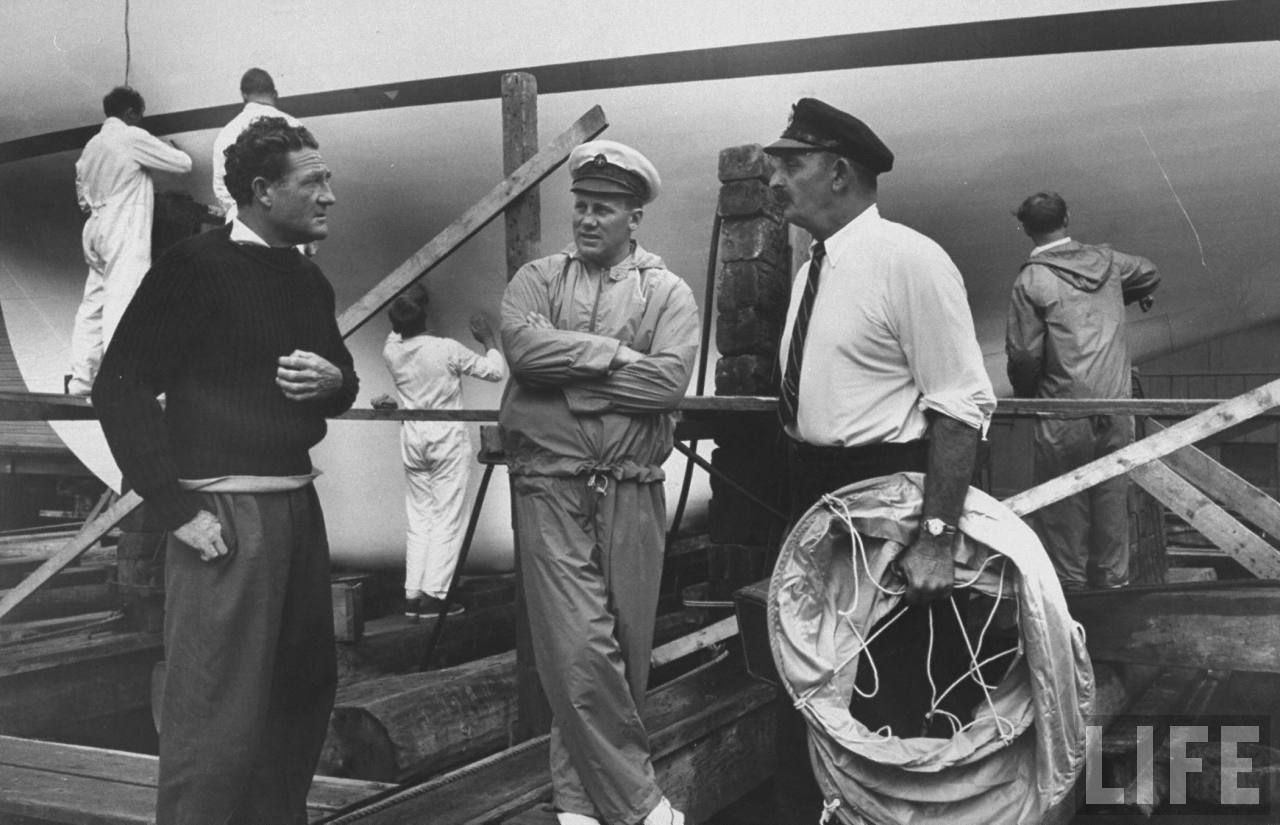 Skippers Cunningham, Mann and chairman of the
America’s Cup Race committee, John Dickerson (far right).
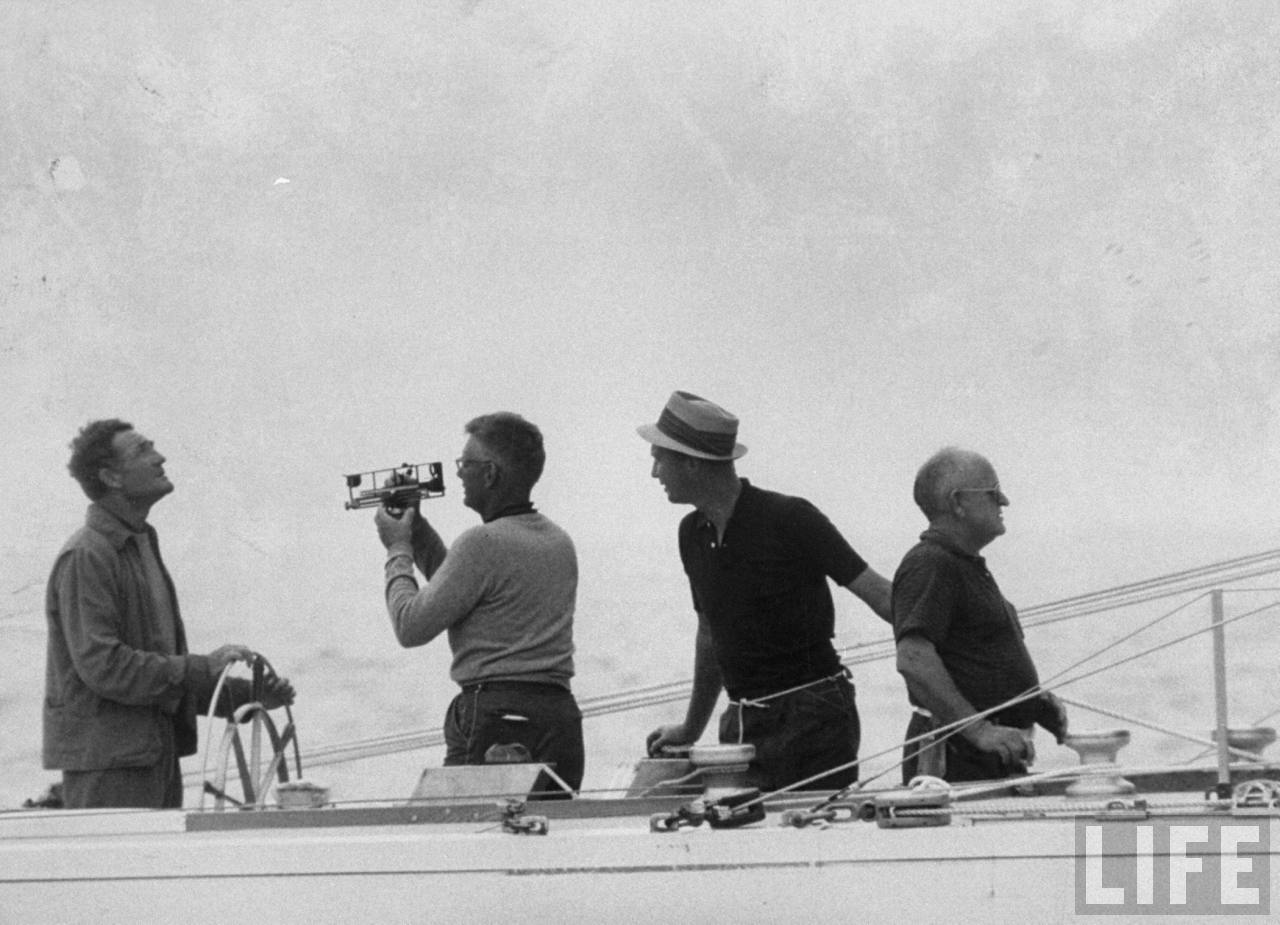 Cunningham at the helm.
”Briggs was like a fine violinist with boats,” said Victor Romagna, who sailed with Cunningham in the competition. ”He would need someone to do the tuning, as one might with a Stradivarius, but afterwards, we would hand the boat back to Briggs. Then he would play the instrument absolutely perfectly.” Via: NYT.
 Racing Committee.
Cute shorts, gents.
 Sceptre.
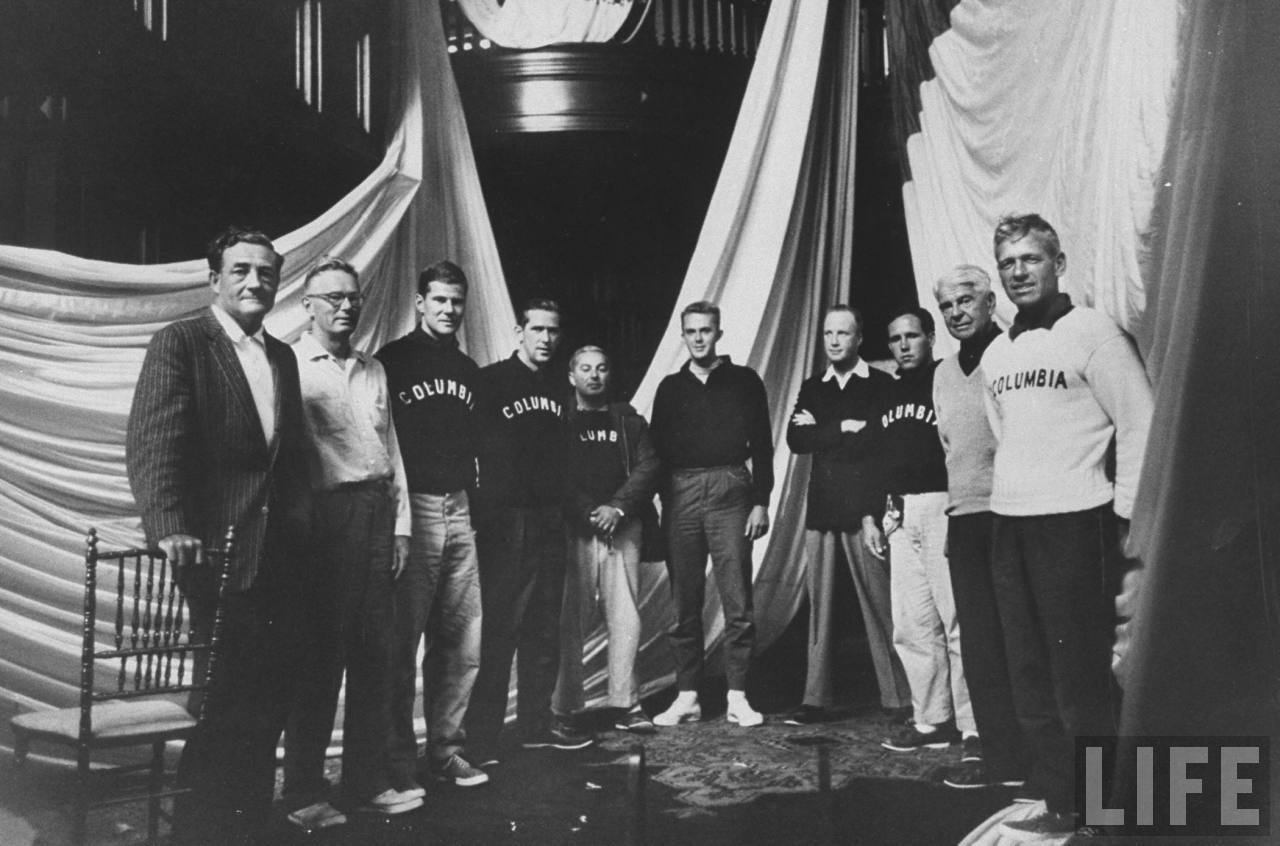 Columbia race team.
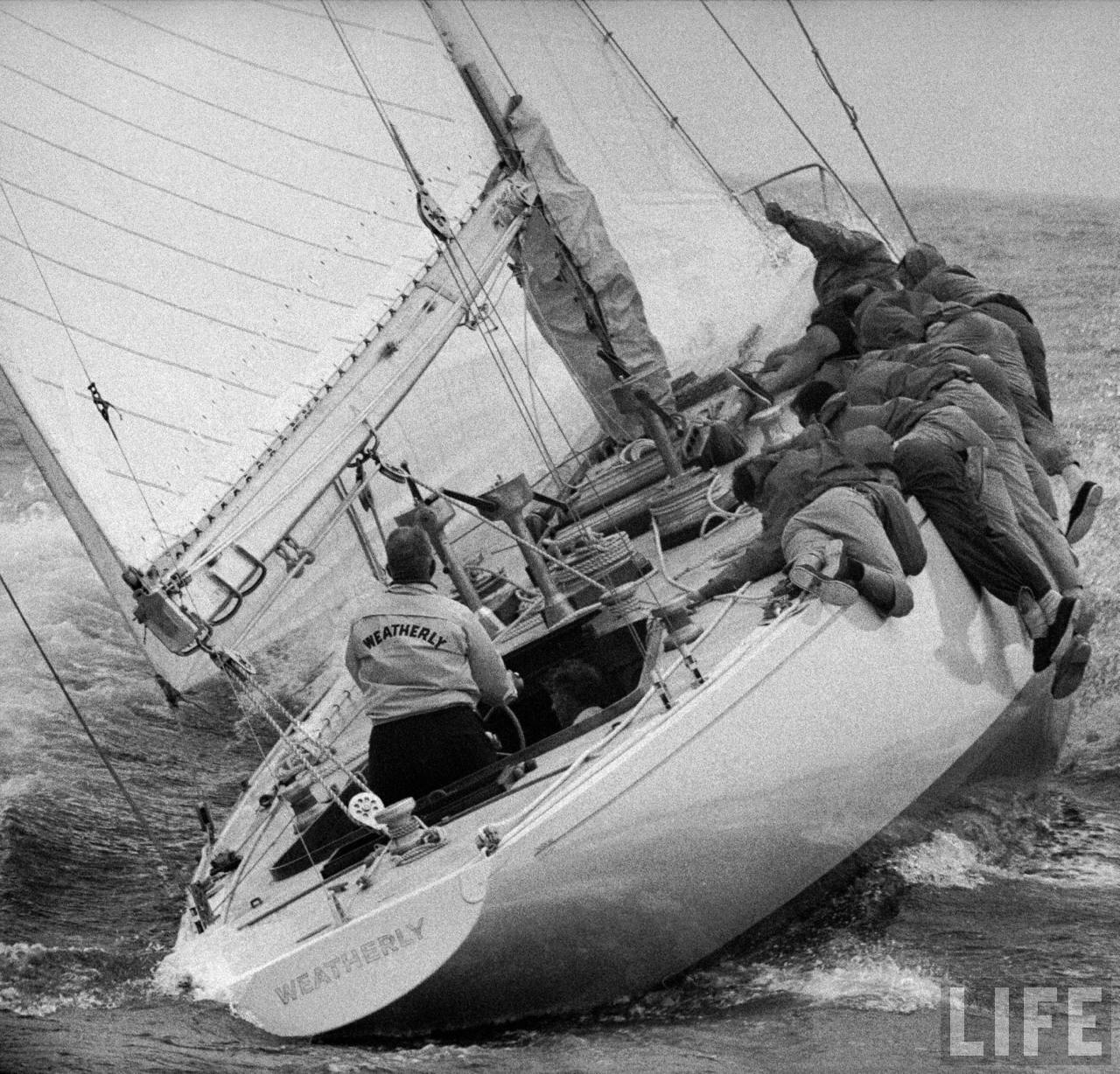 Weatherly yacht and team.
After his victory at the America’s Cup in 1958, Cunningham continued to sail the Columbia, as a member of the New York Yacht Club. As was typical for Cunningham, he also managed to introduce a technical innovation to sailing in the form of a now-commonly used device called the “Cunningham” that adjusts sail tension.
Was pleased to find footage of Cunningham, circa 1956, at the Pequot Yacht Club.
The film is silent, but he appears around the 3 minute mark, dressed in black.
Cunningham continued to race at Le Mans into the 1960s, but instead drove teams of Corvettes, Maseratis and Jaguars. When he became unable to compete as he grew older, he began to unload his massive collections. He sold off his cars in the late 1980s and he parted with his libraries of motoring and yacht books, his art collection and his models in the early 1990s, much of it going to the Herreshoff Marine Museum in Bristol, Rhode Island. Fittingly, he was inducted into both the America’s Cup Hall of Fame and the Motor Sports Hall of Fame.
Cunningham died in 2003 at the age of 96, survived by his second wife Laura, children, stepchildren, grandchildren and great-grandchildren.
Rabbit Hole Revisit: paws22 on Flickr
23/09/2011 § Leave a comment

This picture kind of blew my mind.
It had been awhile since I checked in with paws22 on Flickr, and I’m happy to report that he’s busy as ever. If you haven’t yet had a chance to check out his Flickr stream, I’d suggest you hop to.
Field Notes: (capsule) womens
20/09/2011 § 2 Comments
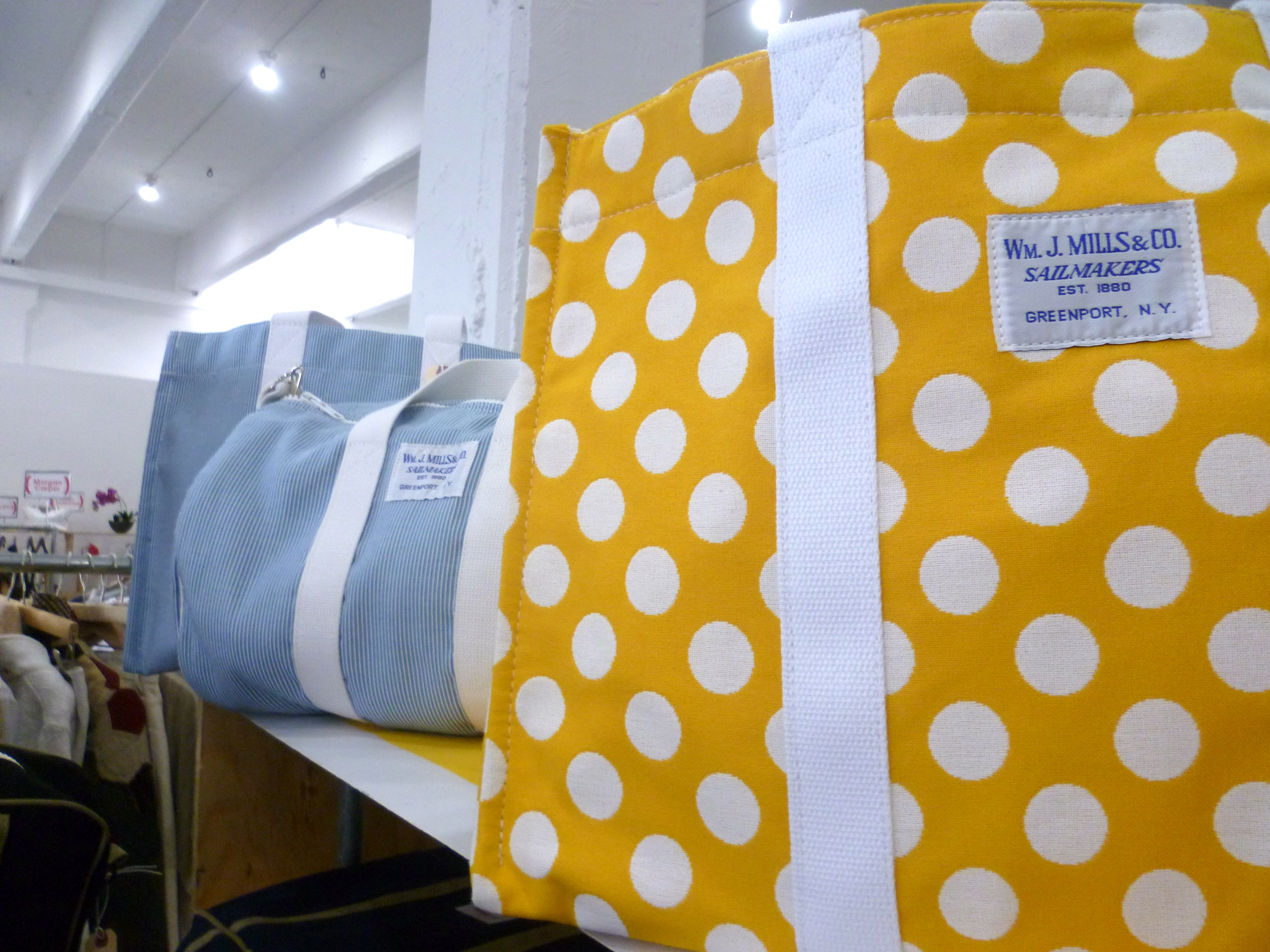
Dropped by (capsule) womens this weekend and was pleased to get an early look at what S/S 2012 has in store for the ladies. While it does feel slightly strange to be looking at shorts when it’s just getting to be sweater weather, I’m definitely not complaining. Let’s get real. As always, (capsule) provided the opportunity to catch up with familiar brands (and faces) and make a few new discoveries as well.
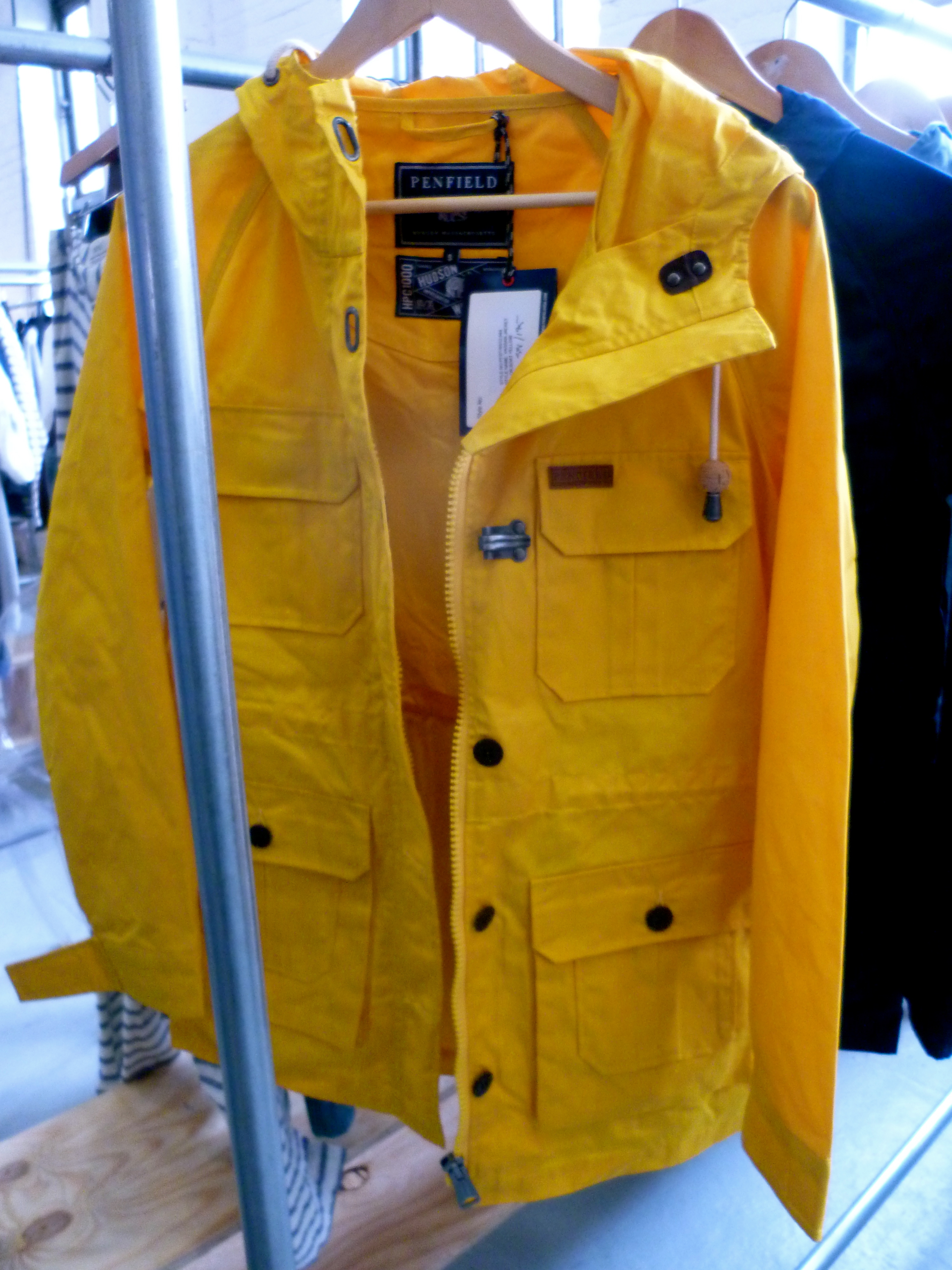 Penfield. Love the color and clasp.
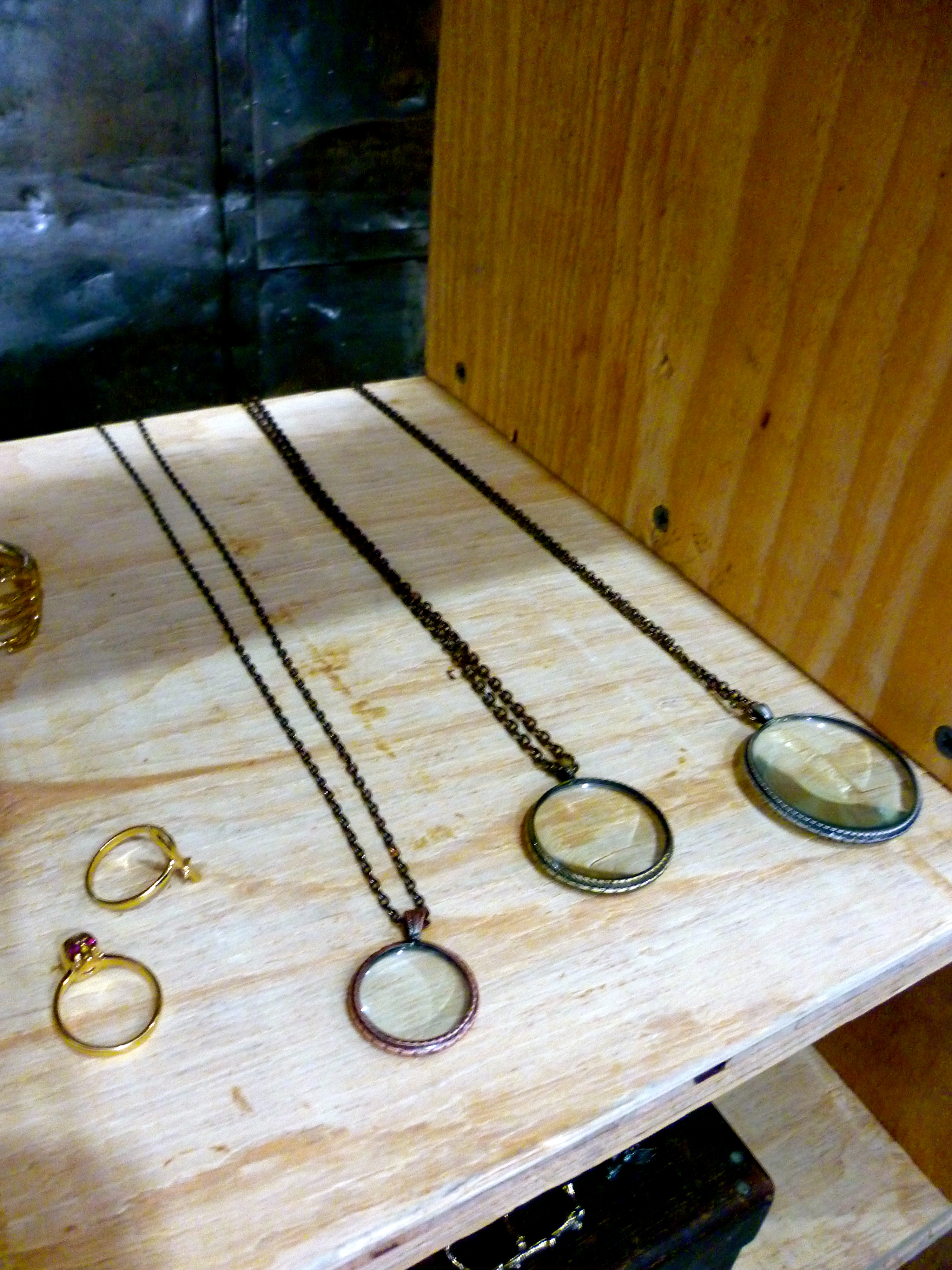 Species by the Thousands. Magnified chic.
 Wm. J. Mills & Co. Lovely ladylike options.

 Vintage Mills labels.
 Made Me: Schott Perfecto x Liberty London lining
 In God We Trust. Lady bowties, cufflinks.

 Cheeky hand-inscribed flask.
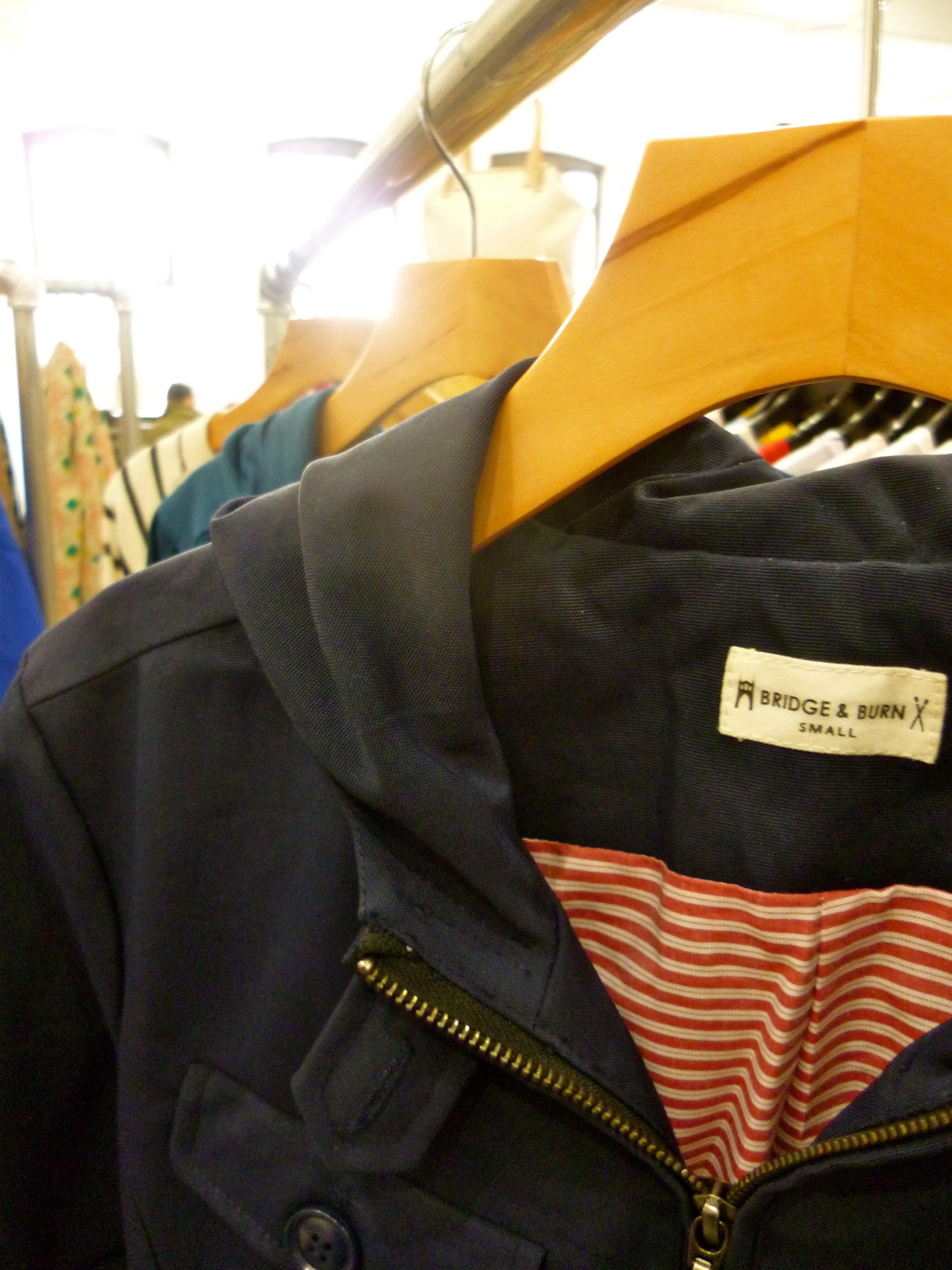
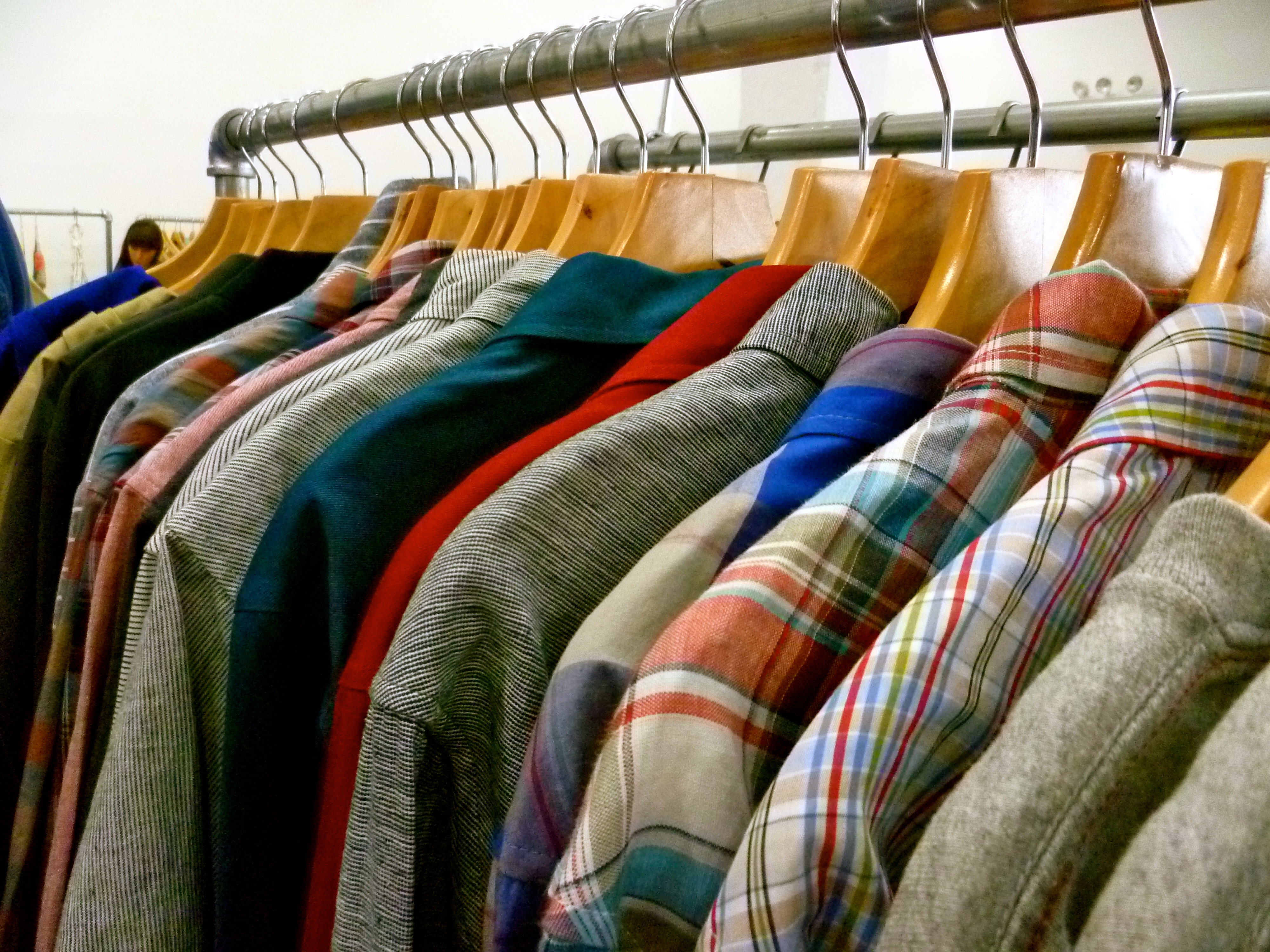
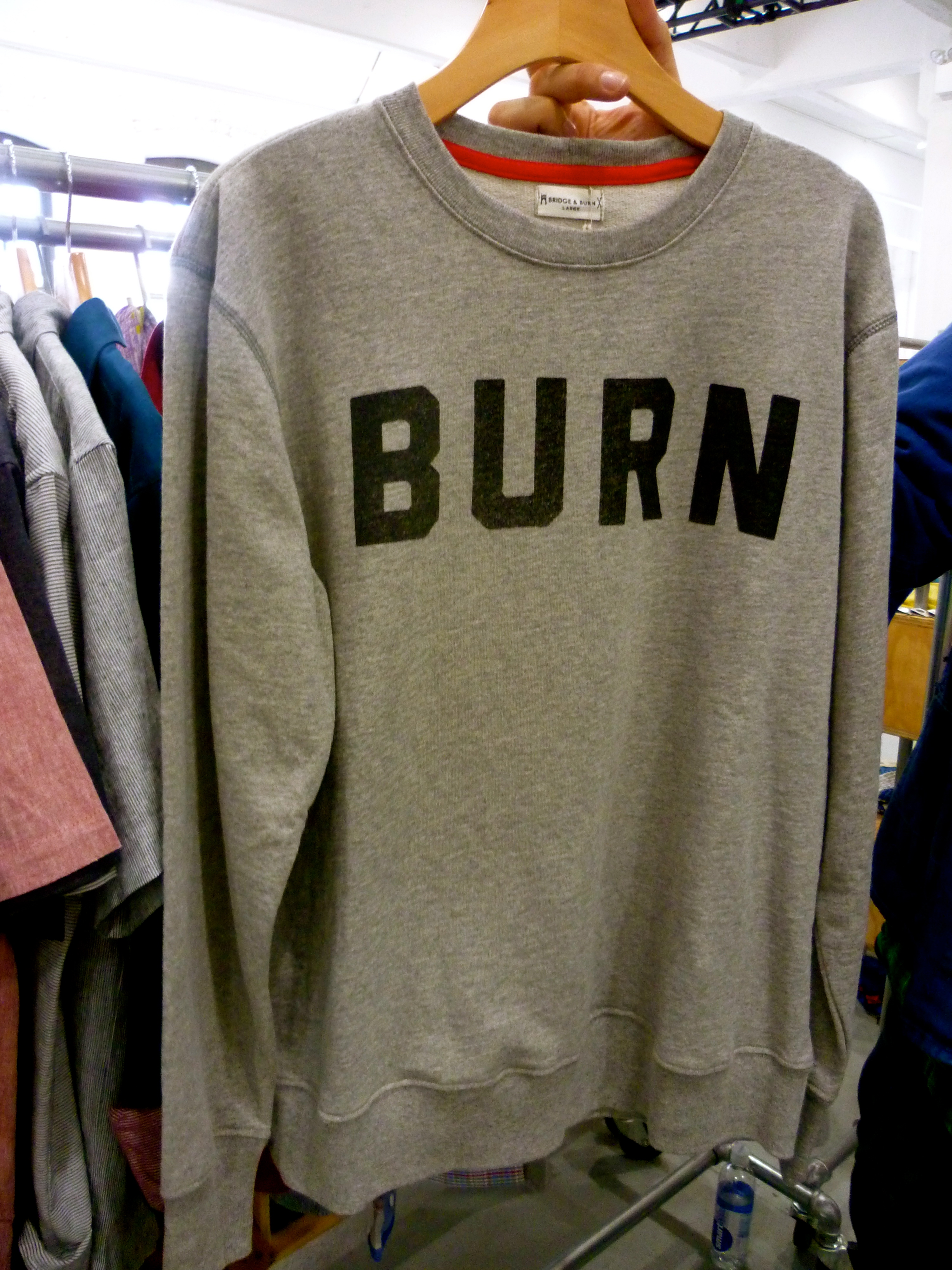
Bridge and Burn. Through the menswear blogs, I was already aware of Bridge and Burn, but I didn’t know they also designed for women. Display a distinct menswear influence, factor in a very well-placed use of contrast (linings, waistbands, zippers) and copiously use navy, red, stripes and plaid, and I’m pretty much sold. I want it all. Was also very pleased to chat up owner/designer Erik Prowell.


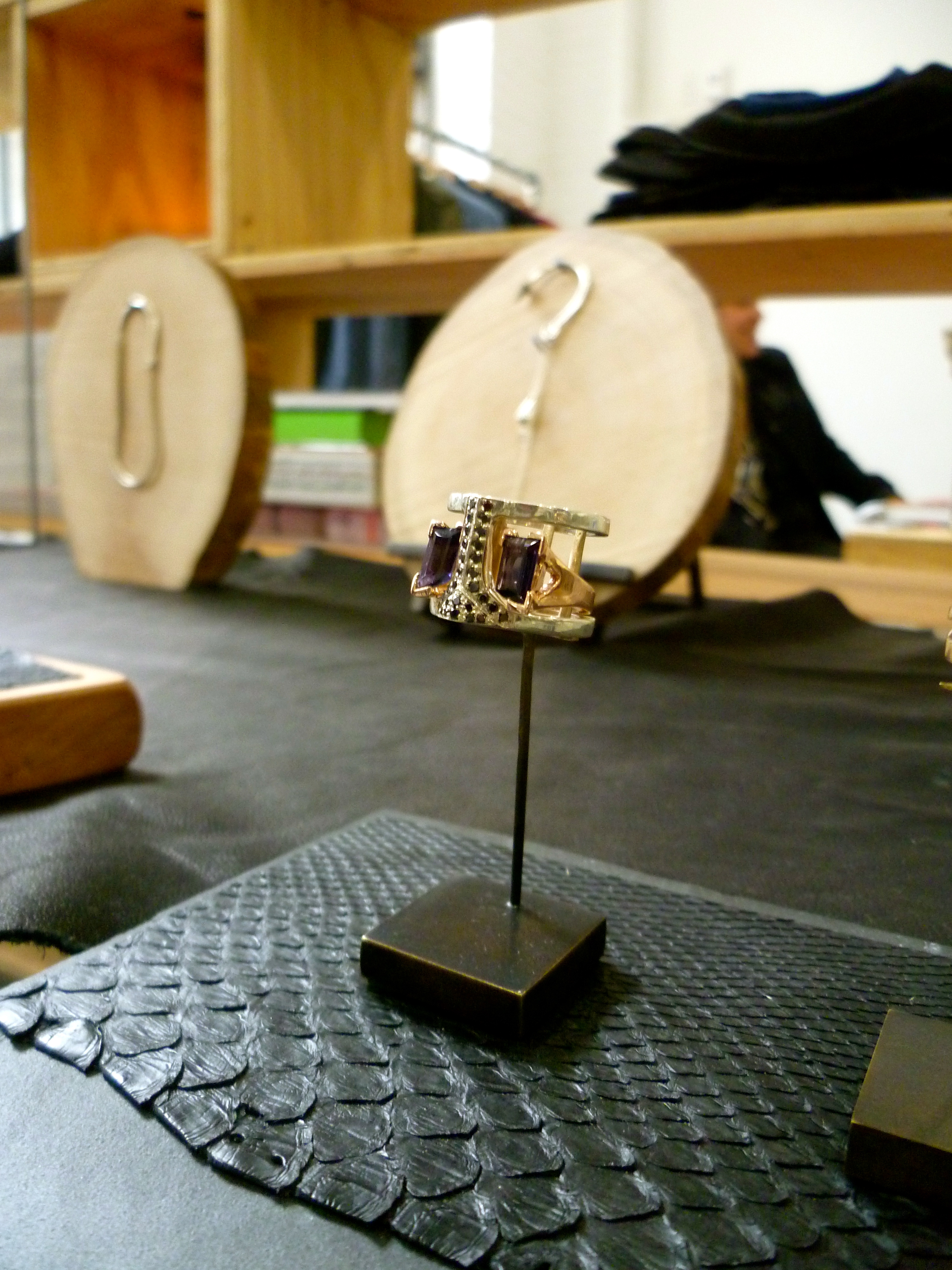 Bliss Lau. The Fathom. In. Love.
The Fathom is a double ring that can be worn together or separately.
That gorgeous purple stone is a gem called “Viking’s Compass.”
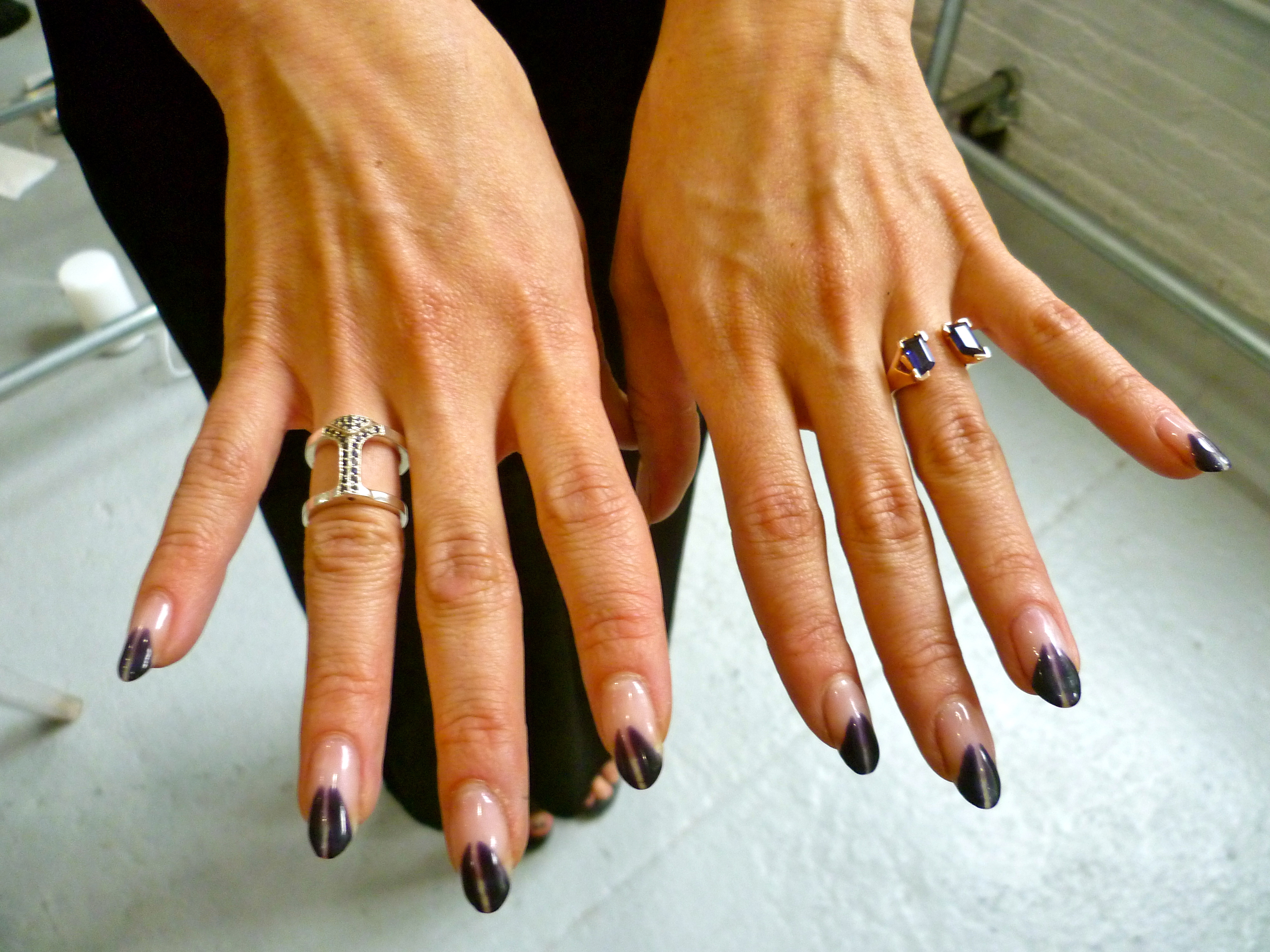 Worn by designer Bliss Lau herself. Can we talk about that amaze manicure?

Just When I Thought I Was Out… {Ralph Lauren Collection Spring 2012}
16/09/2011 § 2 Comments
…they keep pulling me back in.” — Michael Corleone

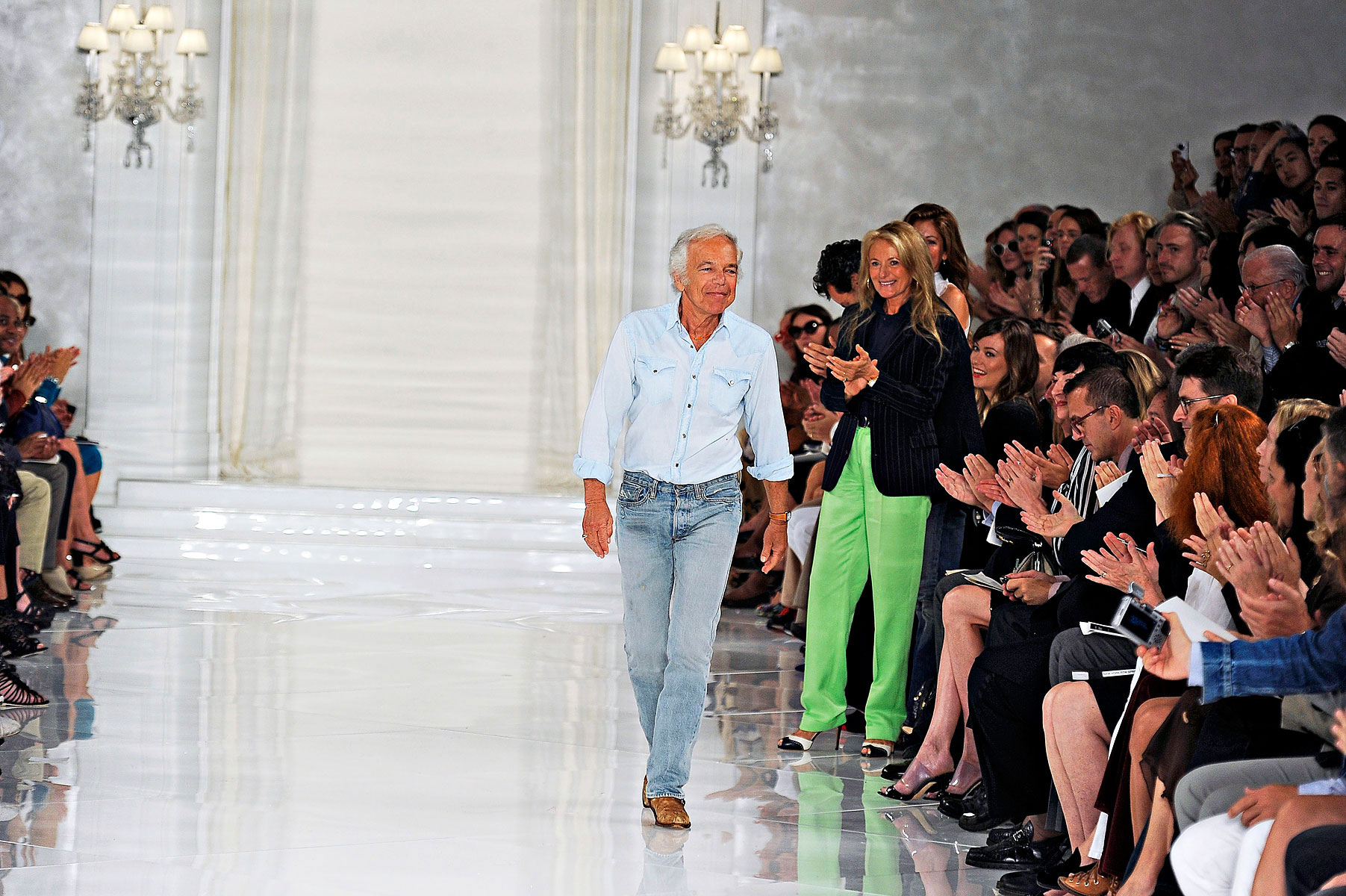
I suppose I should have never doubted that Ralph Lauren would be my favorite from NYFW. We go way, way back. And this time around I flirted with the idea of another man, but the indomitable Mr. Lauren didn’t care. He waited. He reclinated. He knew that when he would drop his glittering collection on my head, I’d come running right back to his side. He knew that I wouldn’t ever be able to say no to him…
The man was right.
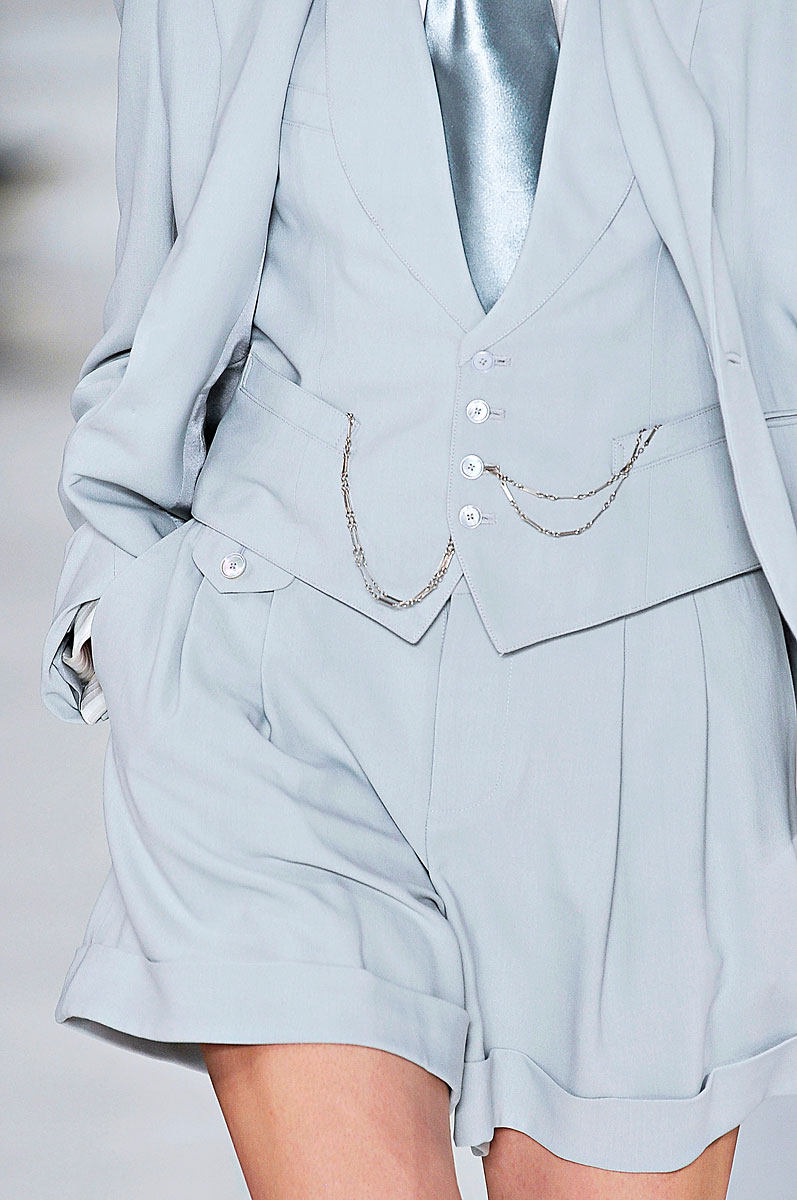
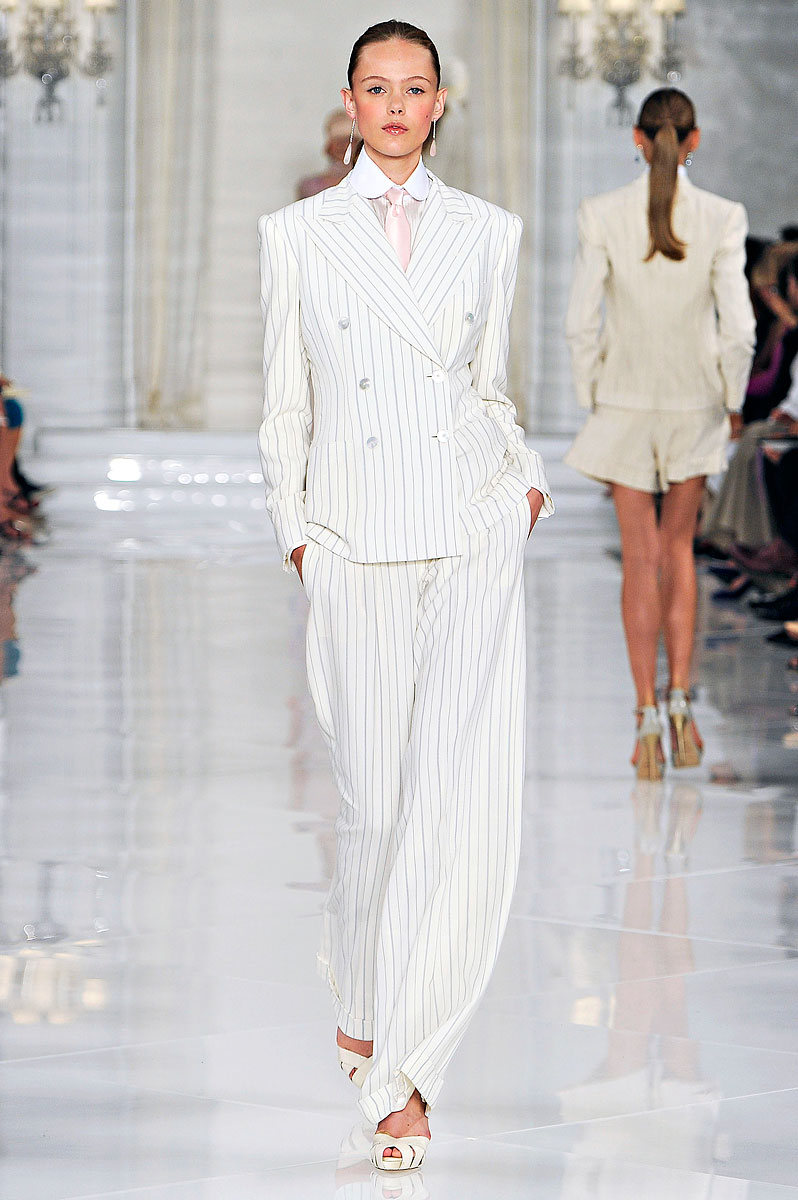
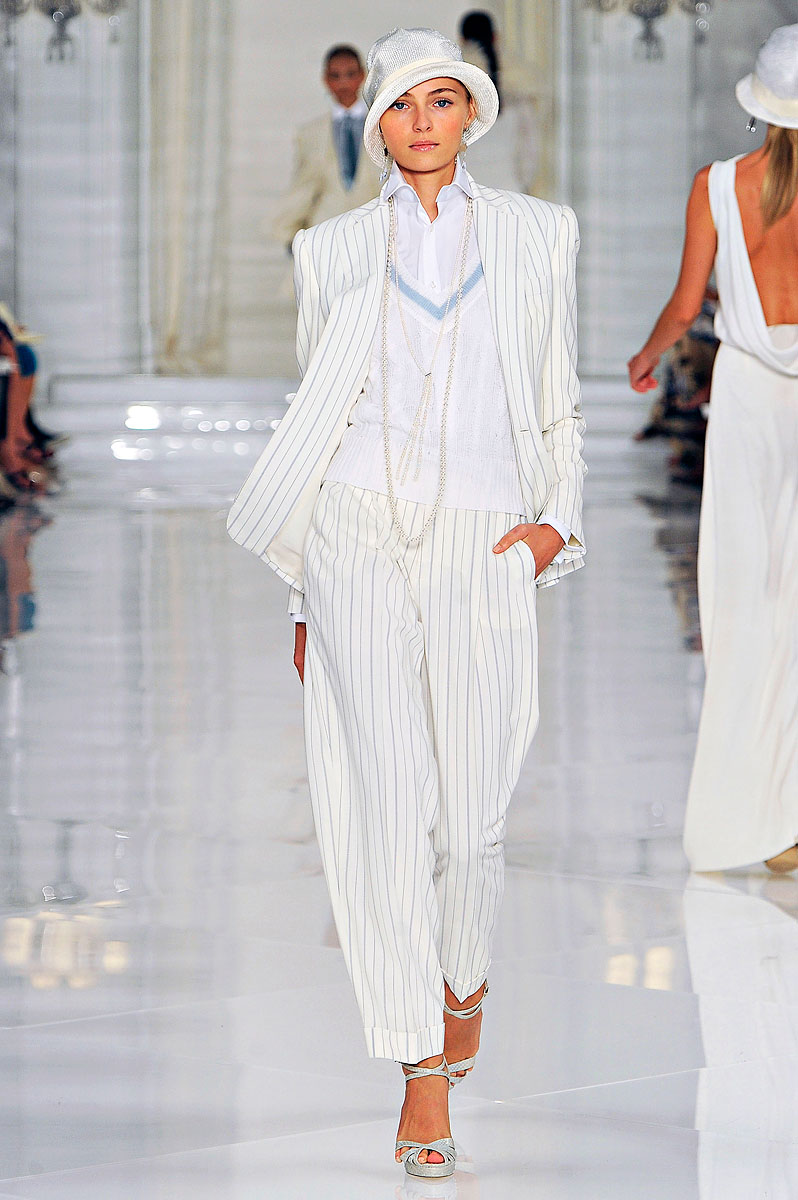
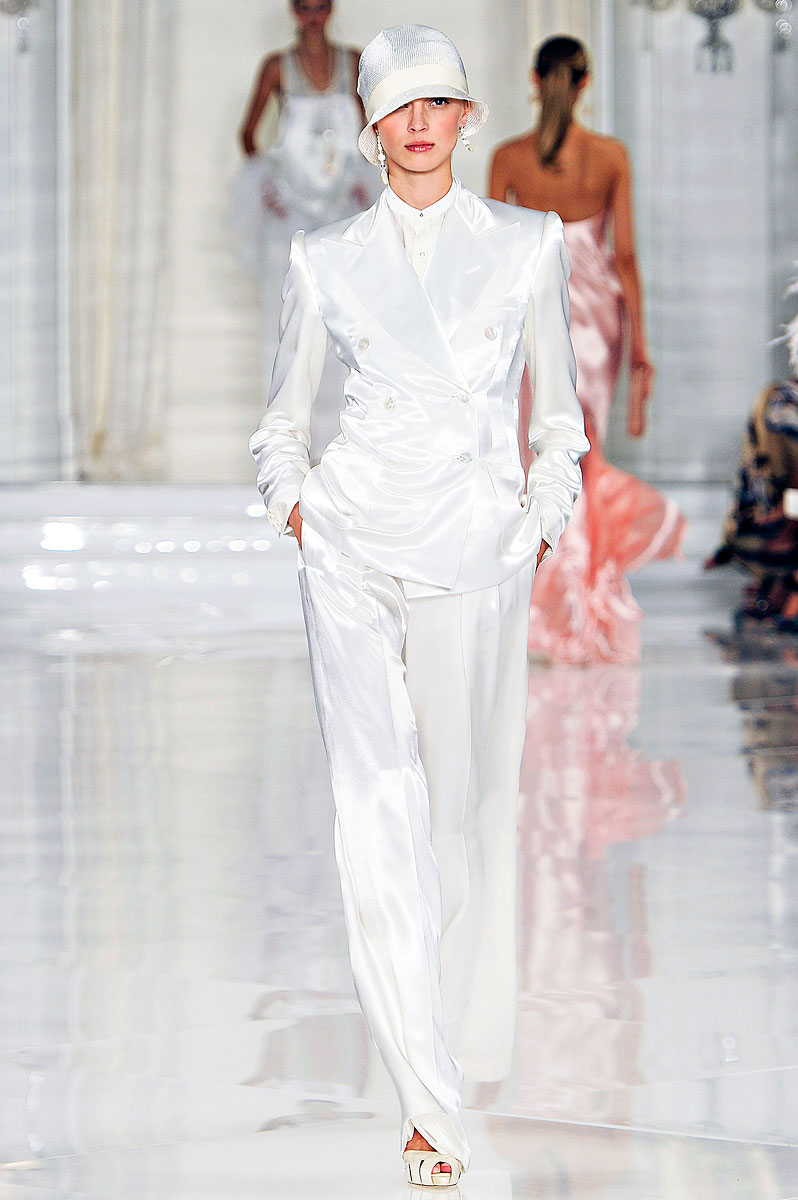
For spring 2012, while most other collections showed influences of the 1930s and 40s, Mr. Lauren reached back even further to a decade he is most comfortable with — the 1920s. And why not? His costumes for Jack Clayton’s Gatsby are constantly referenced by fashion and costume designers. Why not seize upon spring’s nostalgia, ratchet up the glamour and hit his own sweet spot? Textbook really. These are clothes for both Daisy Buchanan and Jordan Baker, and you probably already know I tend to like Jordan a bit more… If you were looking for 1920s with an edge, for the ironic jazz age, you won’t find it here, because that is not what Mr. Lauren does. You need to go talk to Thom Browne if that’s what you want, because that’s what he showed this week. Mr. Lauren is unfailingly earnest, and you will either find this boring, or love it to death as I do. Ralph Lauren is not an iconoclast — he is an icon. And it is a dying breed at that…
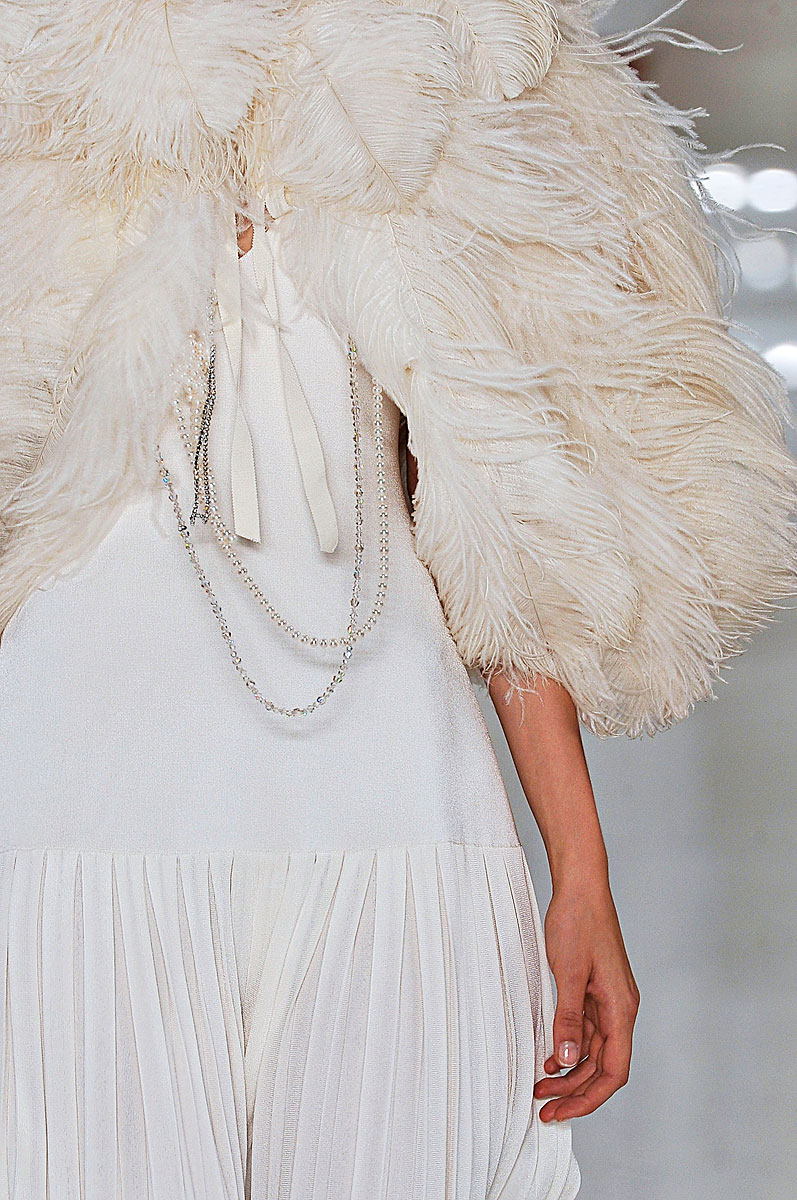
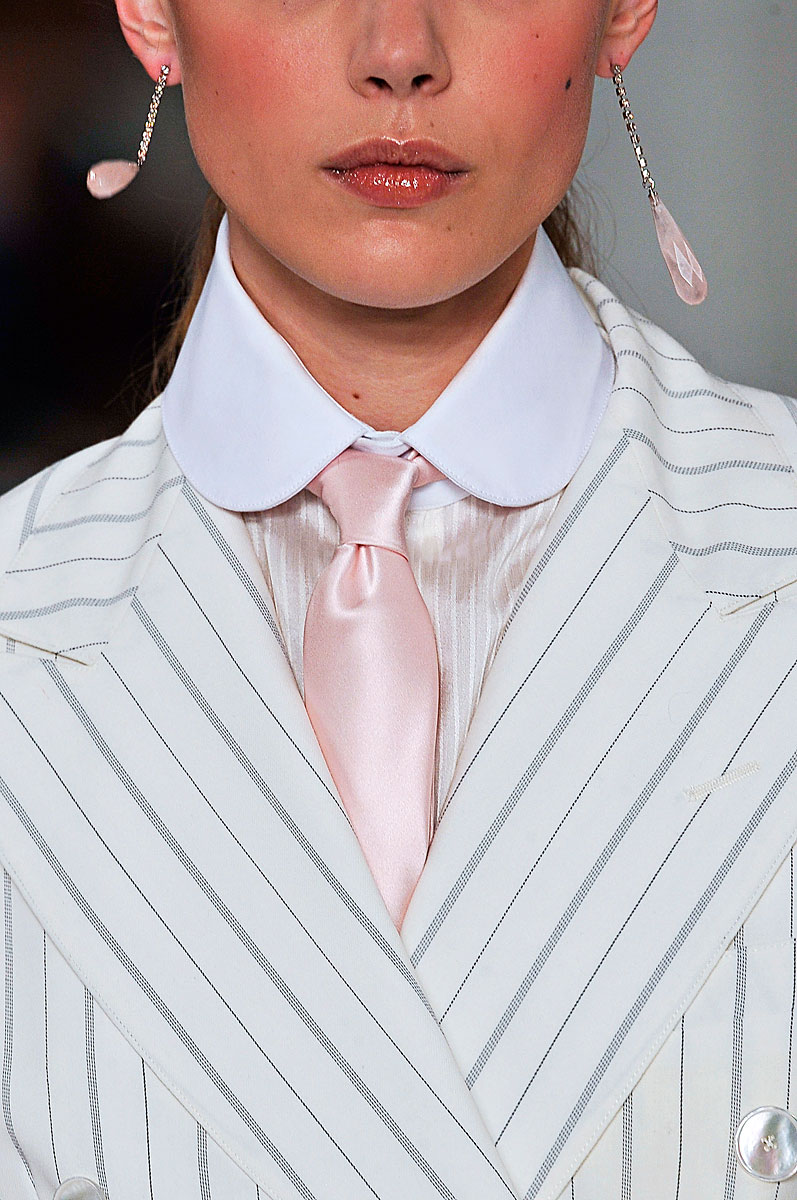
Mr. Lauren’s spring 2012 is iridescent, feathered, and jeweled. It is club-collared, double-breasted and cuffed. The palazzo pant is making a return. You better learn how to tie a tie and how to wear a cloche hat. And above all, get thyself to a fabulous ball because these gorgeous silk gowns, they are screaming to be worn.
Now, I had to restrain myself here. Of course I wanted to post it all down to the last drop, but if you really want to see every outfit, you can head over to Vogue for that. And I highly recommend you do because photographer Marcio Madeira had a field day. His shots are A.Maz.Ing. What I wanted to share with you, were some of my favorite looks, coupled with some of my favorite detail shots (Madeira blew my mind with these — I have yet to see any other runway detail shots that are this lavish, this indulgent).
Ready? Let’s Charleston…







 “Let’s, let’s stay together
Loving you whether, whether
Times are good or bad, happy or sad…”
Well done, sir.
All images via Vogue.
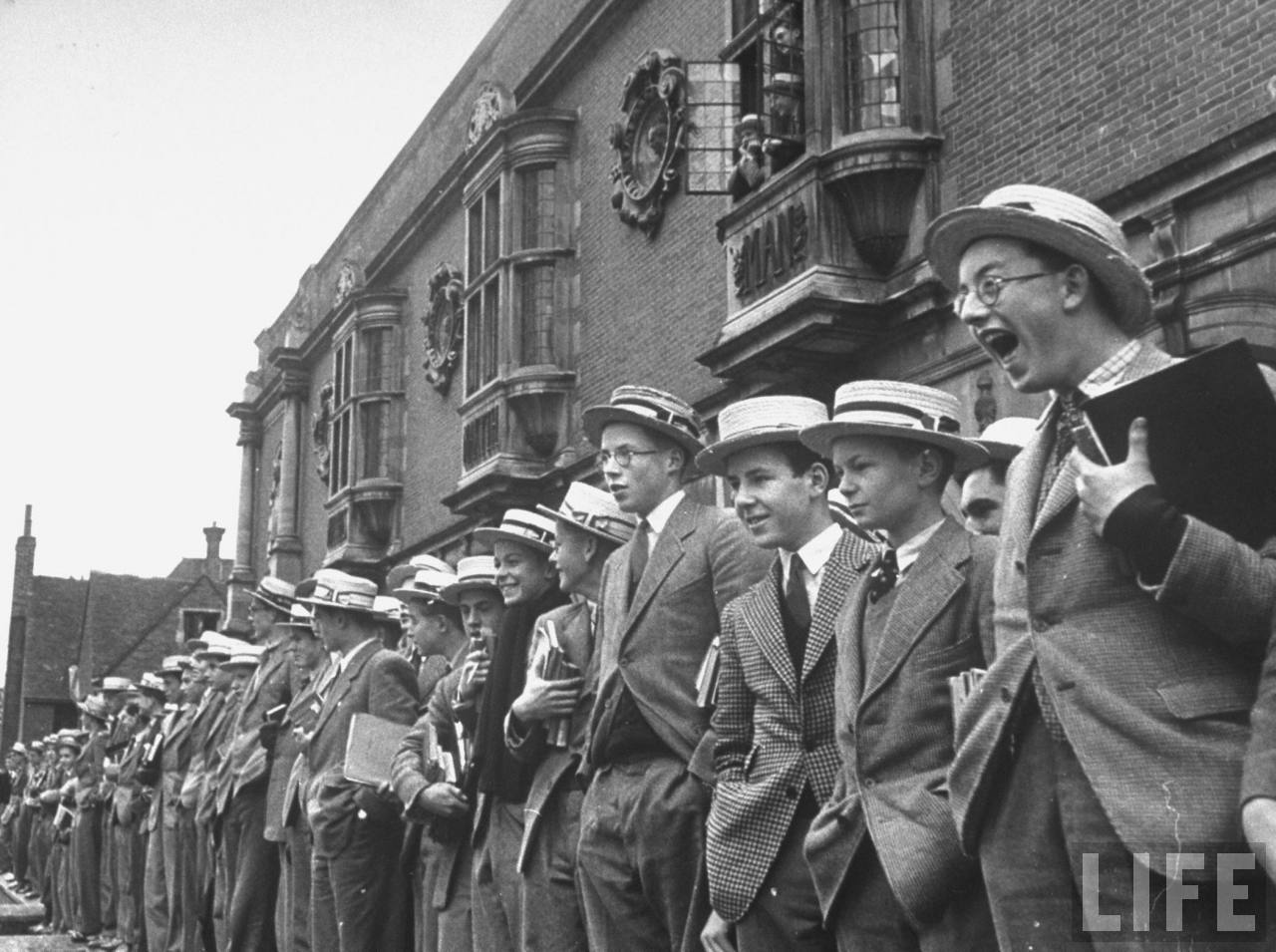
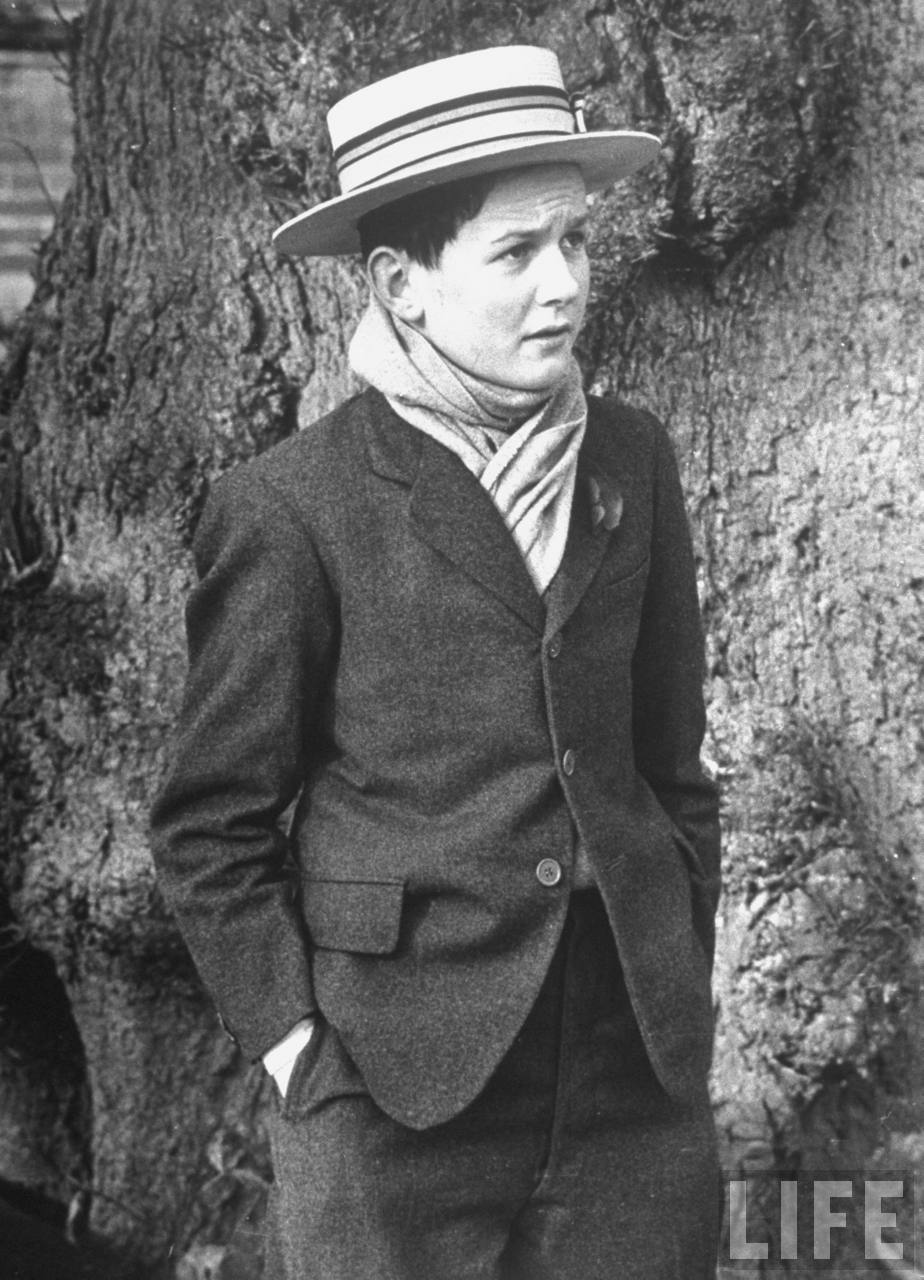
LIFE Archives: Back to School, Winchester College 1951
14/09/2011 § 1 Comment
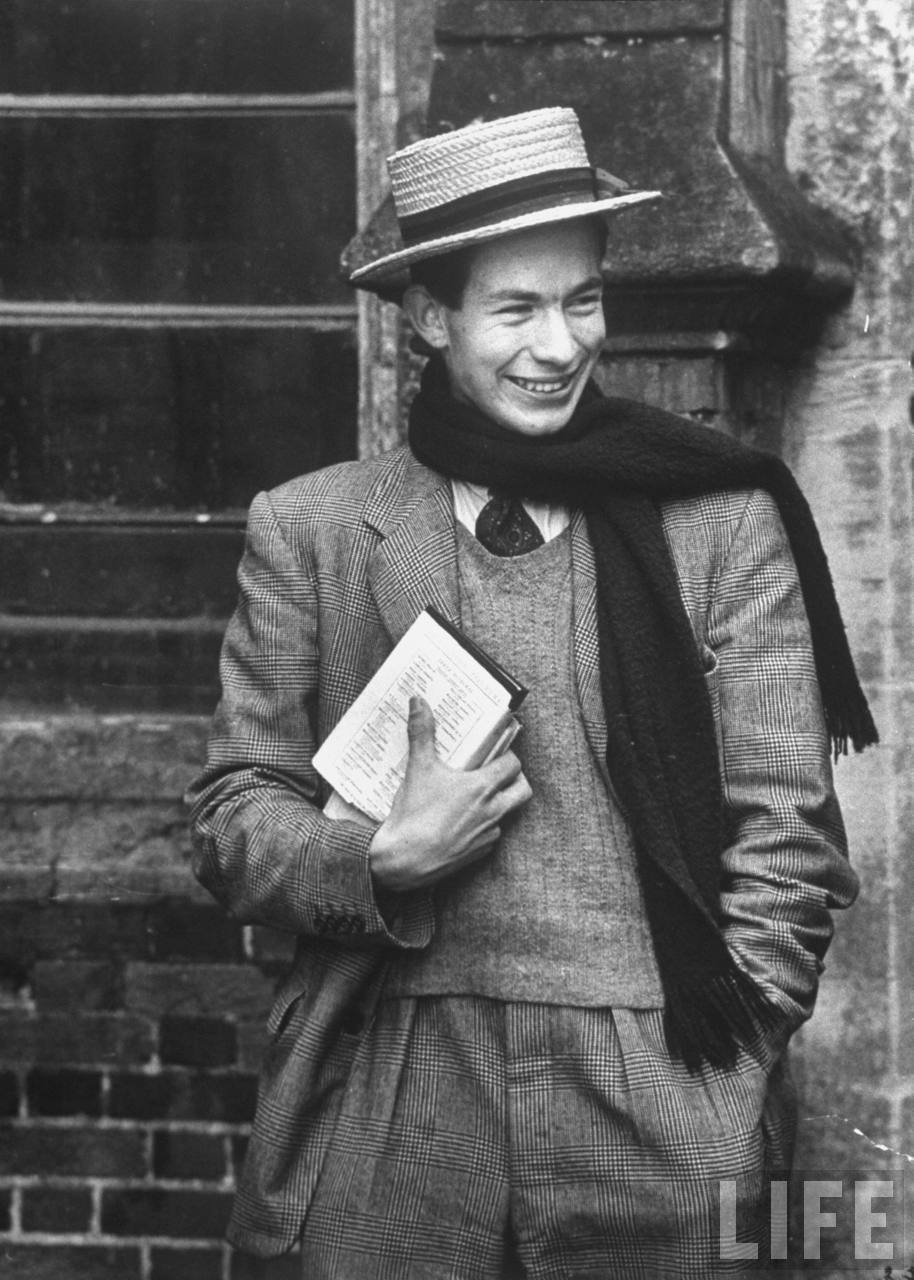 Cornell Capa captures returning students at Winchester College in 1951.
I actually have the AC on as I write this — hello Indian summer!
Seeing all of this delicious tweed is such a tease.



Auction: Doyle New York: The Estate of Douglas Fairbanks, Jr.
12/09/2011 § 1 Comment
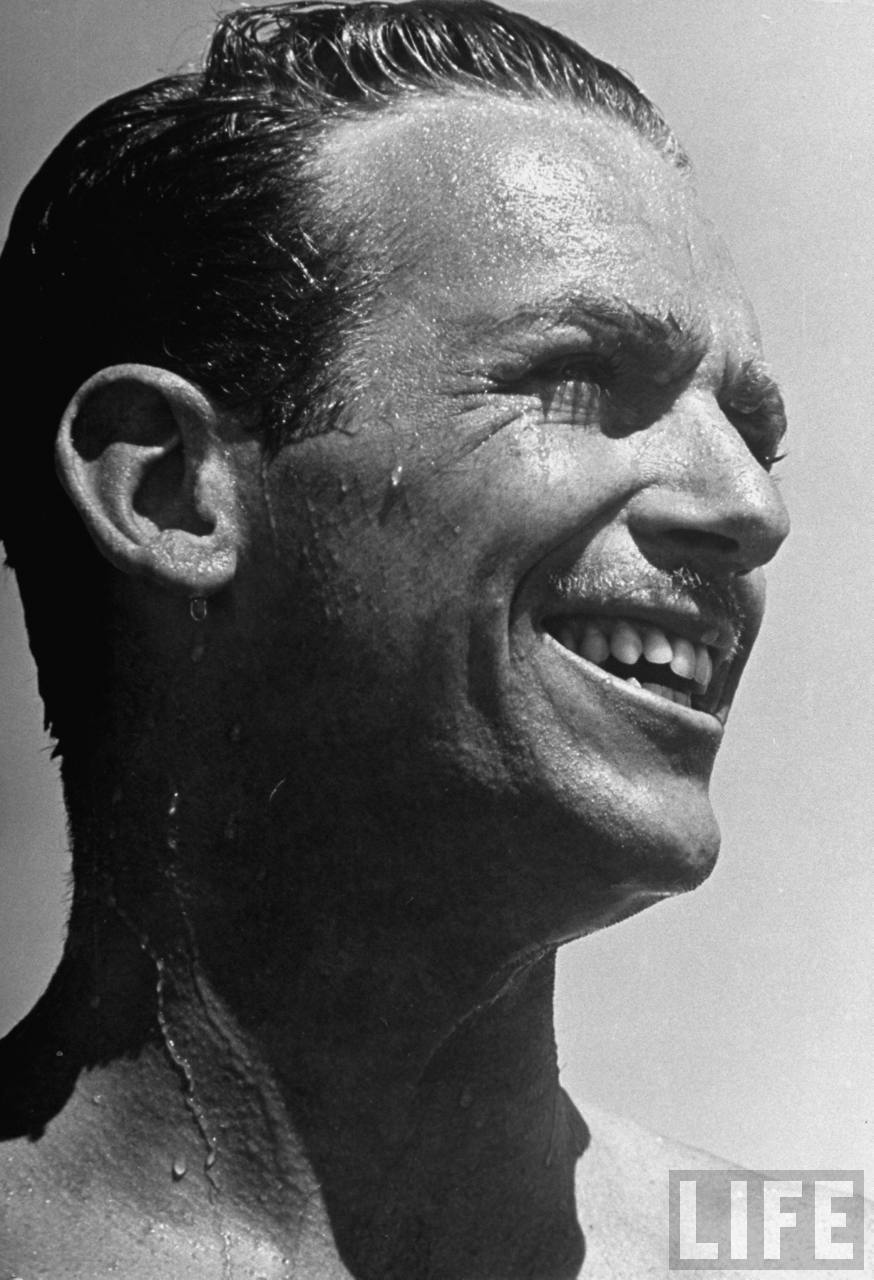 Douglas Fairbanks, Jr. in 1938.
December 9, 1909 – May 7, 2000
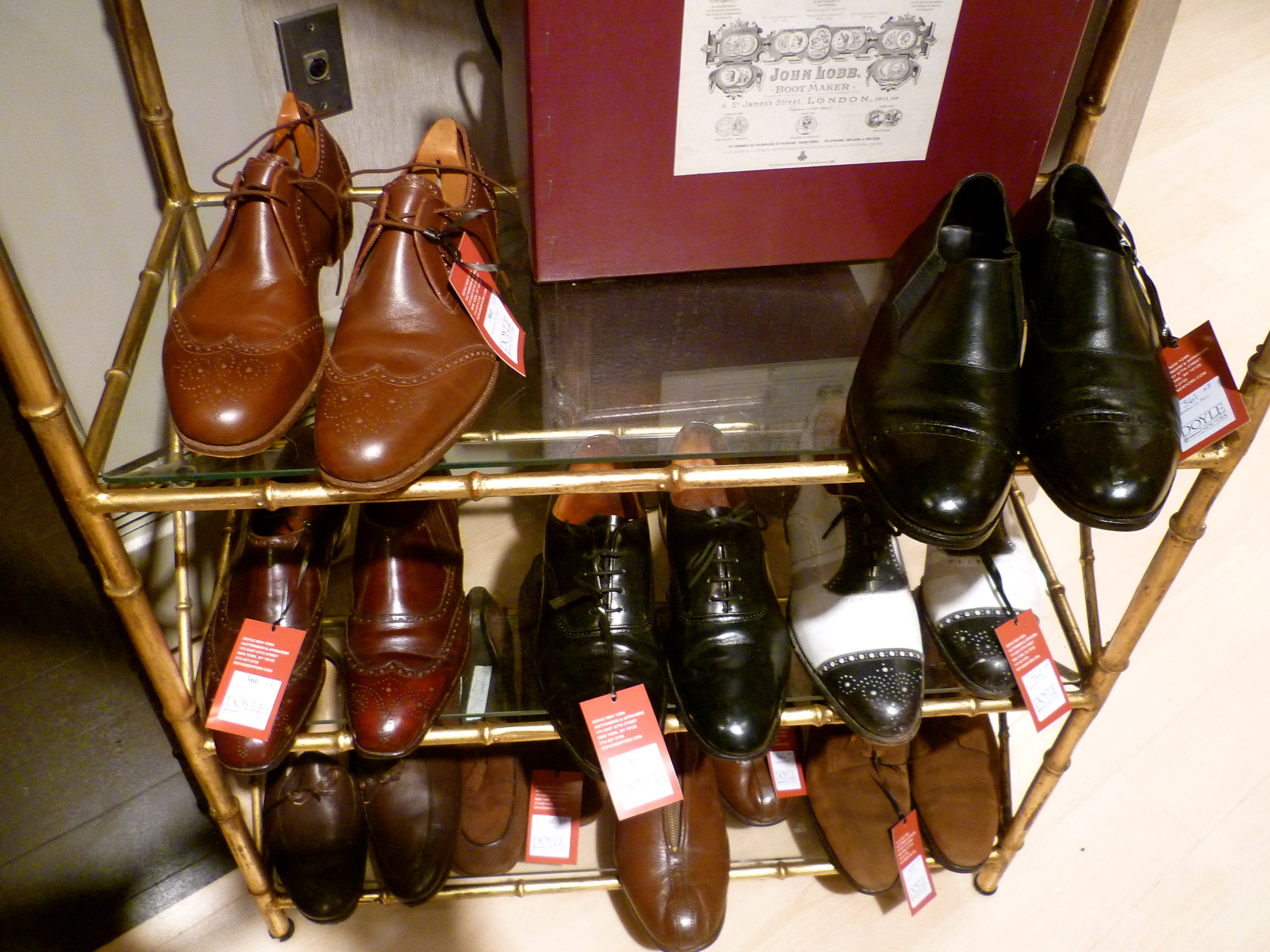
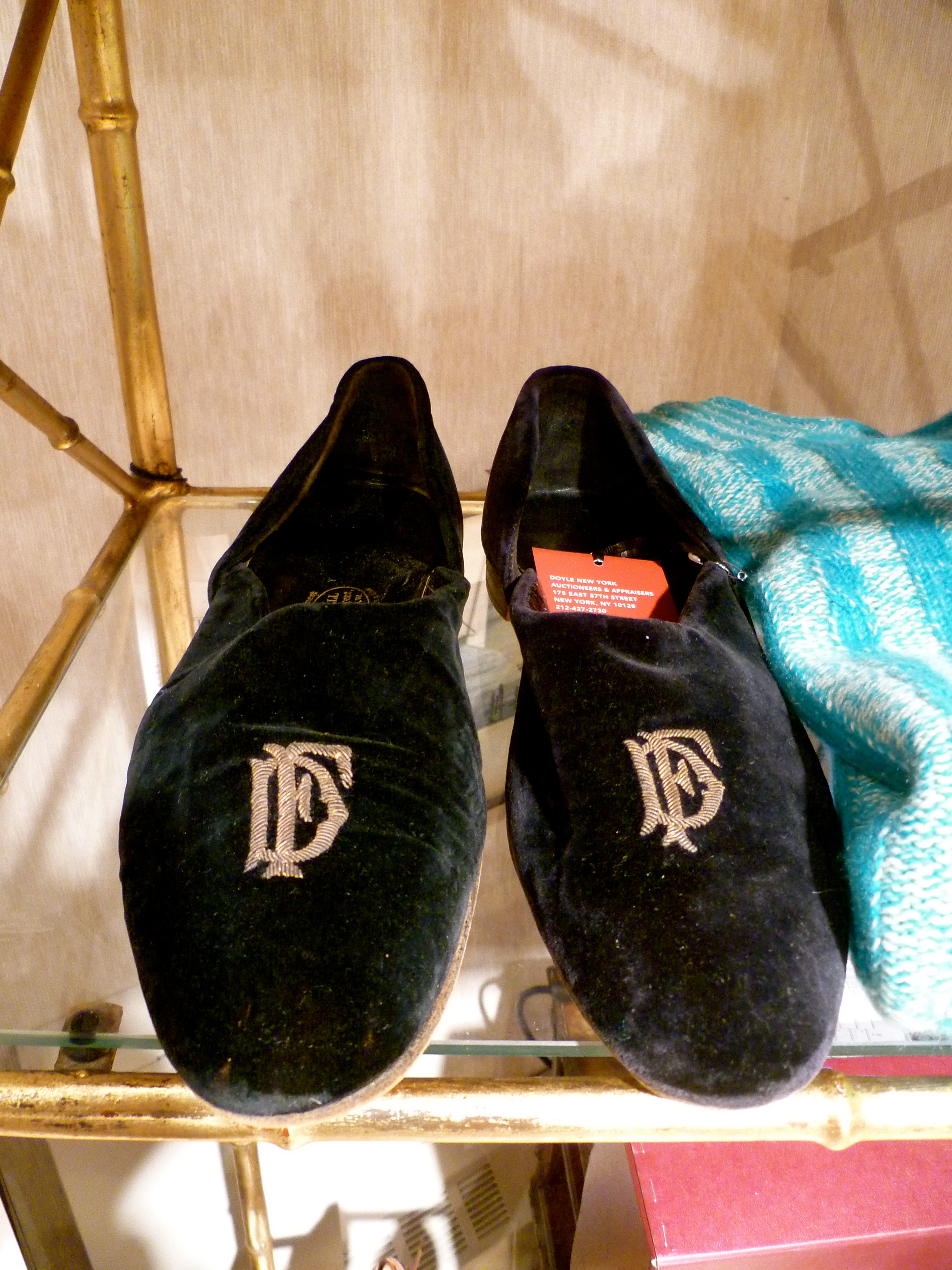
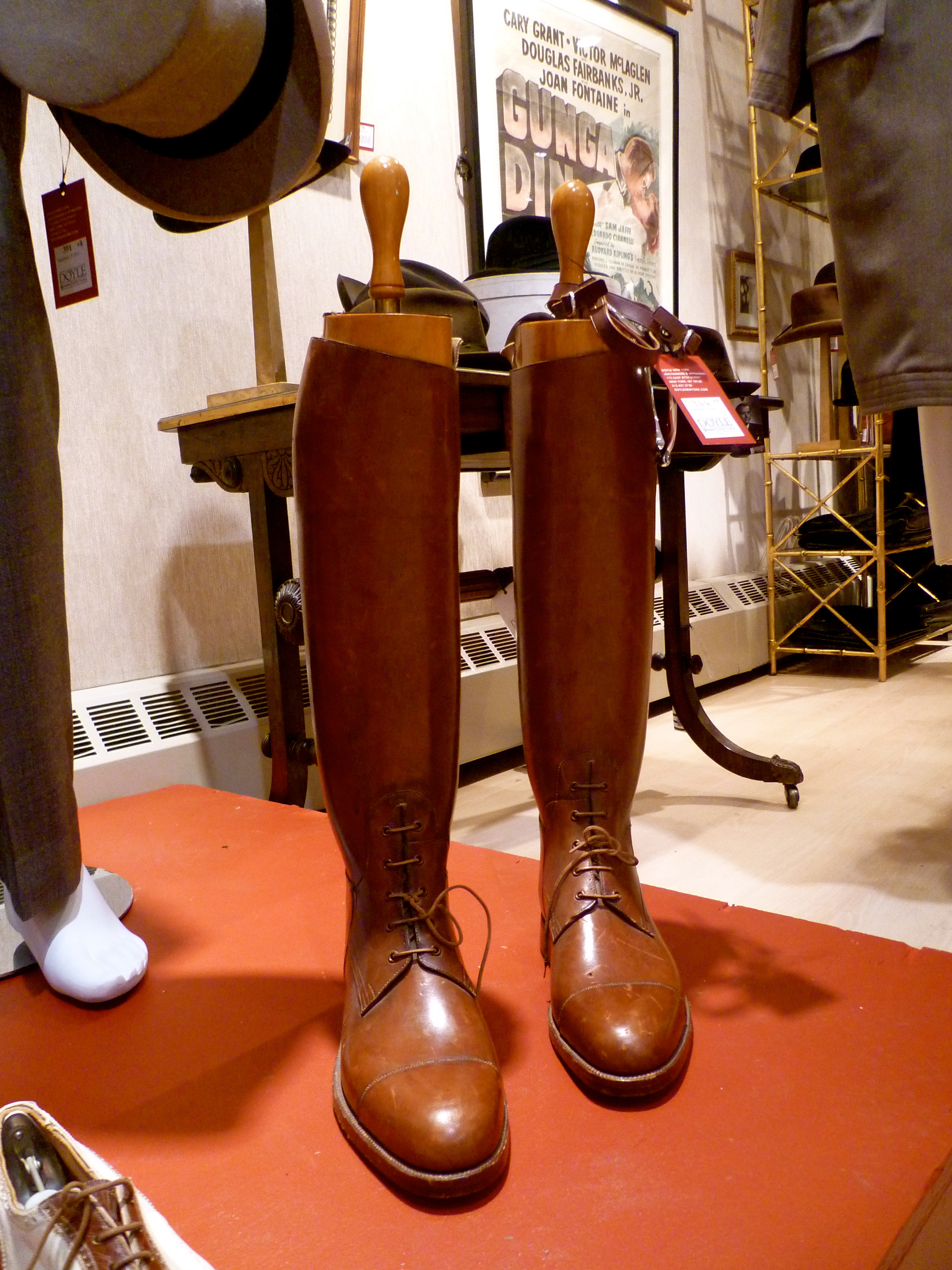
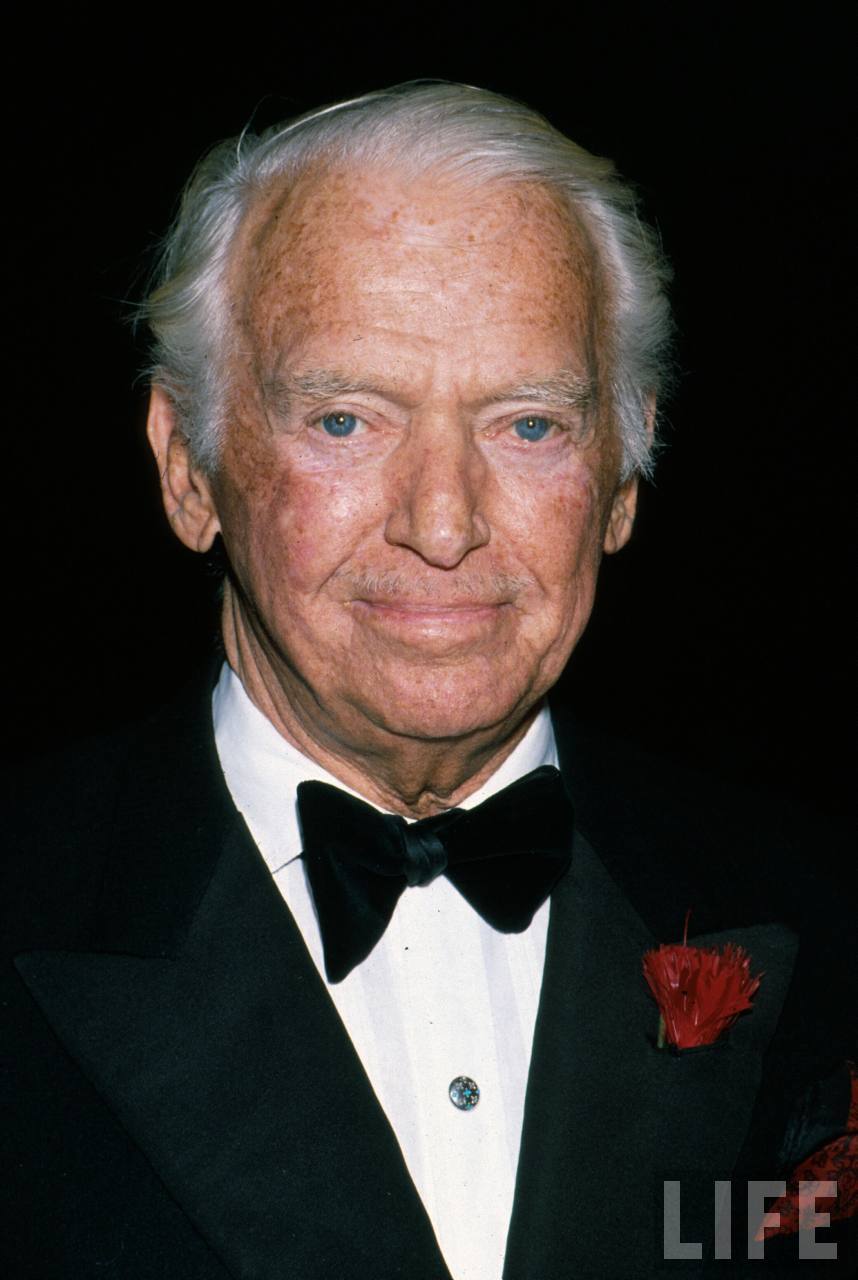
Over the weekend, I dropped by Doyle New York on the Upper East Side to peruse the estate of Douglas Fairbanks, Jr., due to be sold tomorrow morning, September 13, at 10am. Fairbanks, son of screen legend Douglas Fairbanks, Sr. and his first wife Anna; and stepson to his father’s second wife — screen legend in her own right — Mary Pickford; was Hollywood royalty. Encouraged by his father and stepmother, Fairbanks, Jr. began acting at a young age in silent films, eventually working in “talkies” and on the stage, and became quite the leading man.
During the second World War, Fairbanks, Jr. served as a reserve officer in the US Navy, where he trained with the British Royal Navy through an officer exchange program headed by Lord Mountbatten, a friend of his father, Fairbanks, Sr. Fairbanks, Jr. returned to the states where he was instrumental in the creation of the Beach Jumper program, a special naval unit specializing in misinformation and deception. After the war, he returned to acting.
Fairbanks, Jr. was married three times — once to Joan Crawford! — and had three daughters. He was a rather acquisitive fellow who enjoyed the best of everything. This auction of his estate contains more than 400 lots of jewelry, memorabilia, clothing, furniture and artwork. I was most excited to see the clothing and personal effects and came away quite impressed…and also full of antique lust, but that’s to be expected.

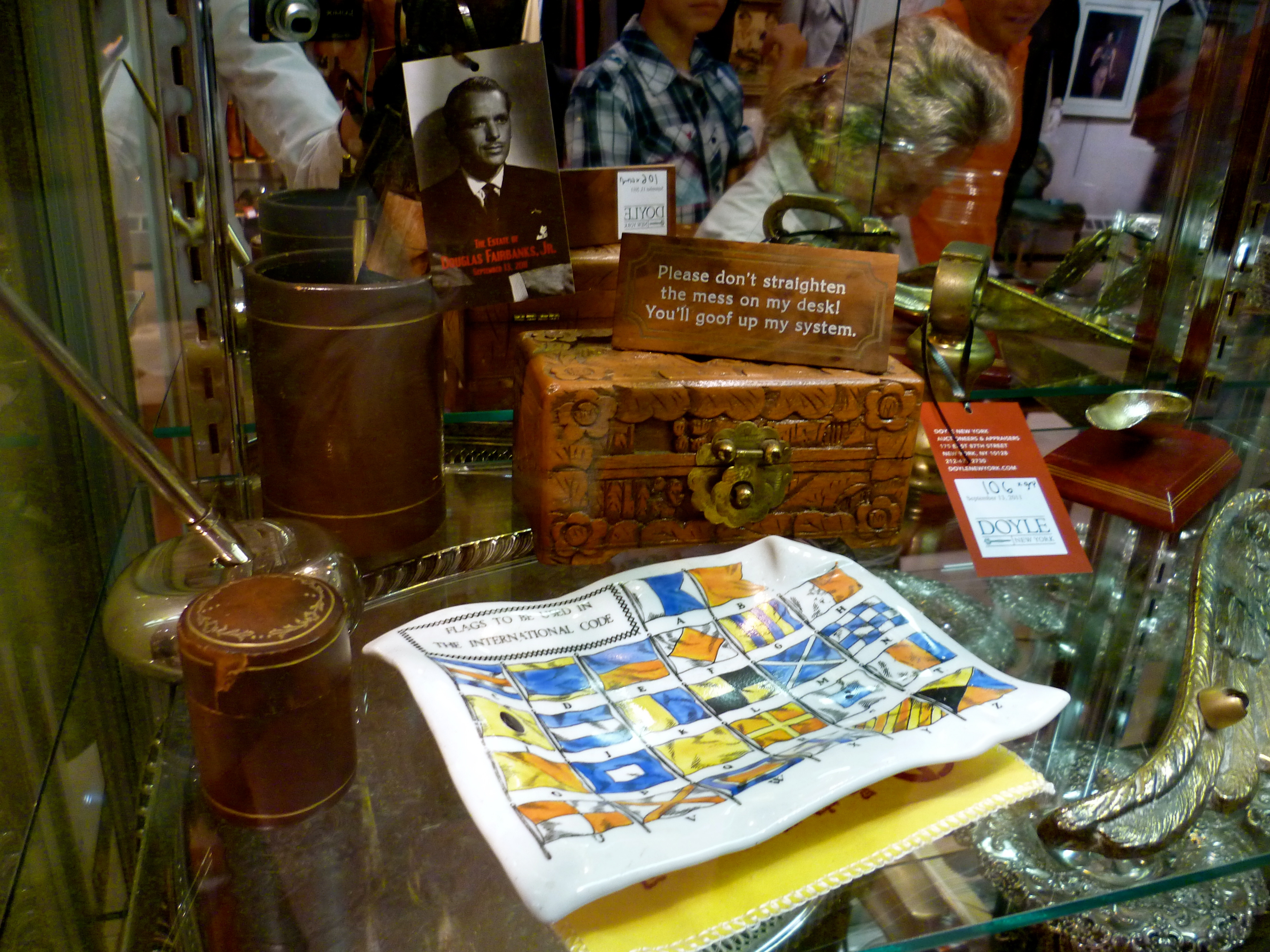



 Wearing the platinum, diamond and turquoise set pictured above.
 Loved Fairbanks’ Rolodexes.

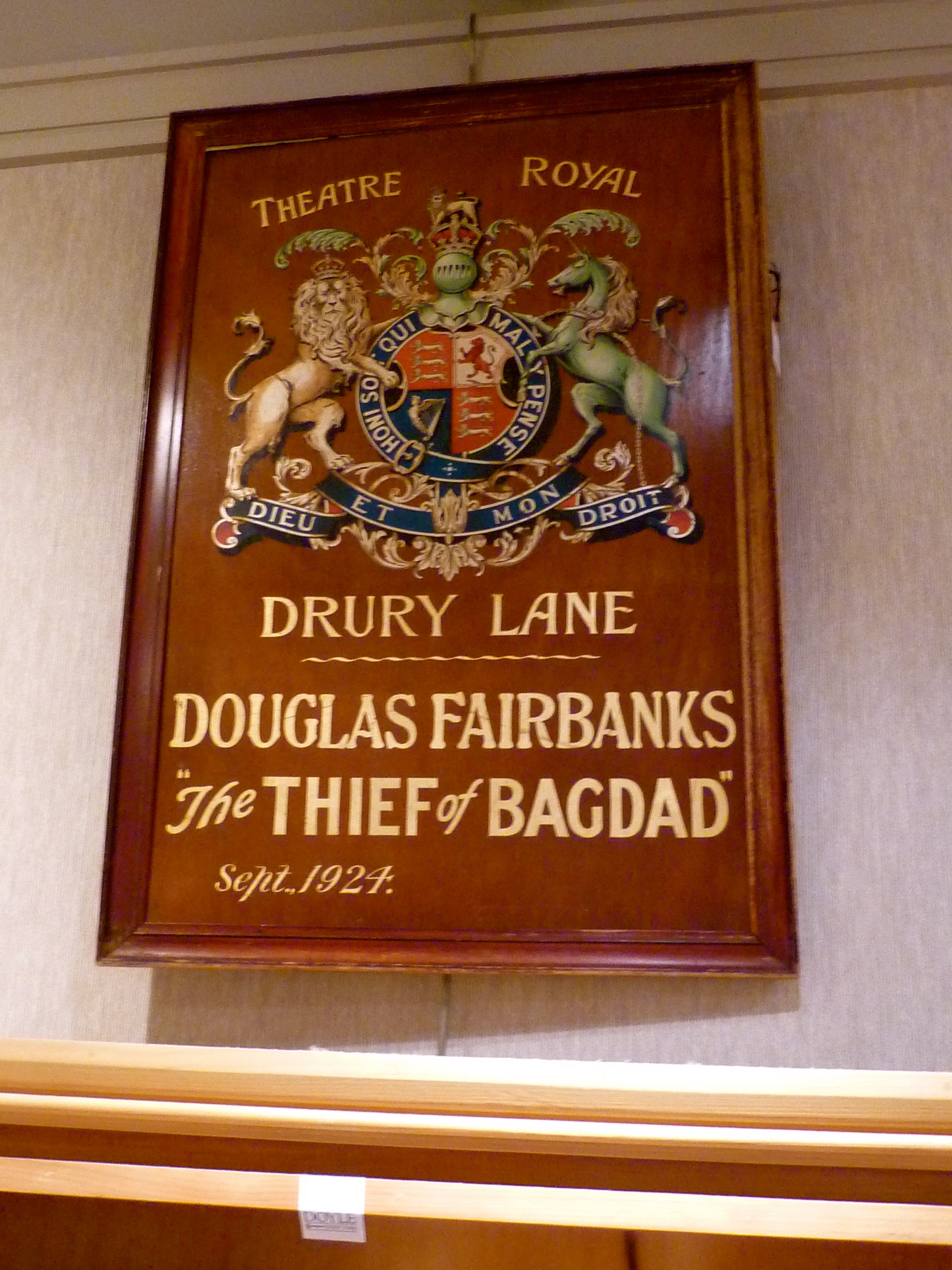
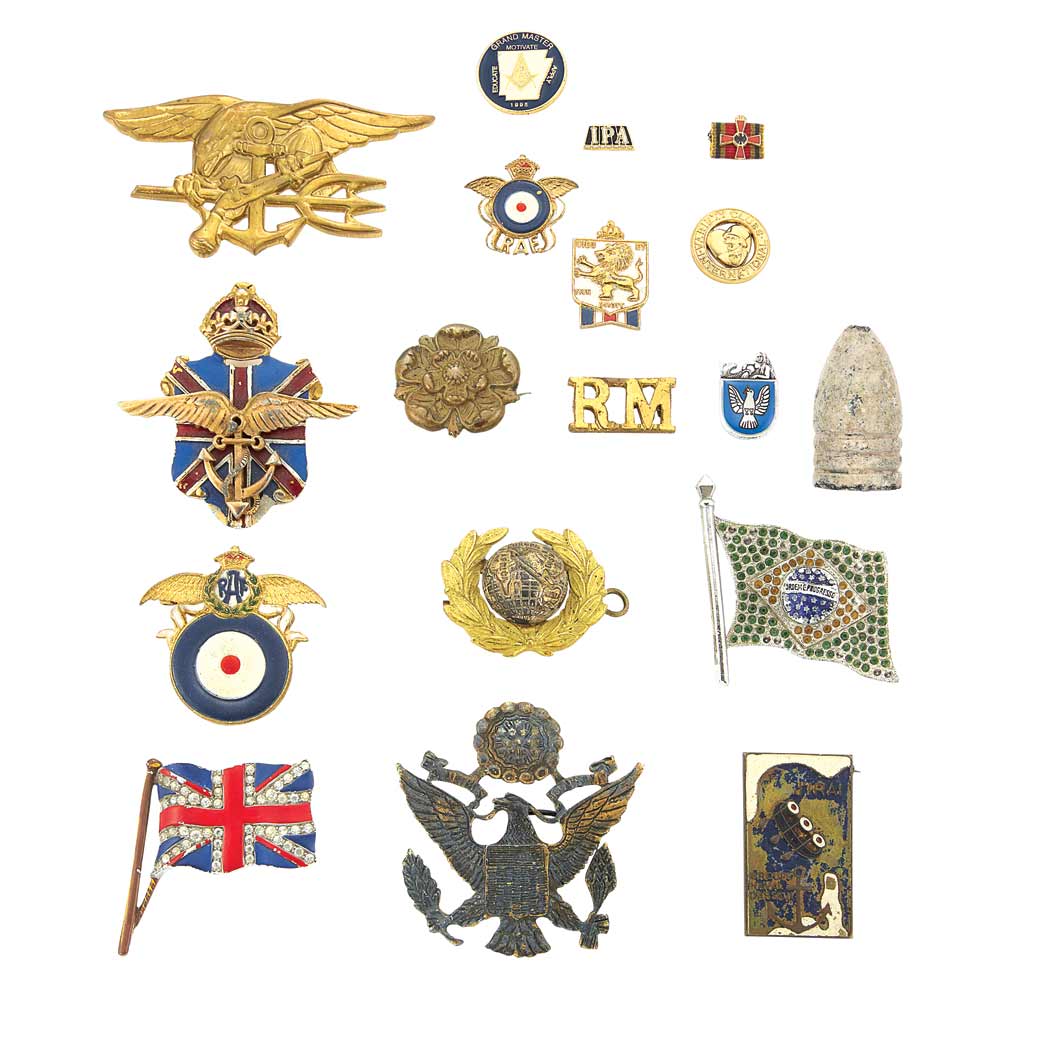
 Decorated war hero, Hollywood star…fan of Lily Pulitzer resort wear?

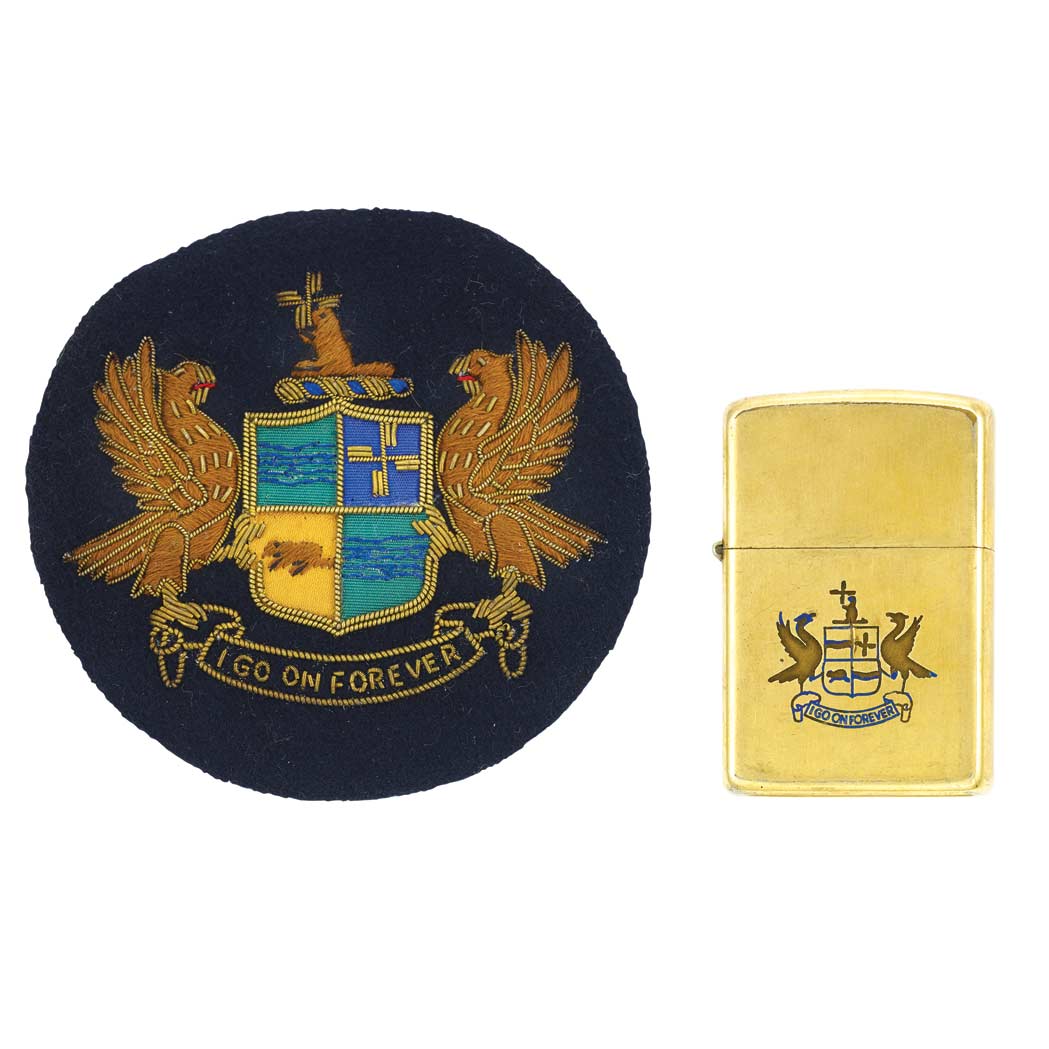 Brook Club crest and lighter
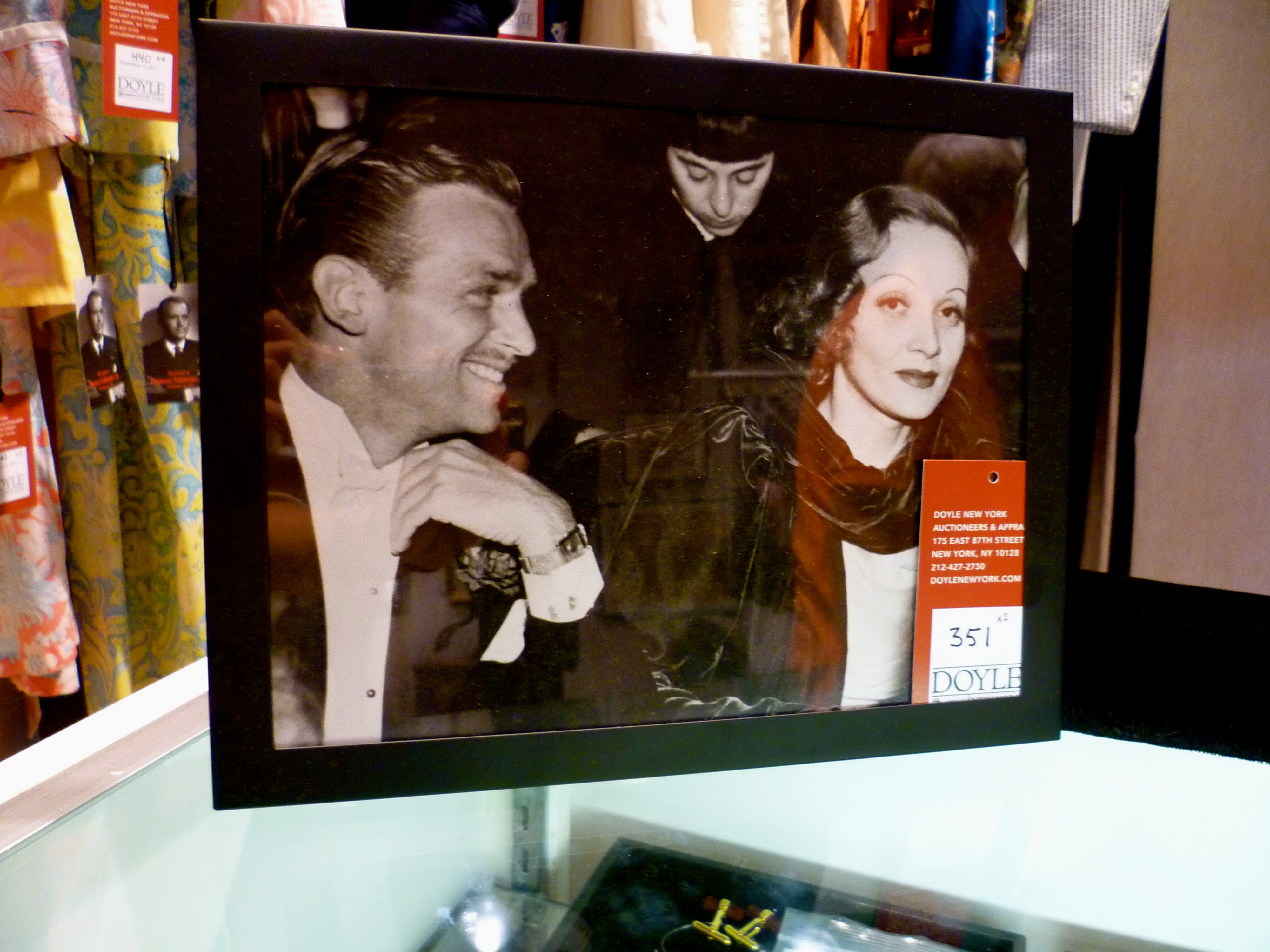
 Patek Philippe Gold Wristwatch
Grouped with below photo of Fairbanks wearing the watch, with Marlene Dietrich

 Images via QC, LIFE and Doyle New York

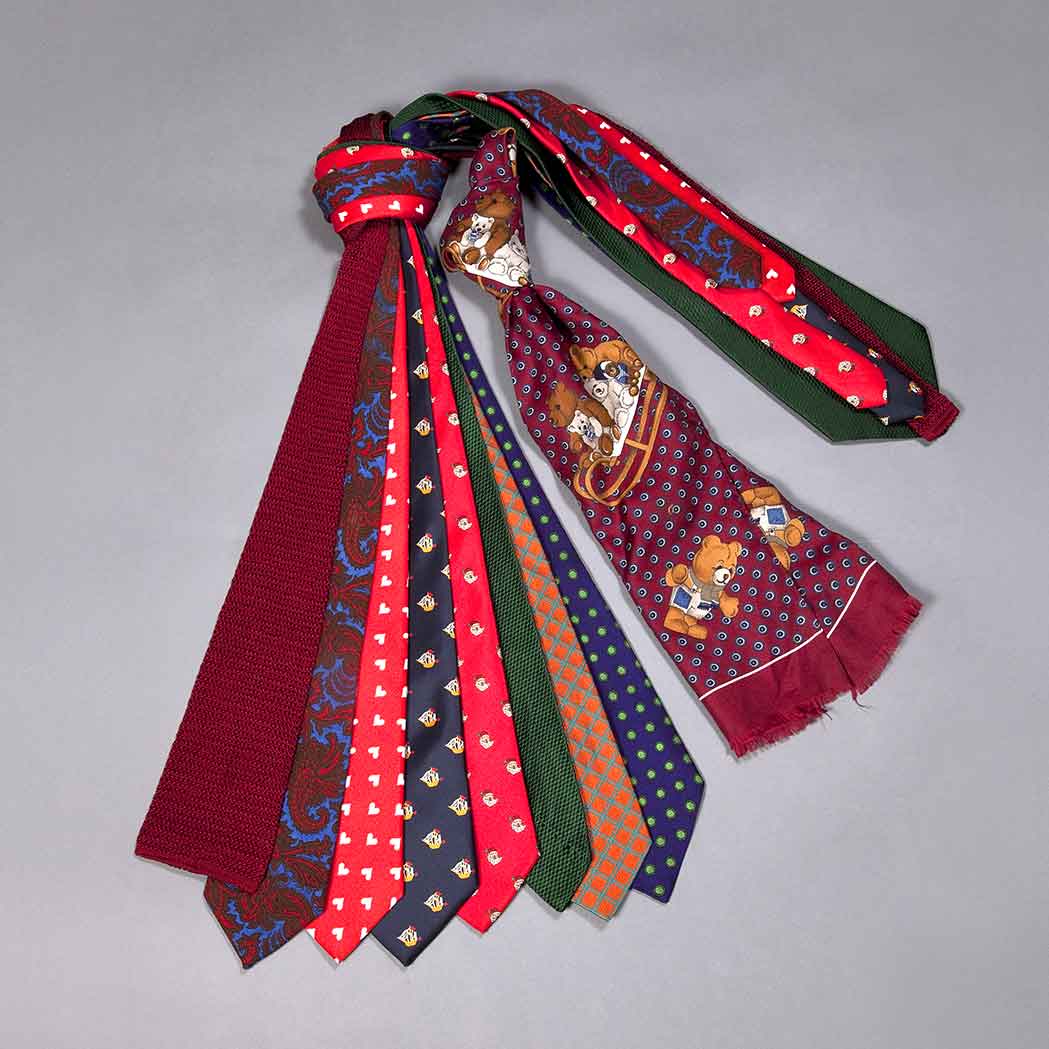
Some of the lots are estimated to go as low as $100 – $200, like these ties pictured above. So if old Hollywood, fine menswear and classic personal accessories appeals to you, you may want to mosey over to Doyle New York tomorrow morning and see what’s what. Or perhaps place a bid from afar. Just don’t you bid on anything that I have my eye on…
The Estate of Douglas Fairbanks, Jr.
Auctioned by Doyle New York
View the full catalog here
 Quite Continental