Summer on the Cape
03/08/2012 § 1 Comment
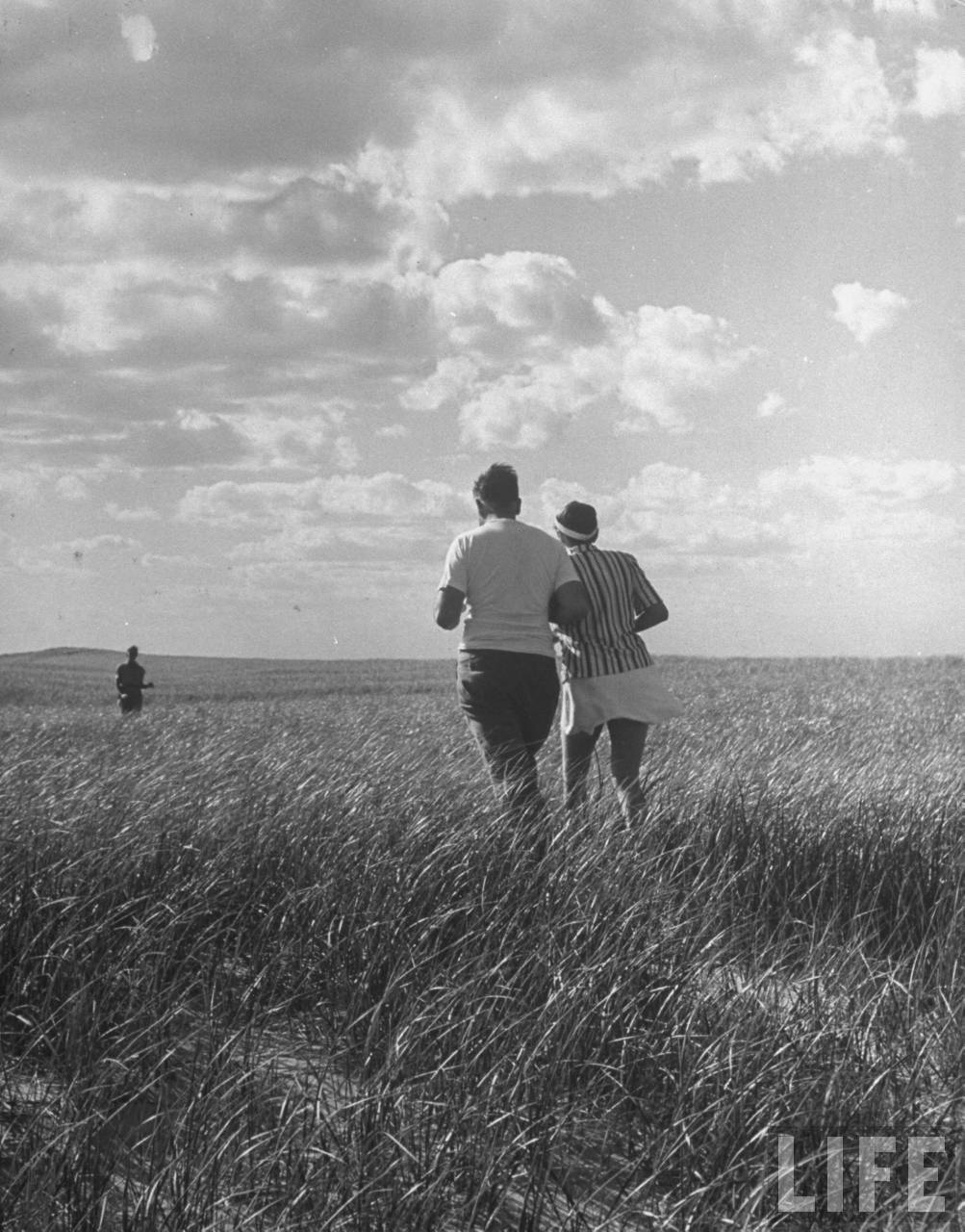
For a perfect summer on the Cape, you’ll need some pretty sailboats, a few rainy bike rides, wavy fields of tall grass, a clambake on the beach, and an overloaded jalopy. For best results, serve over ice in a highball glass and garnish with a gaggle of Kennedys.


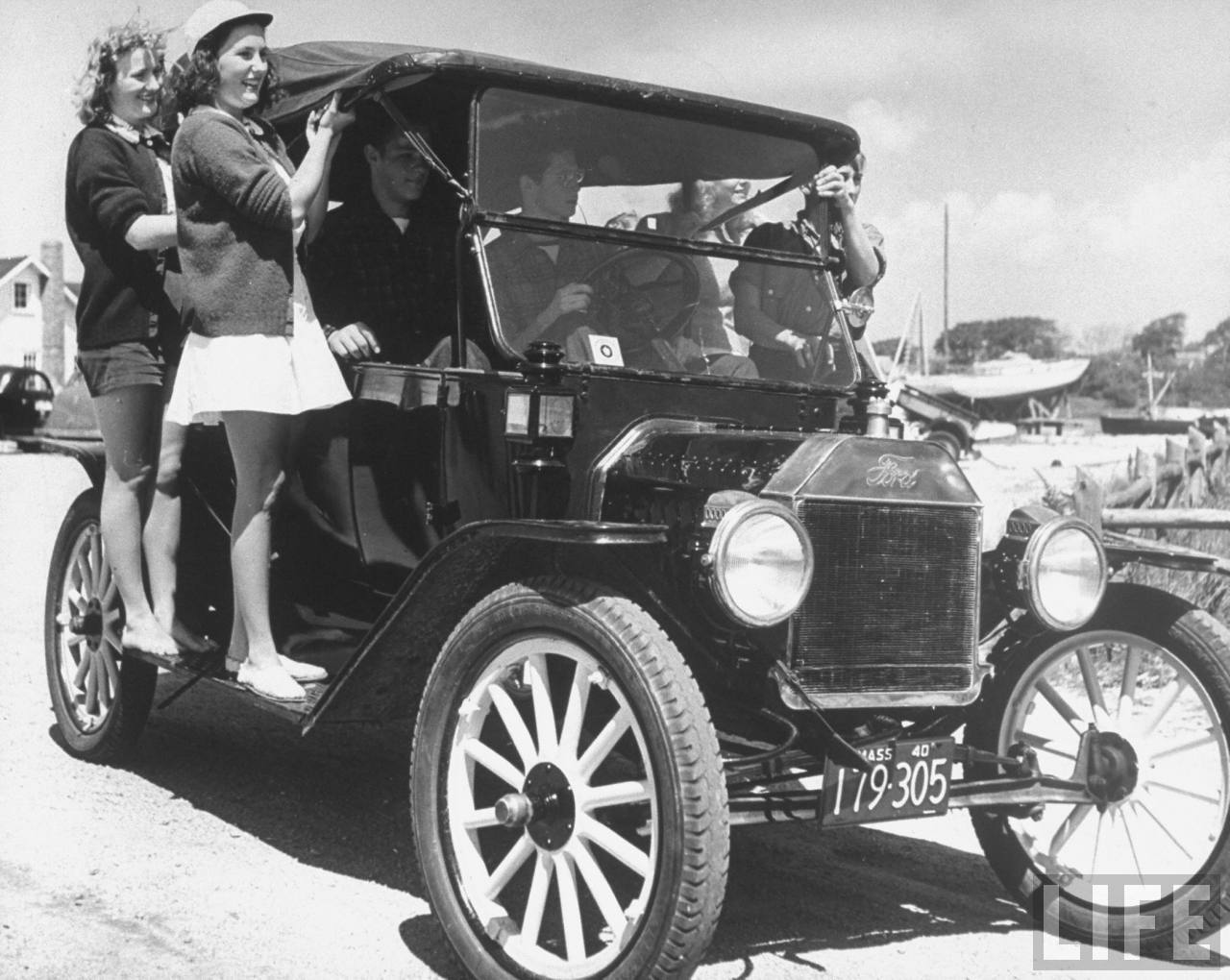


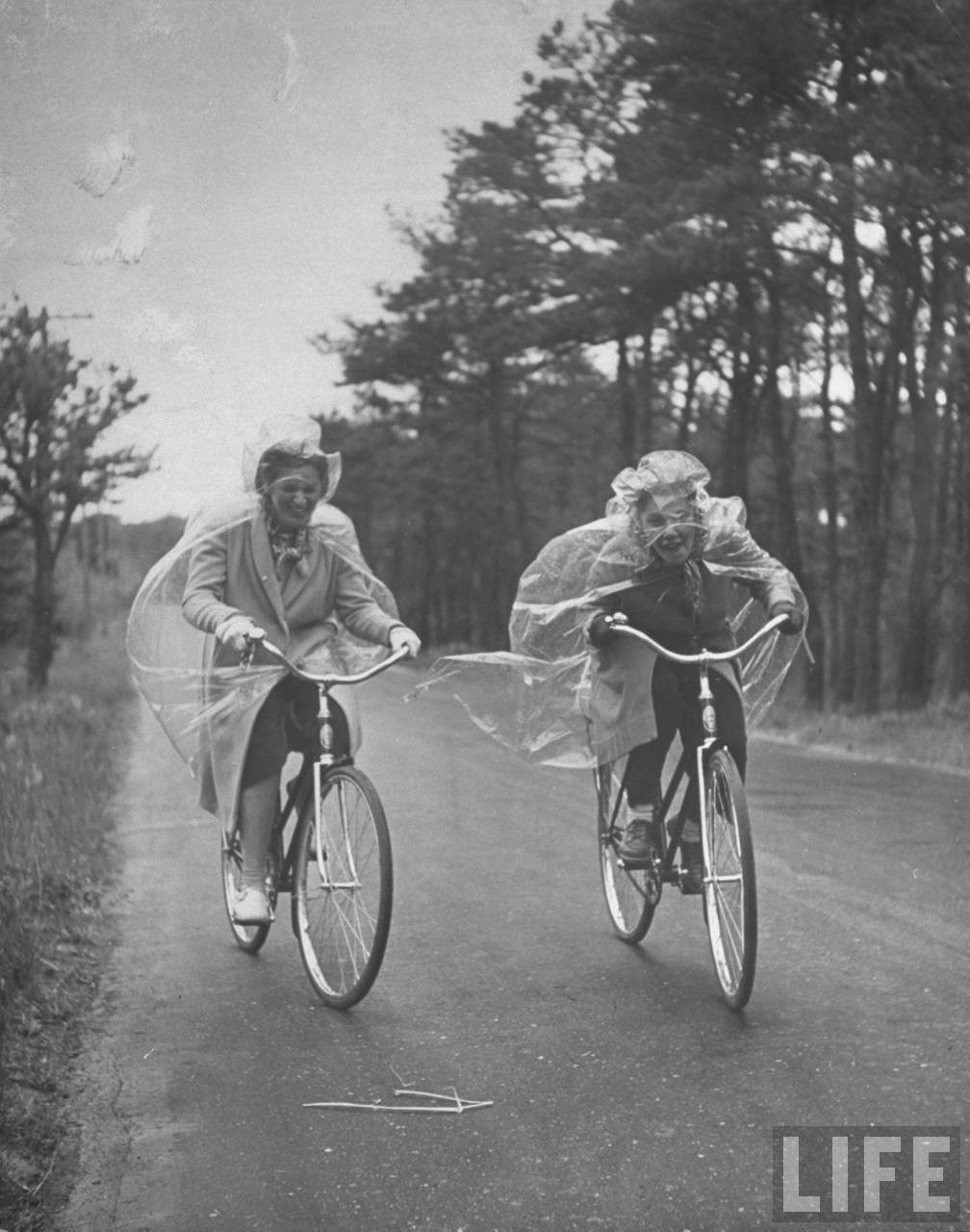


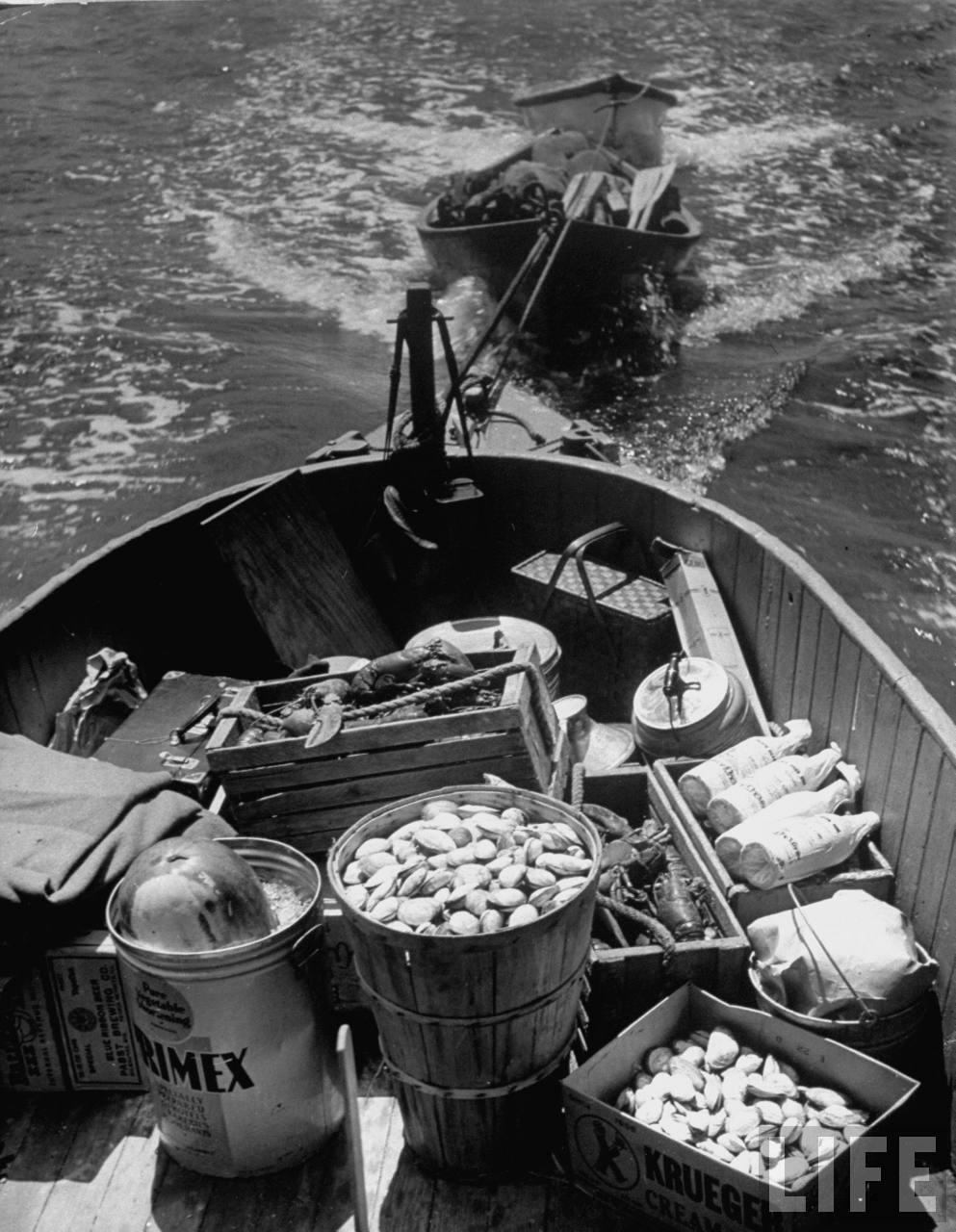
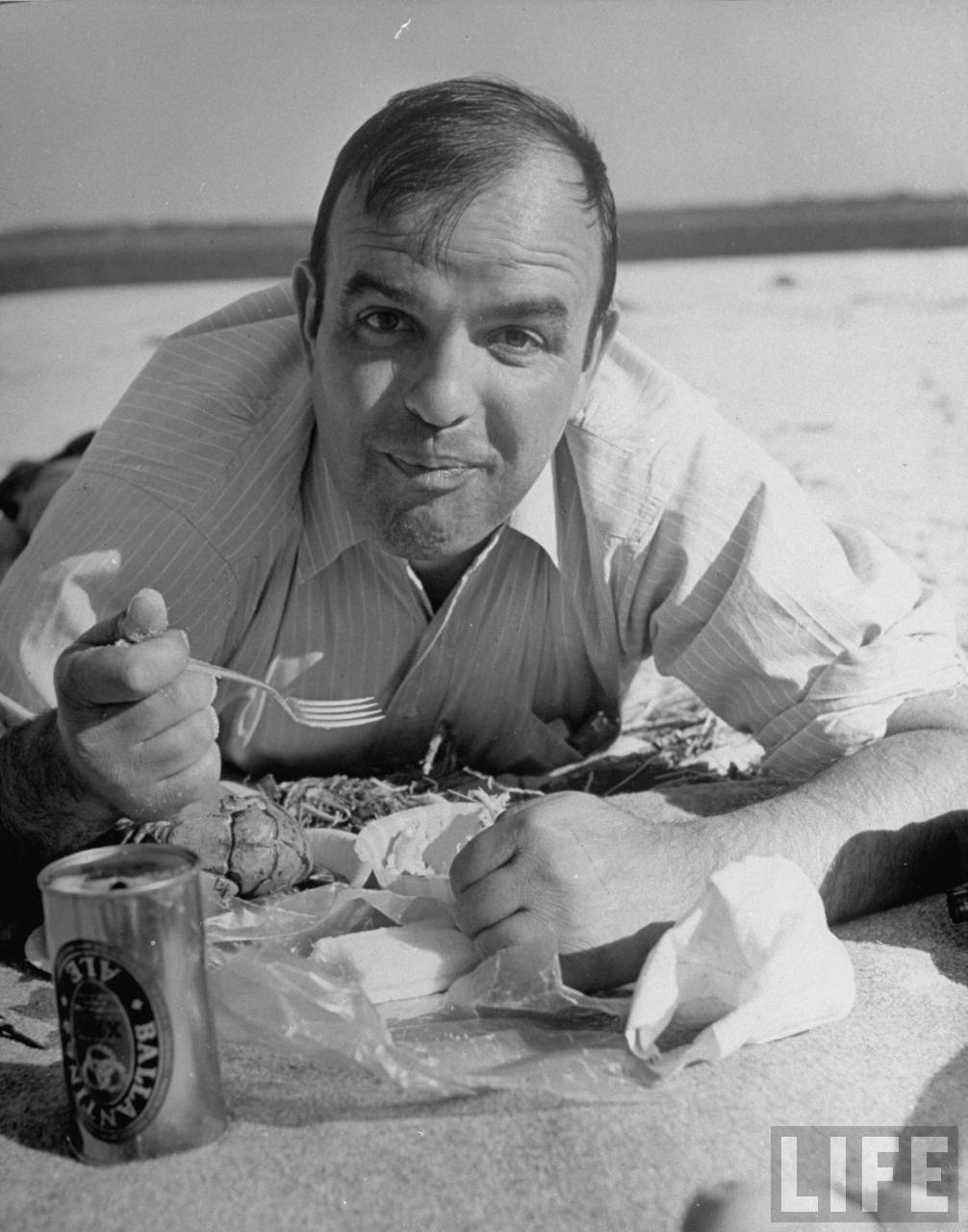

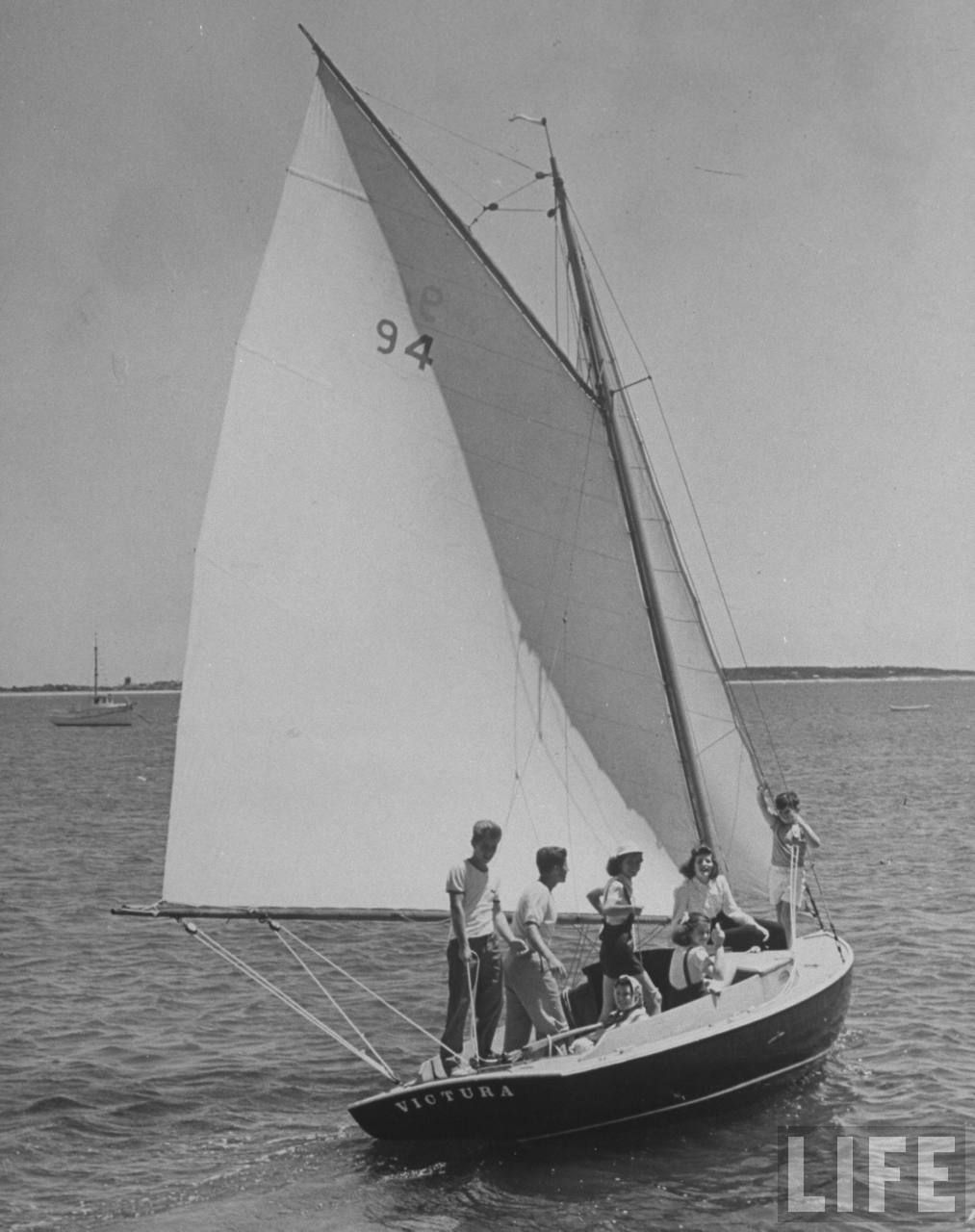

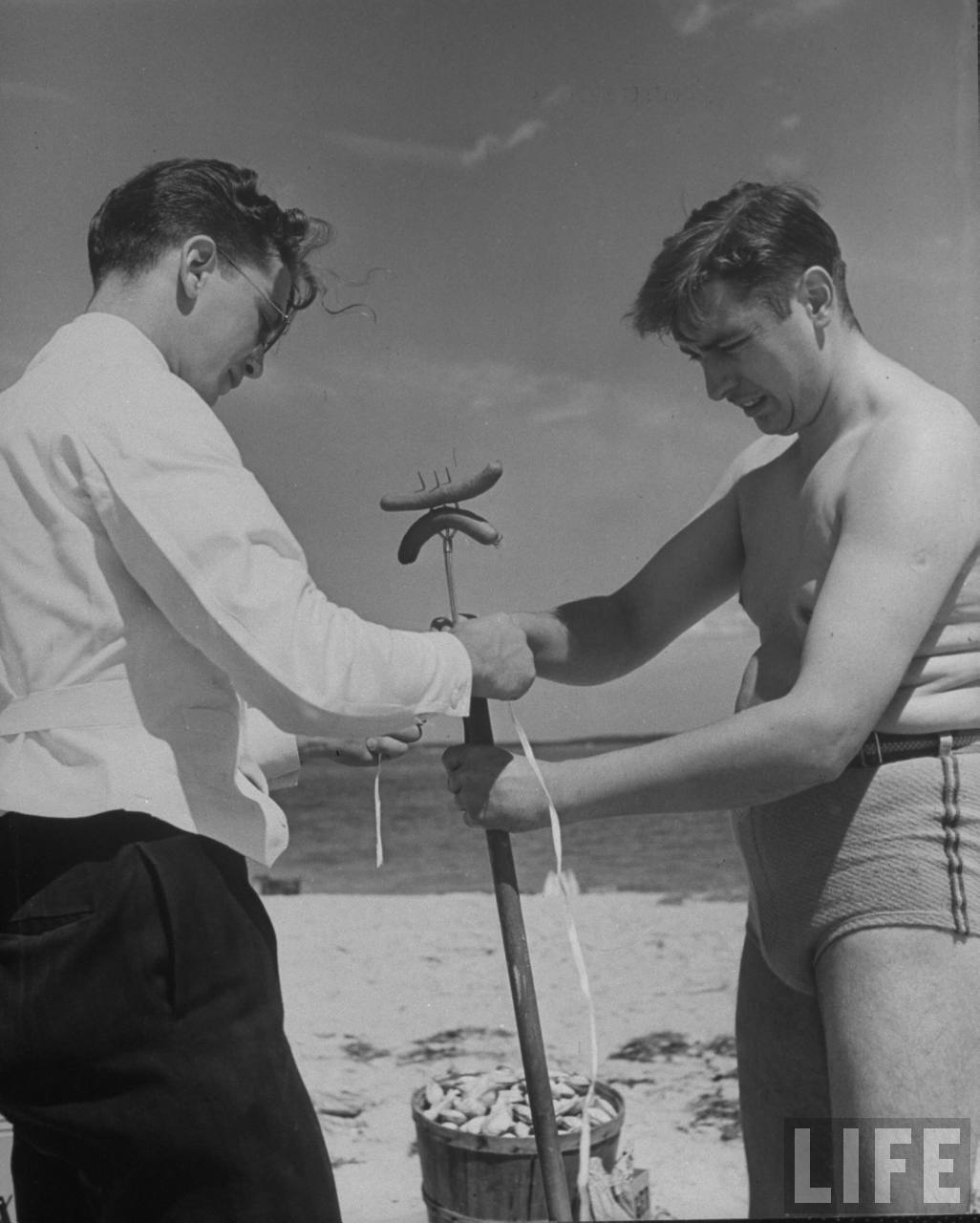


Photos by Alfred Eisenstaedt for Life Magazine, 1940. Via the Life Archive.
Summer Storm
31/07/2012 § Leave a comment

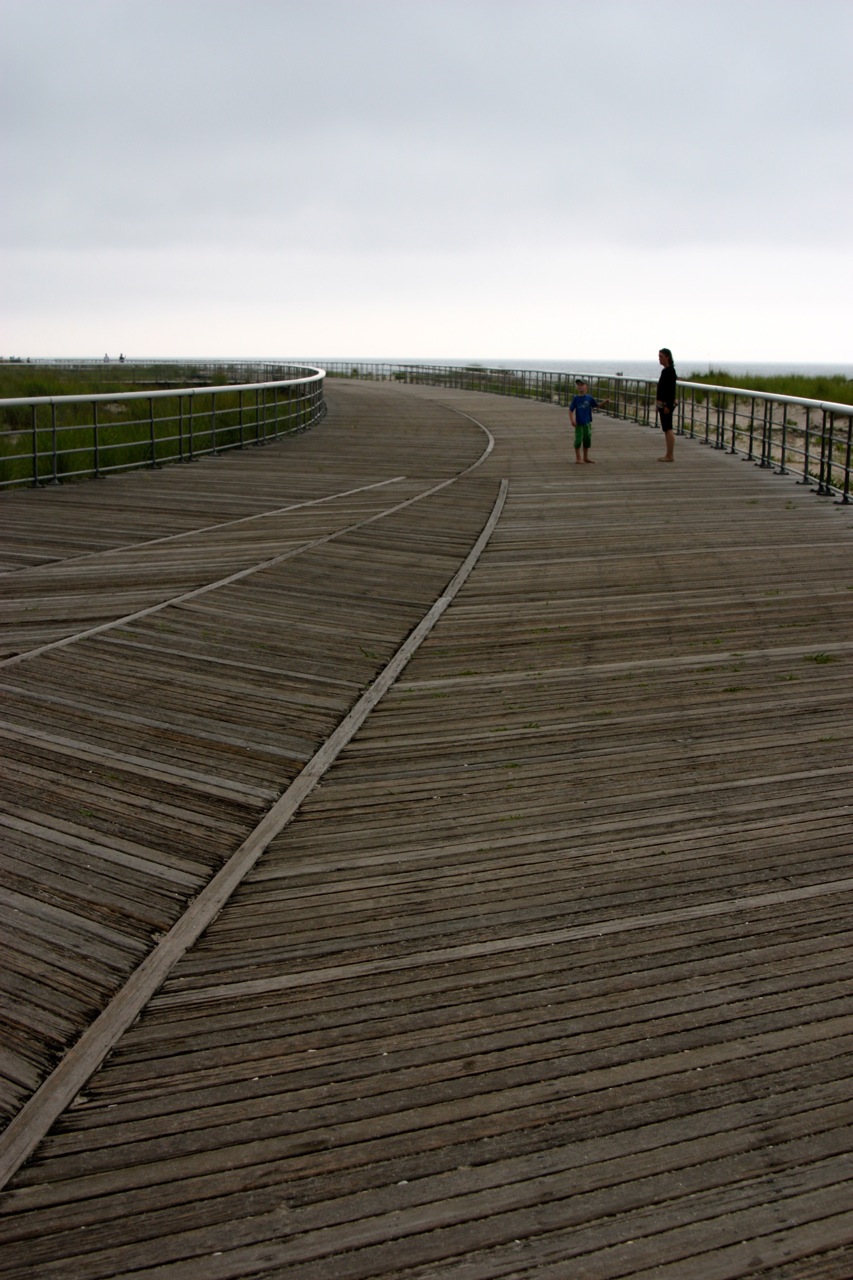
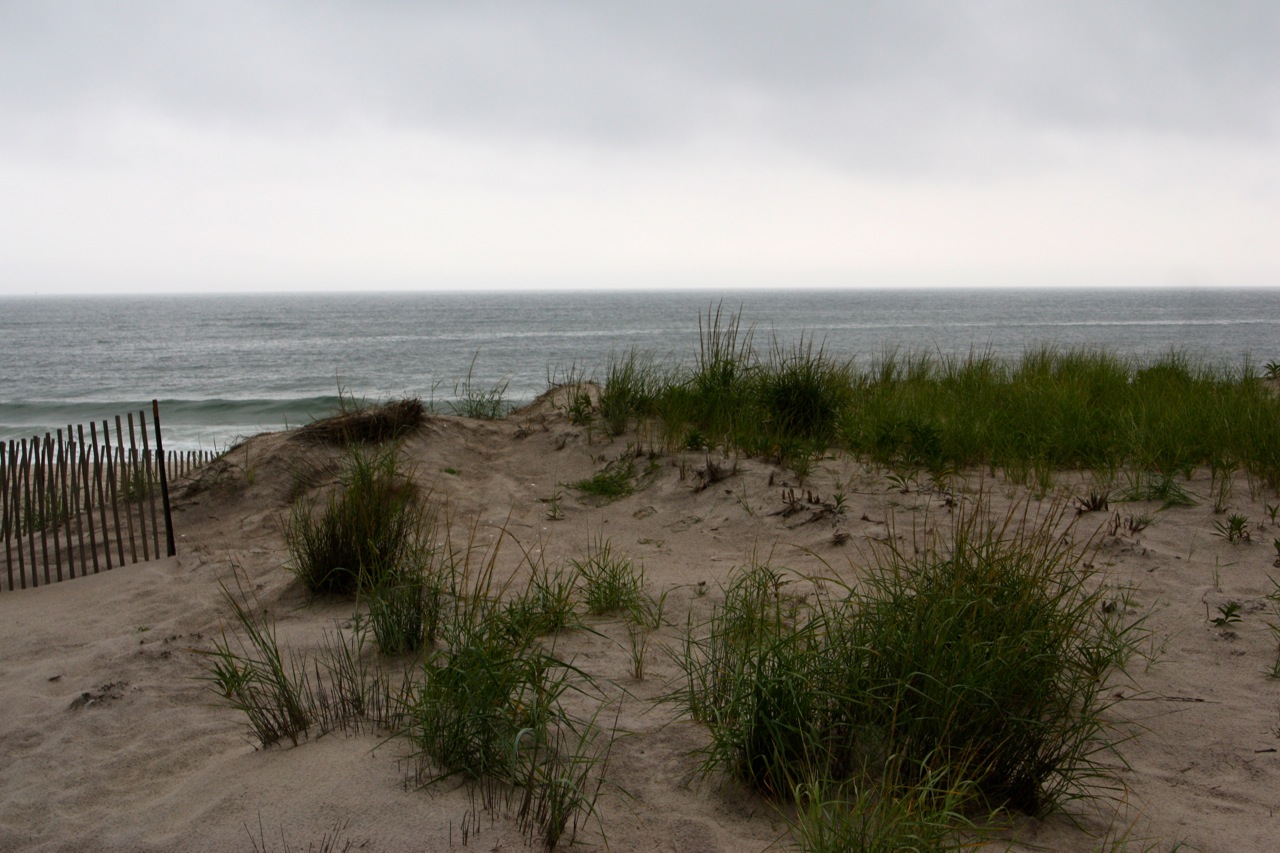
A few pictures from this Saturday past. While a terrific storm was promised, it didn’t manage to dissuade us from our plans to venture out to the beach. And while there wasn’t much sunlight to be had, Mother Nature did present us with some strong waves and beautiful — albeit foreboding — clouds. It was a beautiful, foggy beach day, and by the time the sky opened up, we were safe and sound and already on our way home. A perfect day.







Summering with Patti and Keith
30/07/2012 § 2 Comments

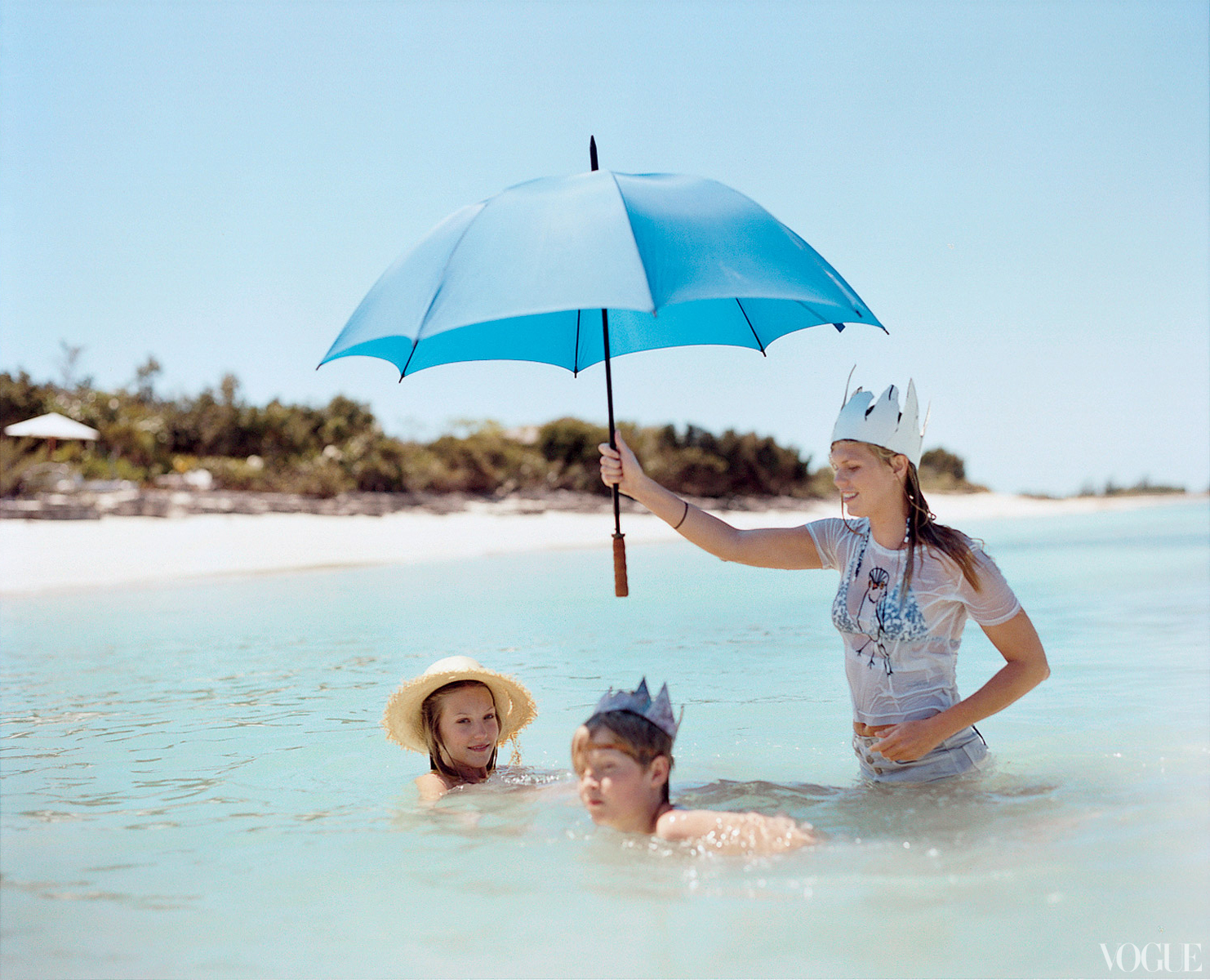
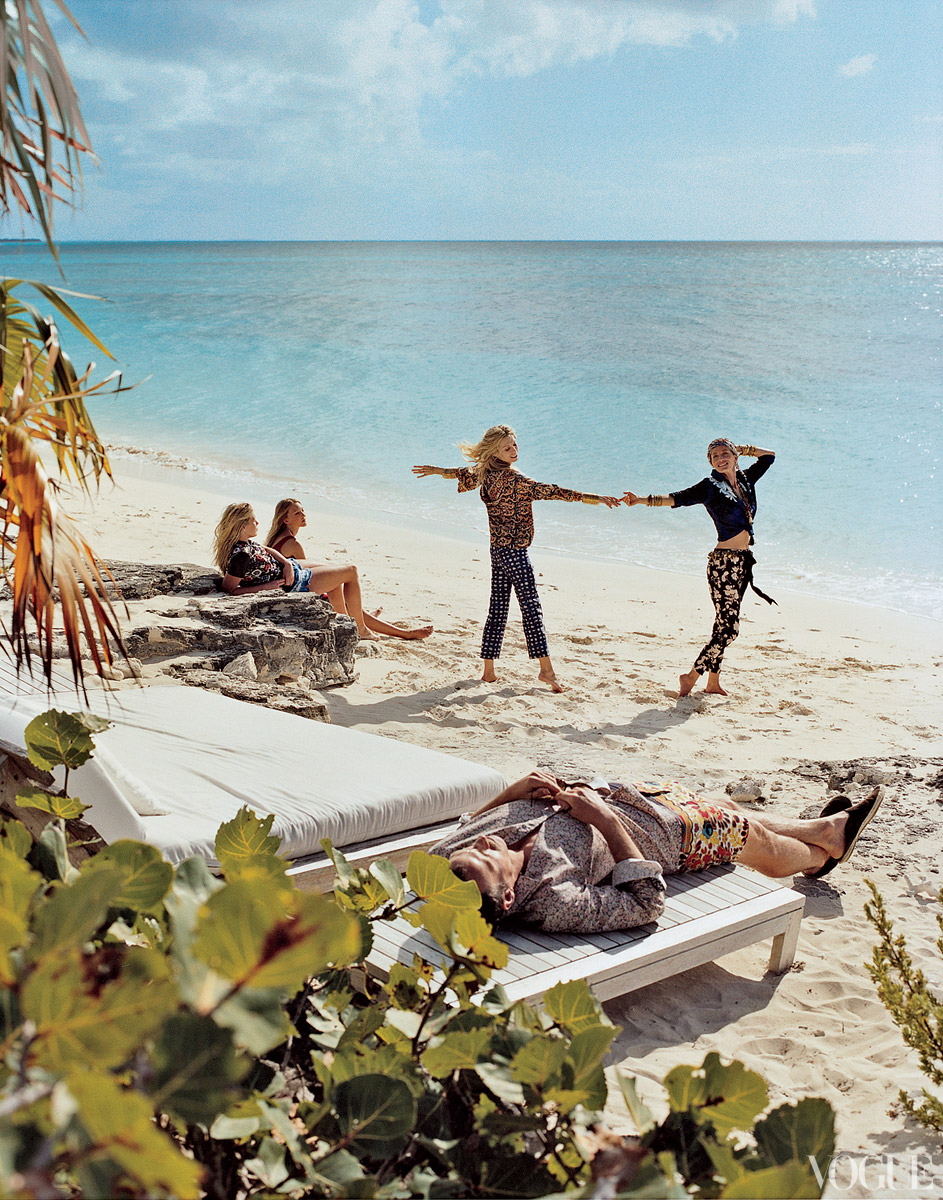
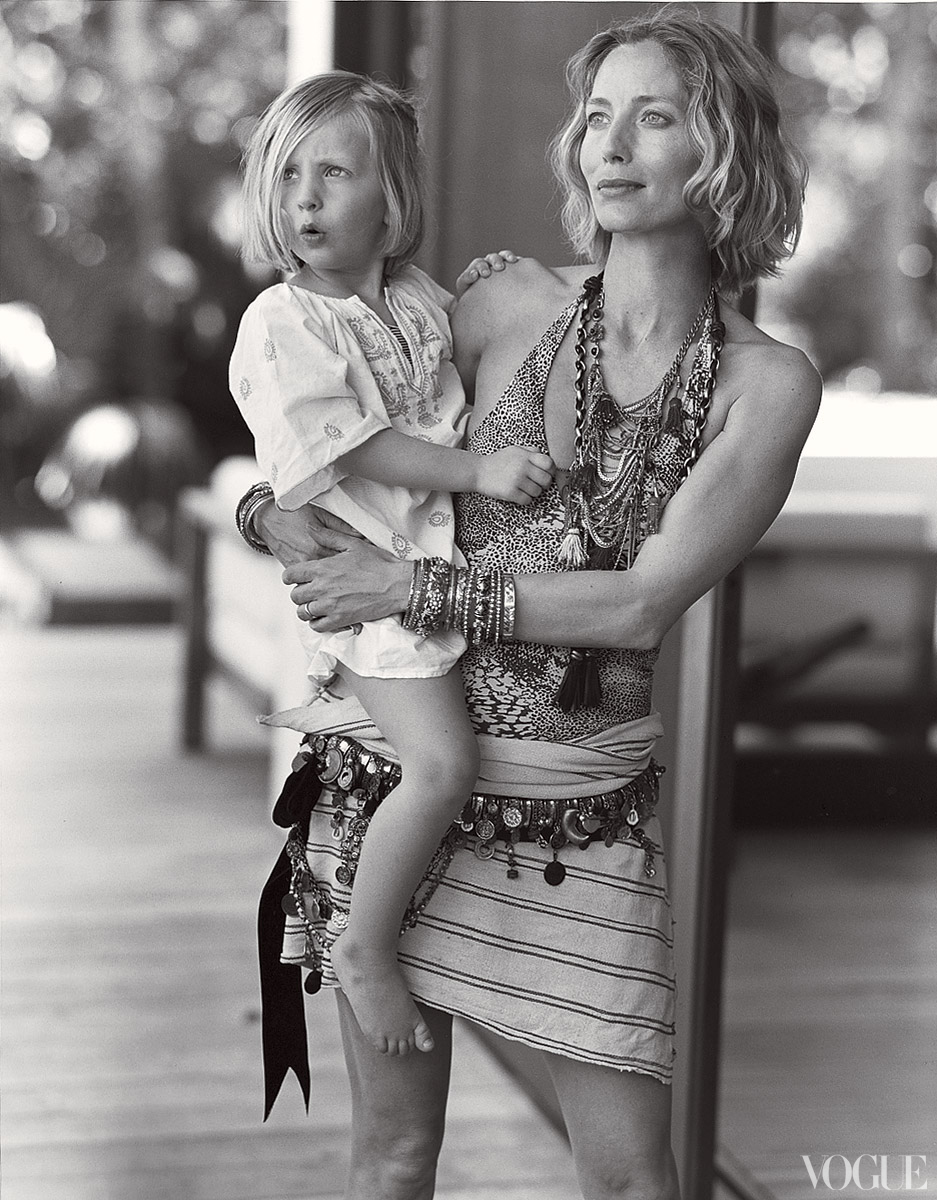
This summer, Keith Richards and Patti Hansen invited Vogue to visit their private retreat at Parrot Cay in the Turks and Caicos, and the photos (taken by Bruce Weber, who is one of my favorite photographers) detail a lovingly chaotic Caribbean summer full of sun, sarongs, kids and grandkids — with a decidedly bohemian flare. But really, what else would you expect?

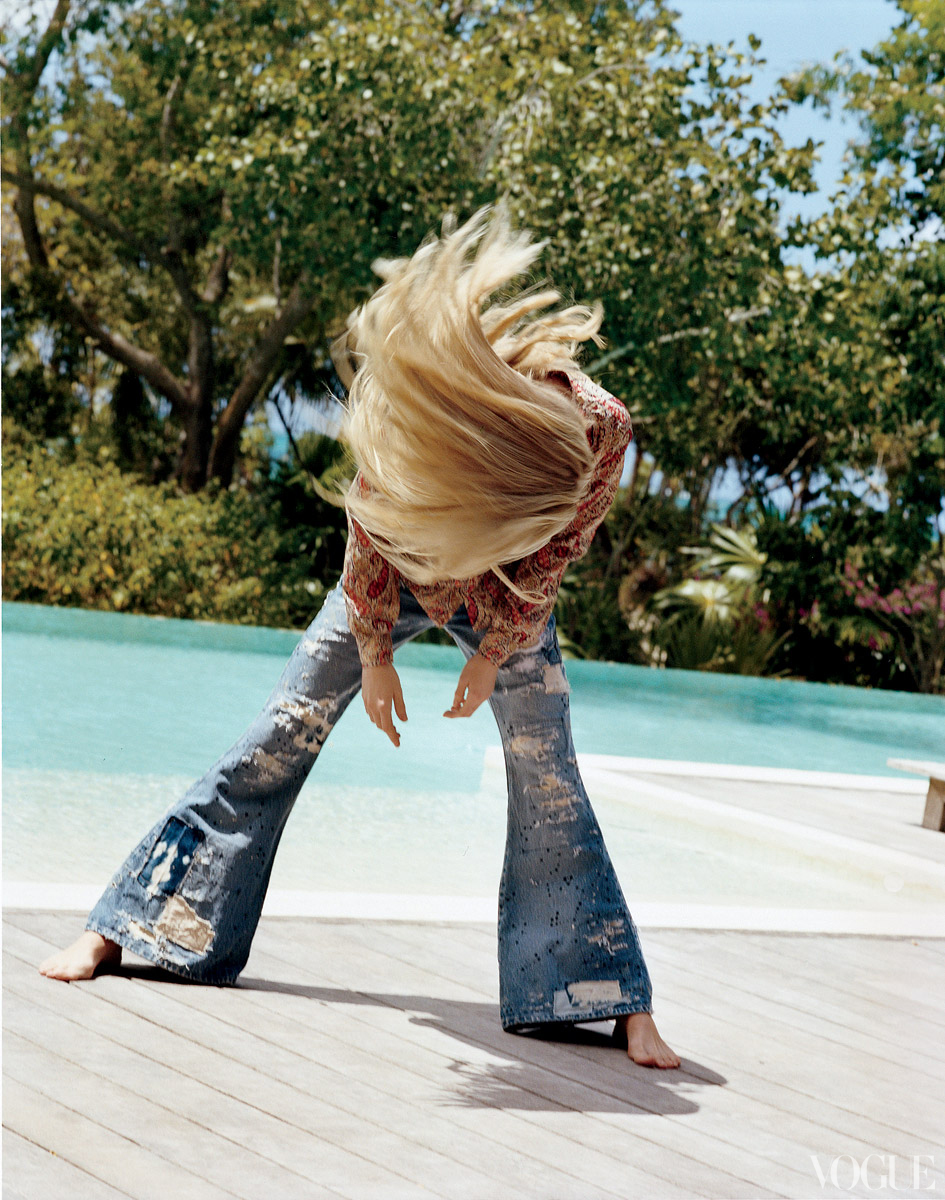


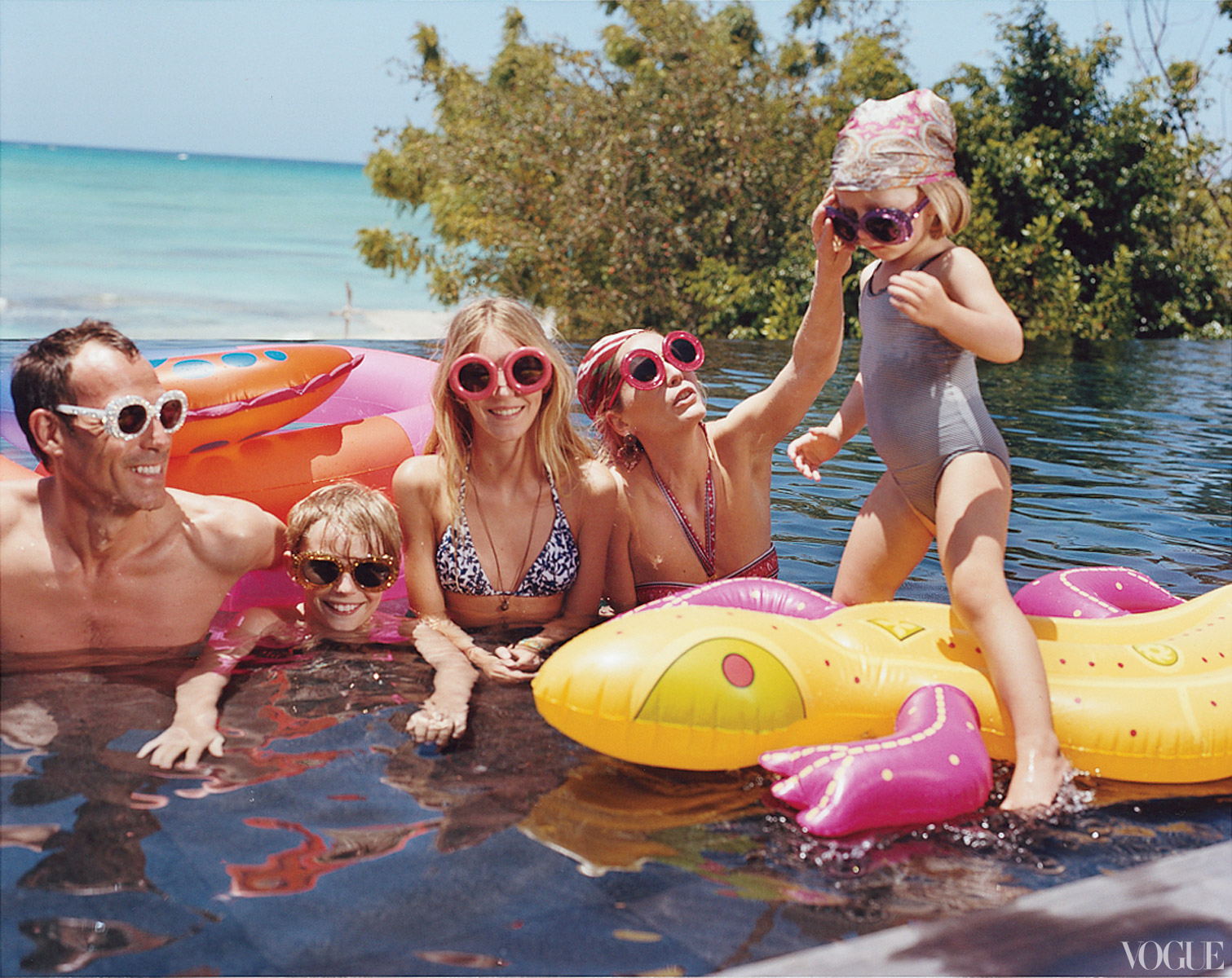


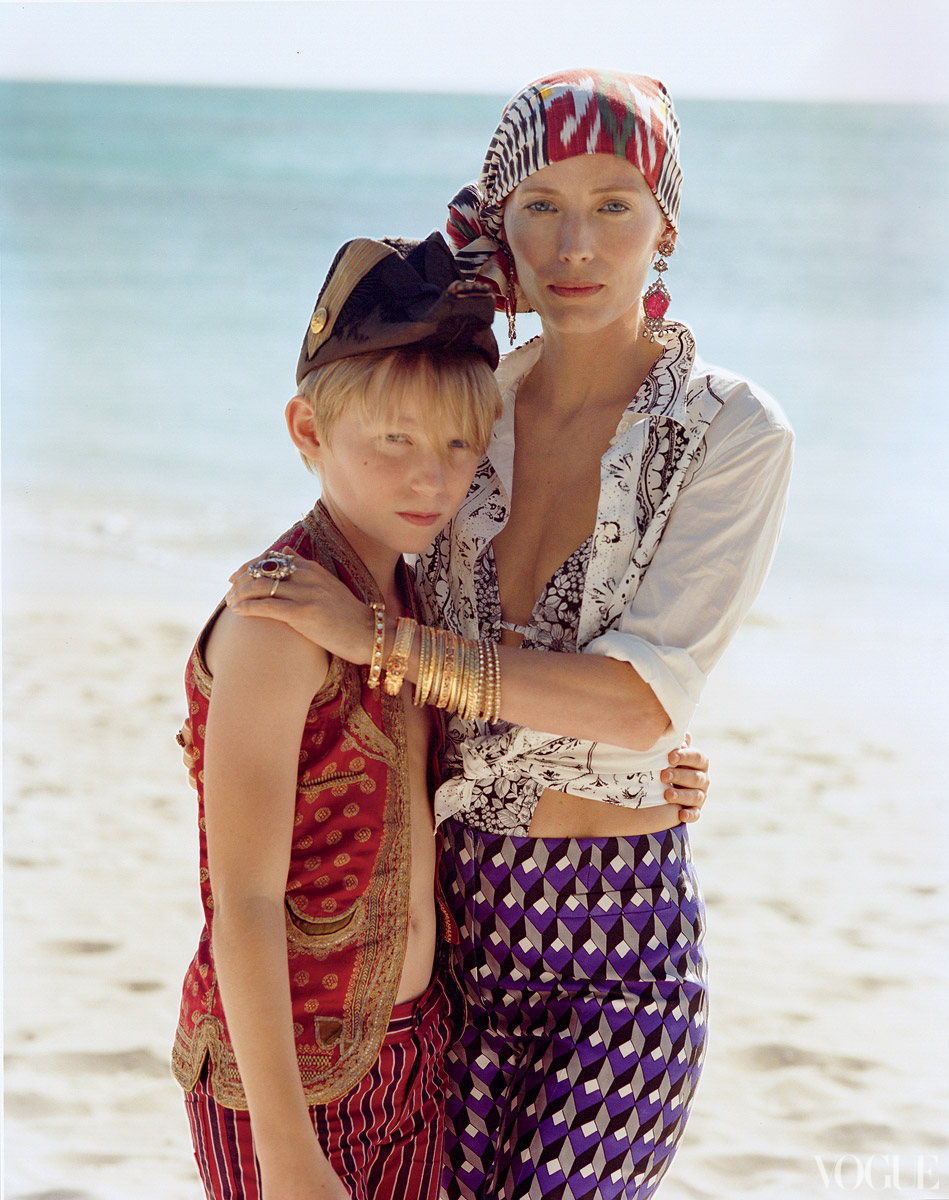


So. Much. Fun.
I’m hopeful my invitation is forthcoming…
All images via Vogue.
Daughter of a Deb
25/07/2012 § 1 Comment

The idea that girls require guidance and education in order to become women — scratch that, to become proper ladies — is the foundation of charm school. You might recall we discussed this concept in February. I talked about how I saw value in the model, girls and women coming together in the name of self-education and improvement, but I disagree with the emphasis most of these institutions placed on being pretty, perfect baking skills or being a good wife. To hell with all that. And so, that’s why I created the Quite Continental Charm School, a modern guide for modern women to create their most charming life.
And while I might have turned the concept of charm school on its head for my own purposes, I still remain fascinated by all the traditions that prepare and commemorate a girl’s transformation into a woman, like the Bat Mitzvah or the Quinceañera. Growing up, I was none too interested in all of that Sweet Sixteen stuff, but I wasn’t able to completely escape the allure of the tradition. Perhaps it’s because I am actually the daughter of a “deb.”
What’s a deb? Historically, American debutantes were girls who had reached the age of maturity and were newly eligible to be married. As part of a formal — and usually quite lavish — ceremony the girls were presented to polite society (read: upper class) either singly or as part of a group, usually wearing some kind of fancy white ballgown. Fast forwarding a few generations, the deb of my mother’s generation wasn’t primarily intent on catching a husband. Her attentions were instead focused on making an excellent impression in her social circle (on her own behalf, as well as for her family), finding the perfect escort and wearing an amazing dress. While traditions do vary regionally, most debutantes also perform some sort of charity work as part of the process as well.
So, as we might have discussed already, my mother was quite the social butterfly growing up. When I was a young resident of Awkwardsville, living at the intersection of Braces Street and Glasses Avenue, I would often look at the pictures of my mom at one of the many photos of her at a prom or formal — from their sheer number, it would seem like that was all she did in high school — but it was the pictures of her at her cotillion, in that shining white dress, that would always stand out from all the others. What I felt is hard to describe, but I loved them without having any desire to be a deb. I left that to my sister, who seemed to enjoy it. Naturally, to her cotillion I wore a black, backless gown and painted my nails with Chanel’s Vamp. Naturally.
So for a change, I asked my mom to talk a little about what it was like when she was a deb, to hear the story behind the pictures I love so much (which I promise to scan sometime soon):
“The debutante thing was very different in 1965. You had to be invited to participate, and that produced a group of about 35. In the spring we waited with baited breath to see if we were chosen. Selection was based on family, character, and social standing. I was afraid I wouldn’t be chosen because your grandparents were not in the “in” social scene. But we were buddies with Alicia’s family (they were); and Alicia and I were best buds (but she had to drop out because she came down with mono). I was a little younger than the rest of the debs (required age was 17 of a HS senior), but it was the crowd I hung out with (I was 16 and a junior). Announcements were made and the formal tea was held; we wore hats and gloves and our best dresses to tea. In the countdown to Thanksgiving weekend, we were required to attend etiquette classes, We were also required to do a set amount of volunteer hours. I was assigned to the Neuro-Psychiatric Institute at UCLA (NPI). It was interesting. I had to wear a candystriper-type uniform (like a pinafore). I got to see the lab monkeys in their cages (that part was sad). Then weekly rehearsals began around mid-Sept. Mrs. Poole started us of with the waltz and curtsey. After we had that down, they brought in the dads, and then the escorts. The ball was held at the Ambassador Hotel in the Embassy Ballroom (where RFK was assassinated 3 years later). I had a room upstairs where I dressed and some parents hung out after hours. We had an all-night party as a group somewhere else.”
My mother’s debut was organized by the Los Angeles chapter of The Links, an international, non-profit volunteer service organization of women committed to enriching, sustaining and ensuring the culture and economic survival of African Americans and other persons of African ancestry. This year marks the 60th anniversary of the Link’s ball; the first was held at Ciro’s, a famous nightclub on the Sunset Strip, because hotel ballrooms were not available for minority social events in Los Angeles in 1952. So you can imagine how happy I was, finding these pictures in the Life Archives. While these debutantes in 1950 are 15 years earlier than my mother’s era, and a good fifty years earlier than my sister’s, there are constants: the puffy white dresses, the elbow-length gloves, the proud parents, the nervous escorts, the pomp and the circumstance.
The photos, shot by Cornell Capa for Life Magazine, capture Harlem’s very first large-scale “negro debutante cotillion,” organized by Mrs. Lillian Sharpe Hunter, a prominent social-event promoter. If you would like to read the article — and there’s a great shot of the Rockland Palace Ballroom where all 52 girls debuted in front of an audience of 4,700 that you must see! — you can find it here.
(Above, L-R) Debutantes Joan Greene, Carole Mc Kenzie, Marian Romain,
Lois Mc Laughlin and Marcia Miller posing in their dresses.
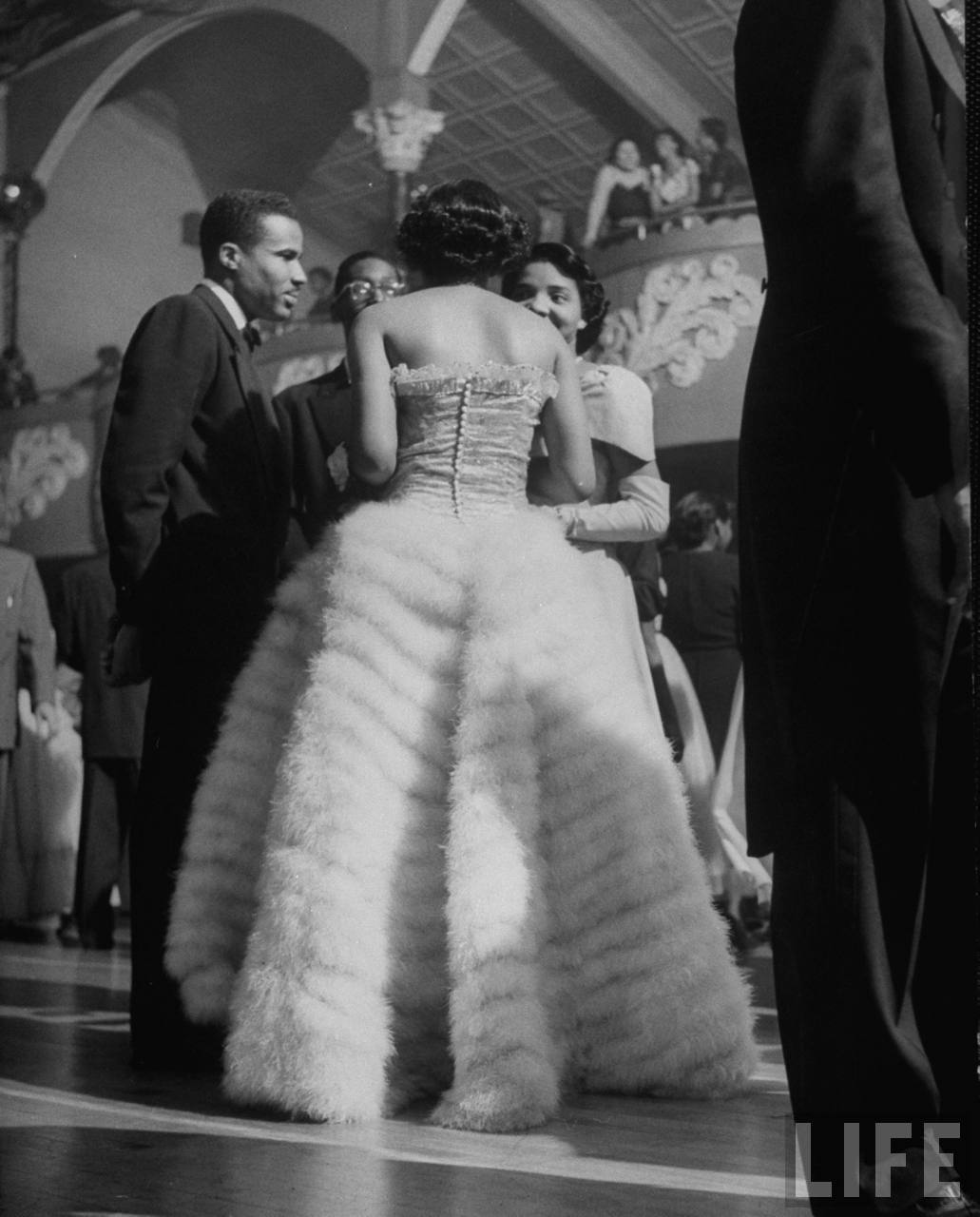 Debutante Marilyn Lowe wearing a dress made
from feathers during the debutante cotillion.
 Patronly shriners, members of Brooklyn’s Eureka Temple No. 10,
who sponsored debutante Joanne Norris during the debutante cotillion.
 Ushers holding seating lists during the debutante cotillion.
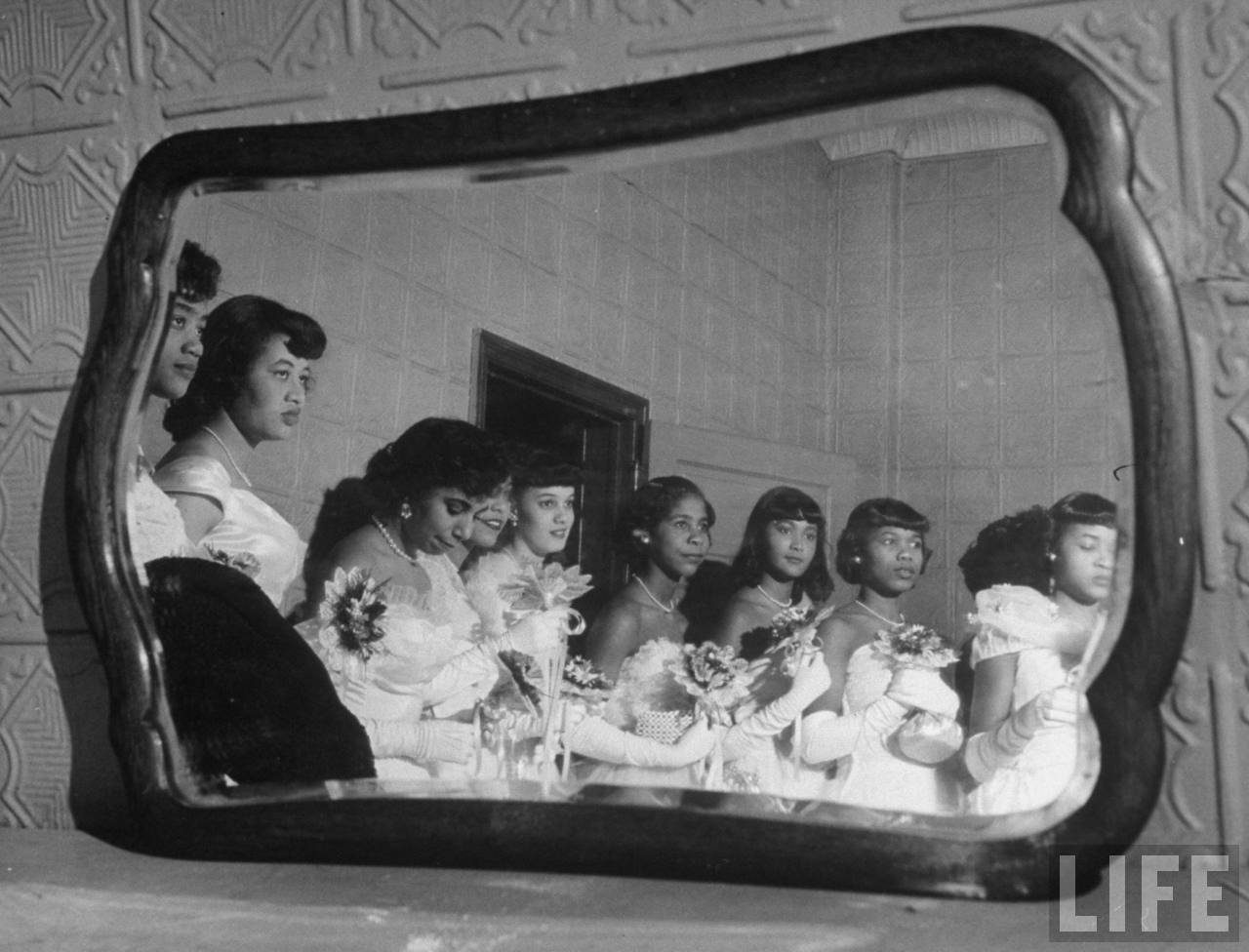 Girls waiting to go downstairs for the debutante cotillion.
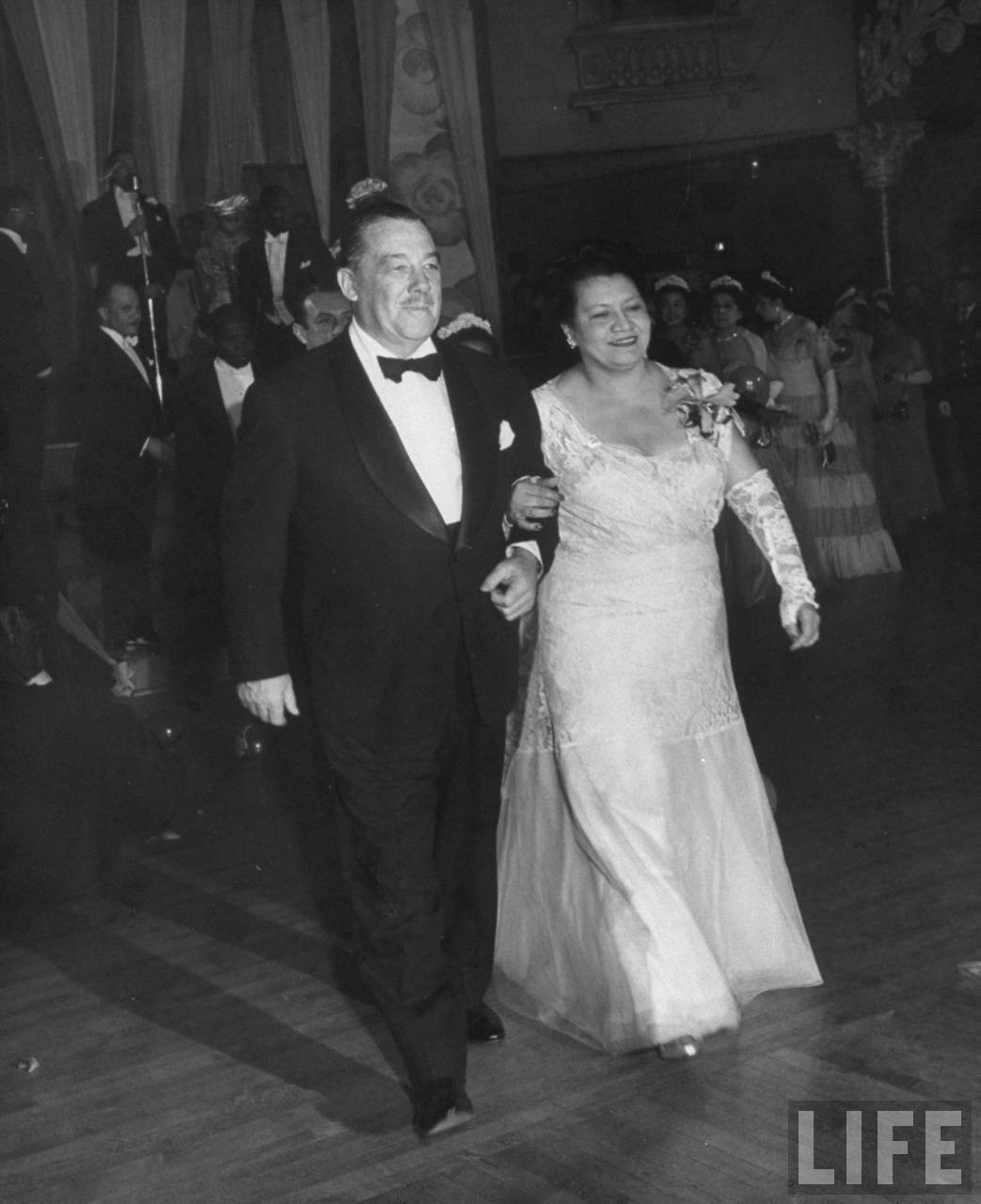 Grand March is led by Mrs. Lillian Sharpe Hunter and the
guest of honor Grover Whalen for the debutante cotillion.
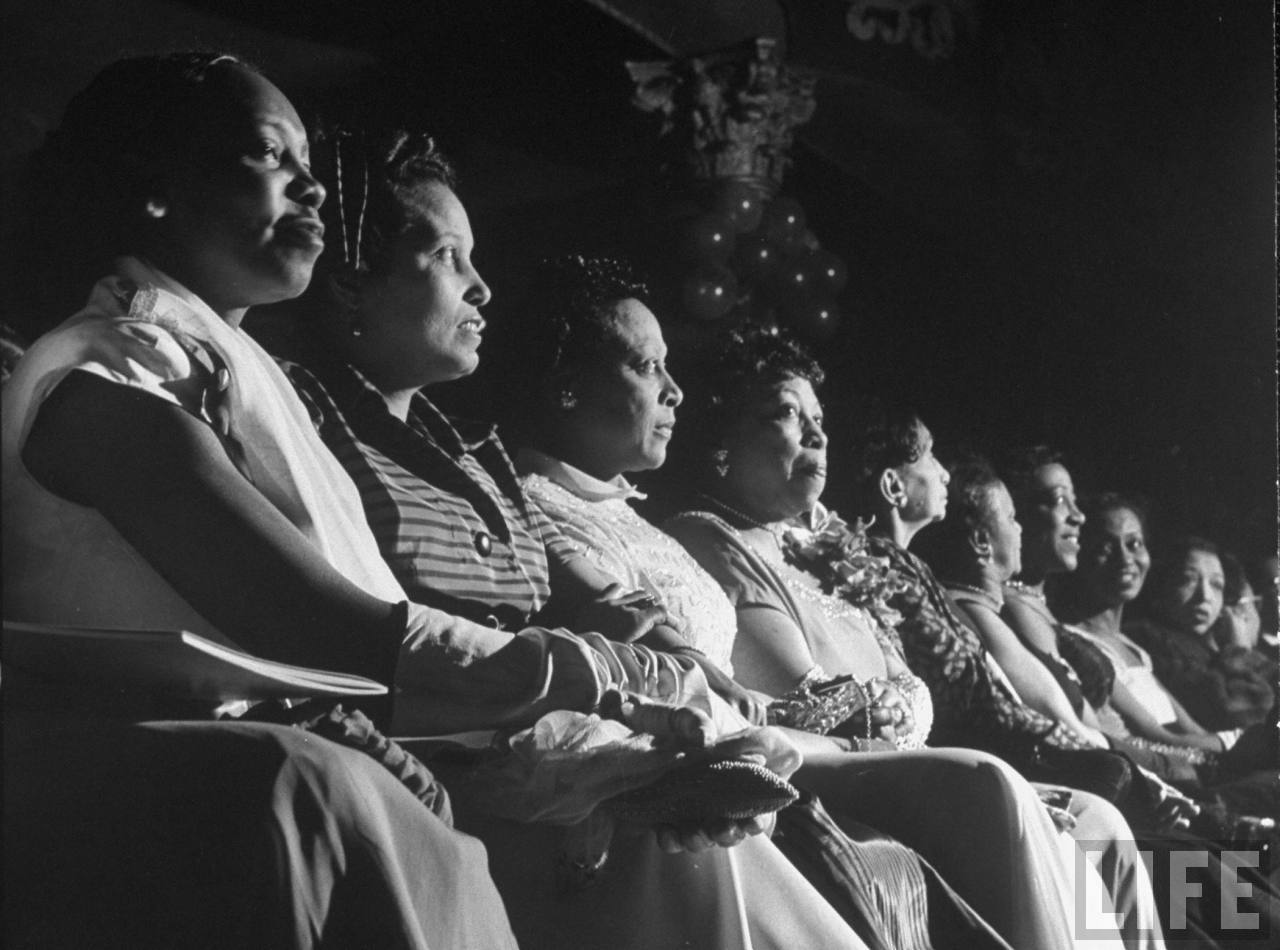 Matronly organizers and committee members
look on during the debutante cotillion.
Were you a deb too? I would love to hear your story!
The Quite Continental Charm School
A modern guide to creating a charmed life
The Dandy, The Rockstar & The Gentlewoman {Style Icons: Janie, Esther & Jeeyong}
17/07/2012 § 7 Comments

Janie Cai, Esther Quek and Jeeyong Kang.
Three amazing women, three distinct senses of personal style
that are heavily influenced by menswear.
Believe me when I say serious. girlcrush. (times three).

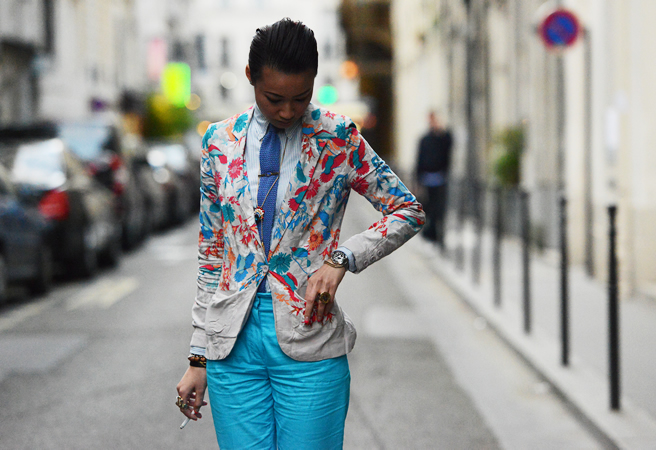
The Dandy — Janie Cai, fashion director, Esquire Singapore.
Janie is a lady who loves a good hat and a statement lapel (or accessory). She’s eternally smiling — something of a rarity for streetstyle subjects — and her kits always feel like so much fun. I’m especially digging her new haircut.

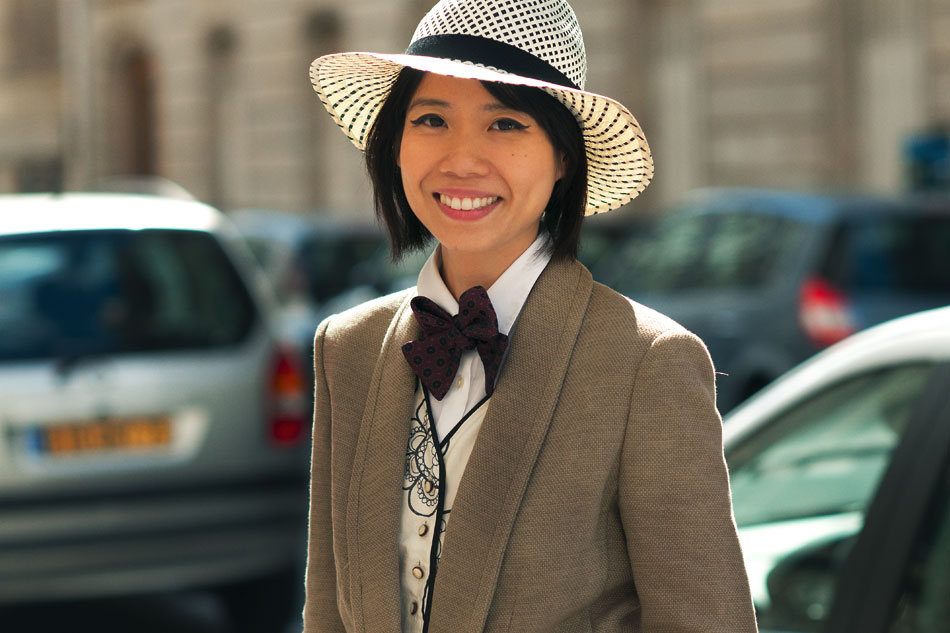


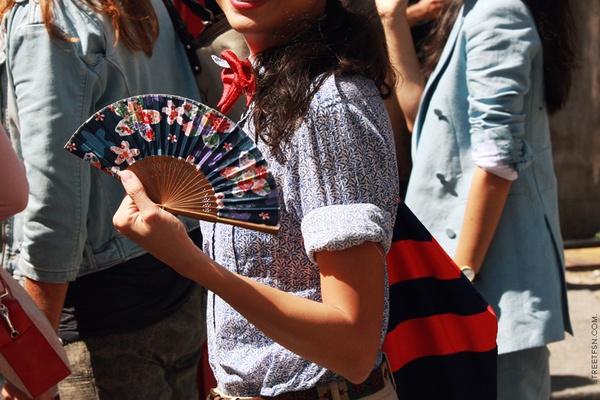

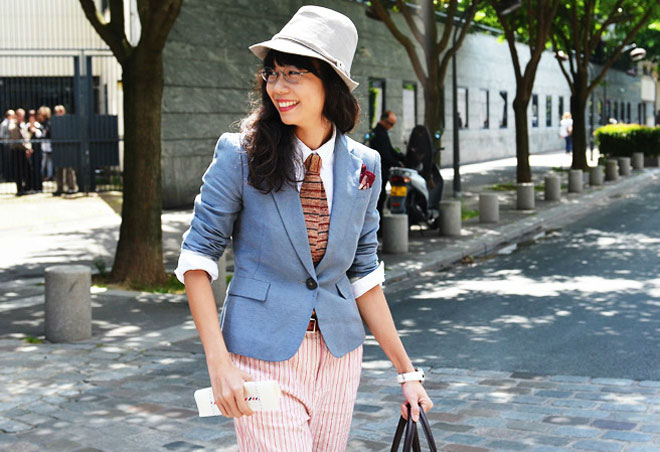
 From Janie, take a carefree attitude and a love for nattily mixed textures…
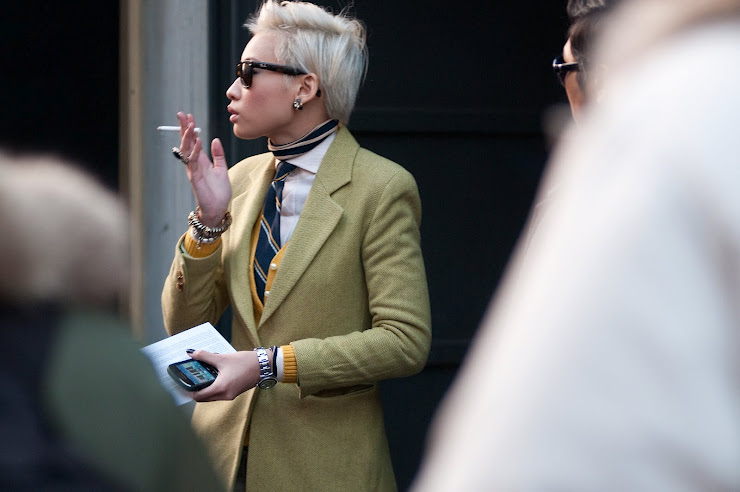
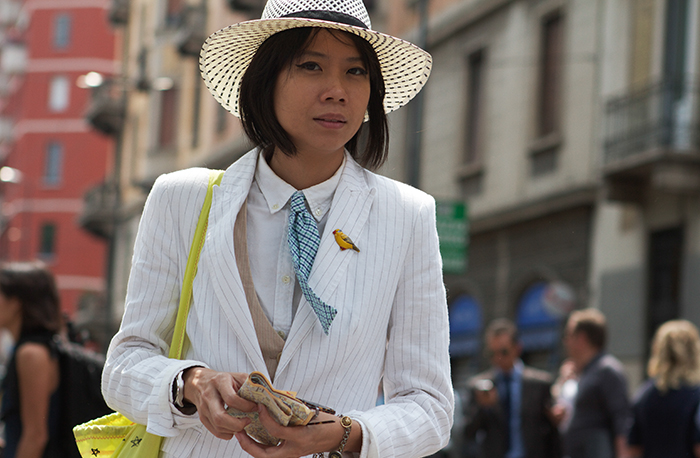
The Rockstar — Esther Quek, fashion editor, The Rake.
Esther’s self-assured composure and amazing hair choices have me a bit intimidated, even from pictures. But I love it. She is a master of the necktie — and did you notice her tie bar game? So, so good. I love her approach to layering and pattern-mixing — and her omnipresent dark glasses? Completely badass.


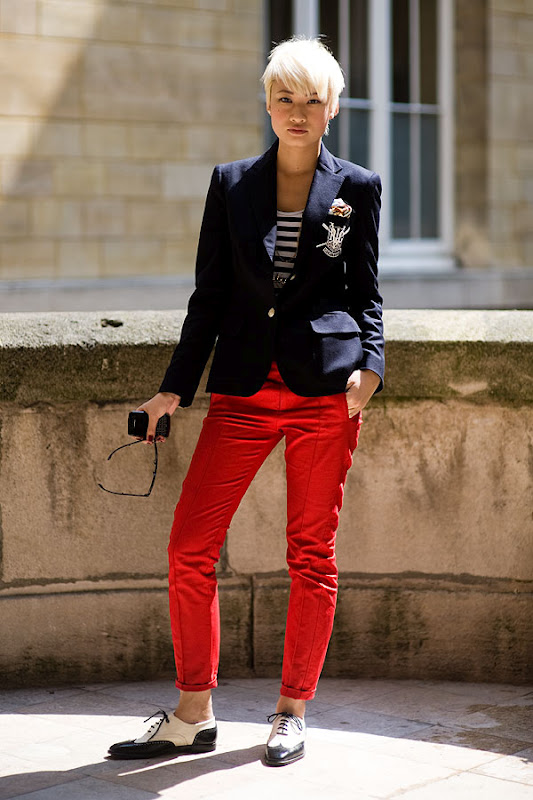



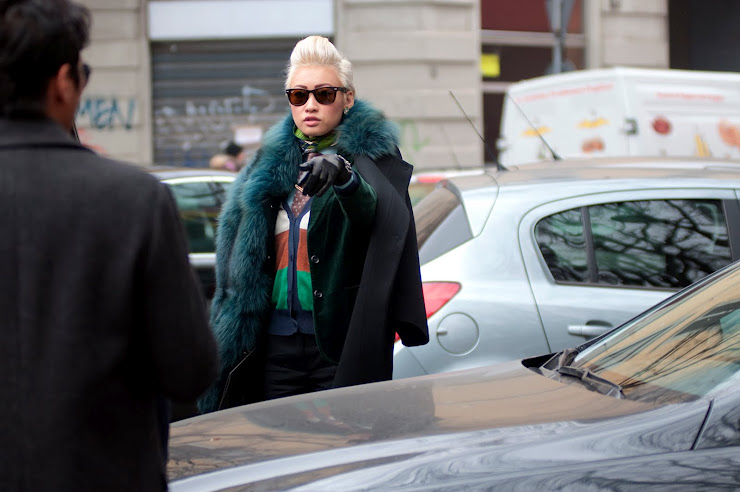
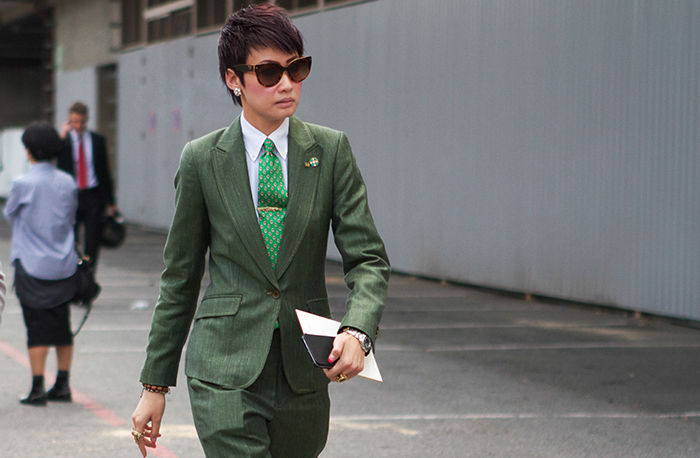


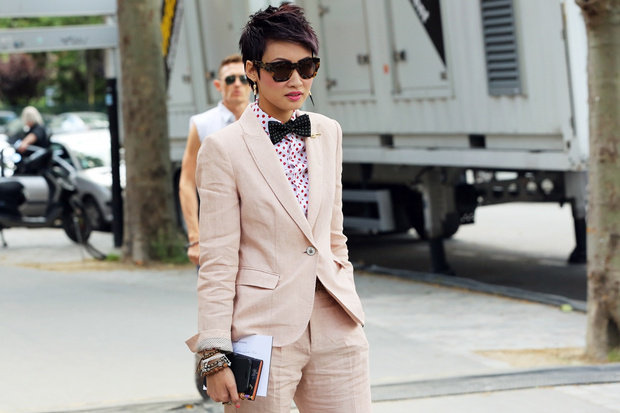 From Esther, take a sense of boldness and a love of color and contrast…
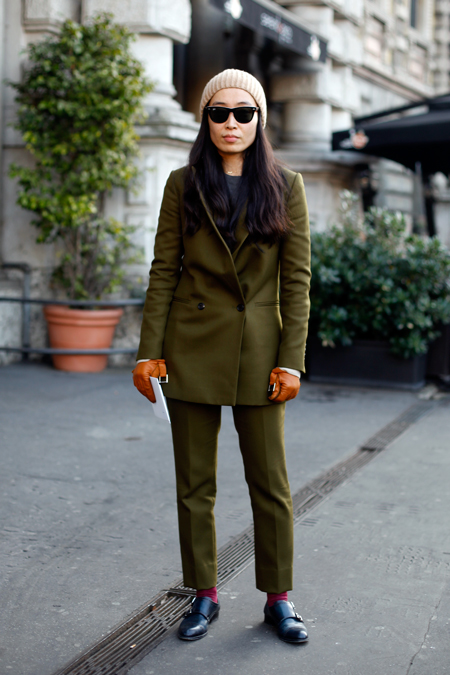
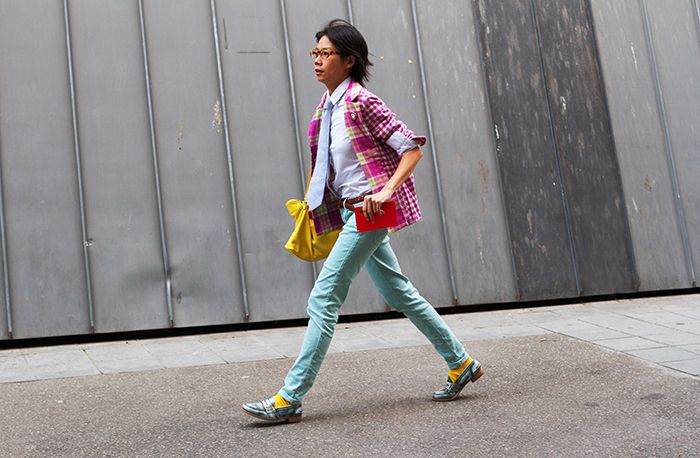
The Gentlewoman — Jeeyong Kang, fashion director, GQ Korea.
Of the three, Jeeyong’s sense of style is probably my favorite. There is a calmness to the way she dresses — it is simple and elegant and communicates a sense of seriousness.

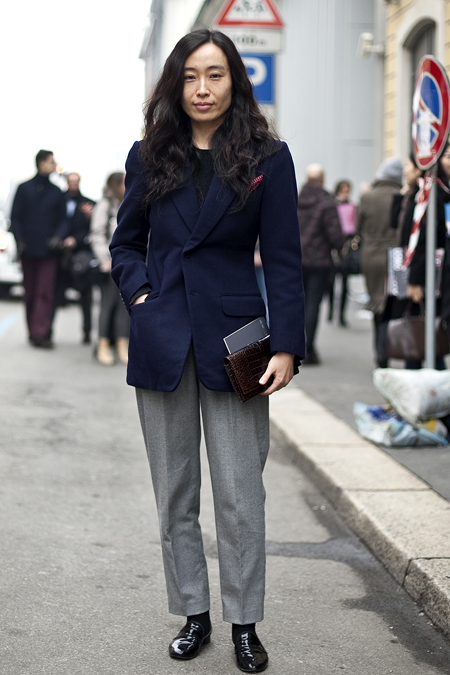
 From Jeeyong, embrace a sense of confident simplicity.
Images via: You Just Got Spotted [1 and 2], The Sartorialist [1], All the Pretty Birds [1 ], Vanessa Jackman [1 and 2], Rock the Trend [1 and 2], STREETFSN [1 and 2], Stockholm Streetstyle [1, 2, and 3], Guerrisms [1], Streetpeeper [1], Citizen Couture [1 and 2], Tommy Ton for Style.com [1], and a few random finds courtesy of the Tumblrs and the Googles.
Roughing It.
05/07/2012 § 4 Comments
Fact: I have never been camping.
Corollary: My mom will probably dispute this.
Who’s right? I suppose it depends on how broadly you construe the term “camping” — because if to you, camping means you’re in a sleeping bag in a tent in the woods somewhere, then I most definitely have never been camping. However, if you are like my mother, and think camping includes driving some sort of van or trailer to a “campground” and parking for a few days near some nature, then maybe you’ve got me there.
My parents did own a sweet Minnie Winnie in the late 90s. It was sort of an odd purchase for a completely non-camping family that was spurred by the experience of the 1994 Northridge Earthquake. We did use it a few times, mainly for soccer tournament weekends, but also for camping at Lake Cachuma and the Kern River. We actually did Thanksgiving one year, turkey and all, entirely on wheels!
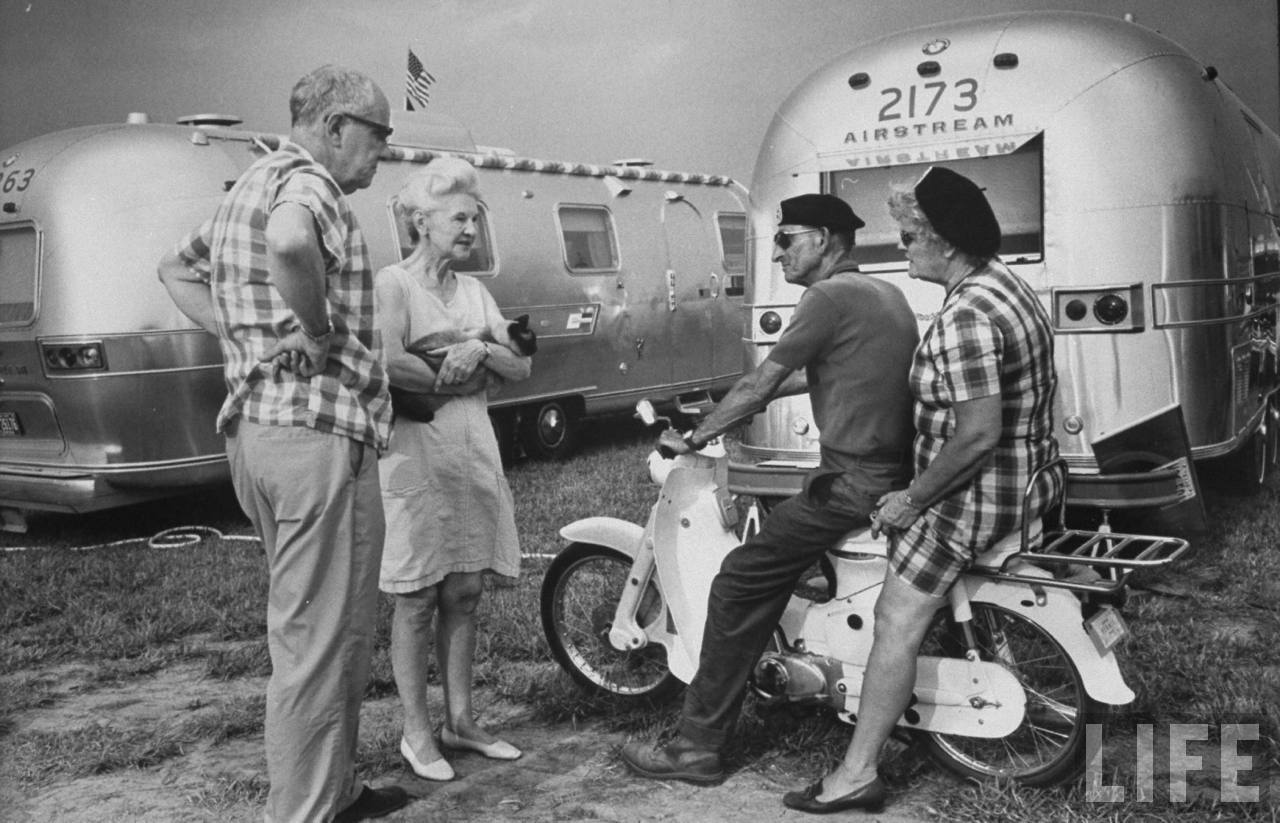
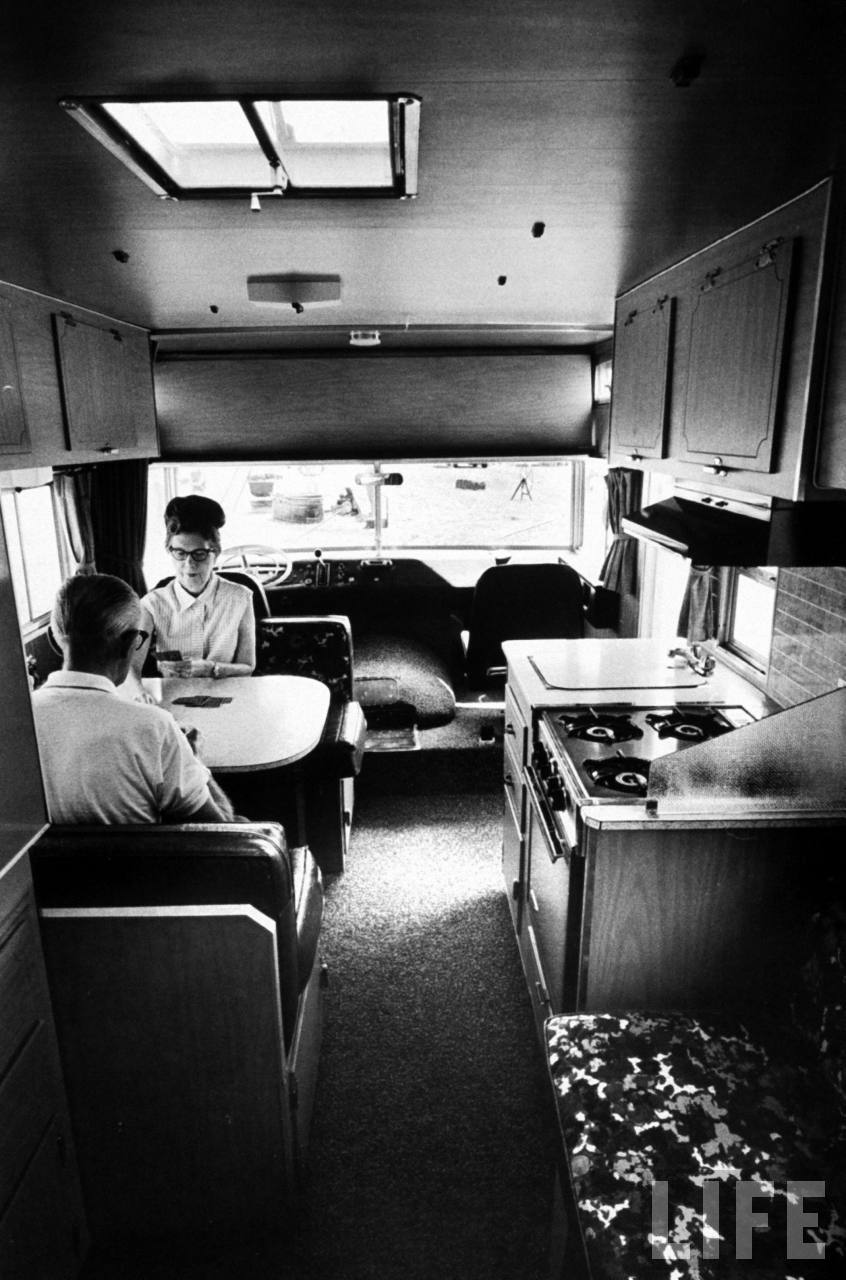
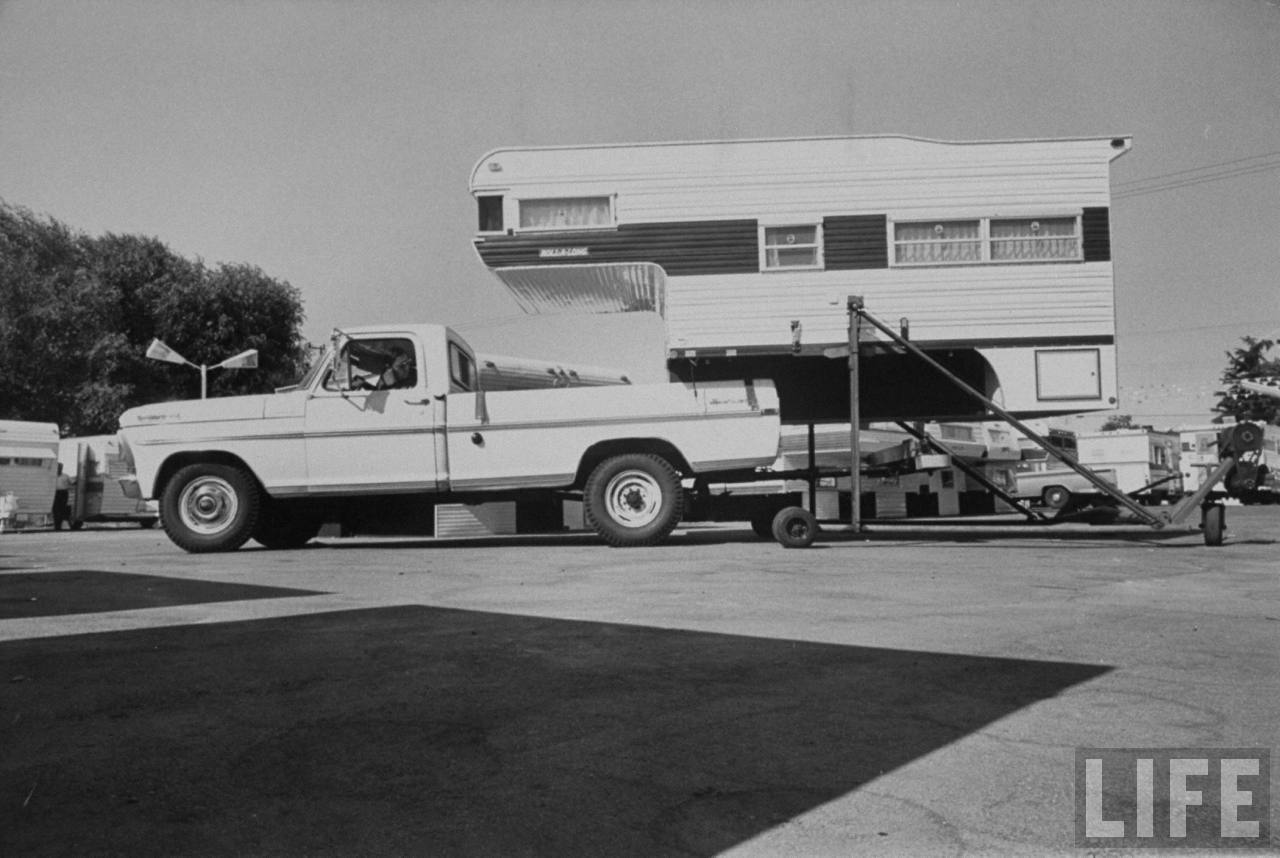
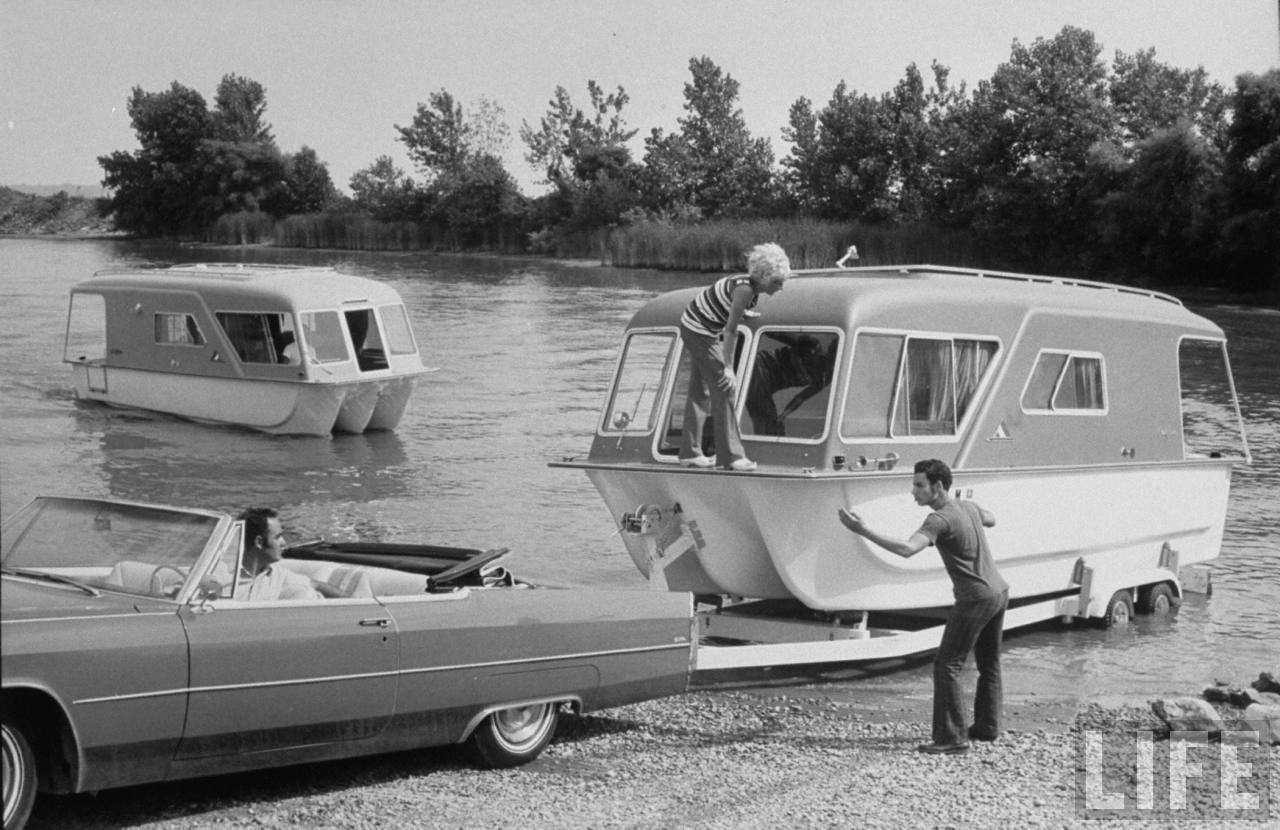
So while I don’t really count those experiences as camping, I do have plenty of great memories of those weekends, which were jogged when I came across this set of photos in the Life Archive, taken at various points around the country by Ralph Crane in 1970. Capturing different kinds of motor homes and trailers, and the folks who used them, they are a slice of Americana that seems perfectly apropos for the day after Independence Day.
Some of these images originally appeared as part of a special group of articles in the August 14, 1970 issue of LIFE entitled “Home, Home on the Road,” which details “Caravans on the open road. Houseboats on the busy waters. Youth in its frustrated festivals. Venturers abroad in trains.” If you’d like to read the article — and I definitely recommend it, mainly for some great pictures of a convoy of pretty aluminum Airstream trailers — you can find it here. Enjoy!



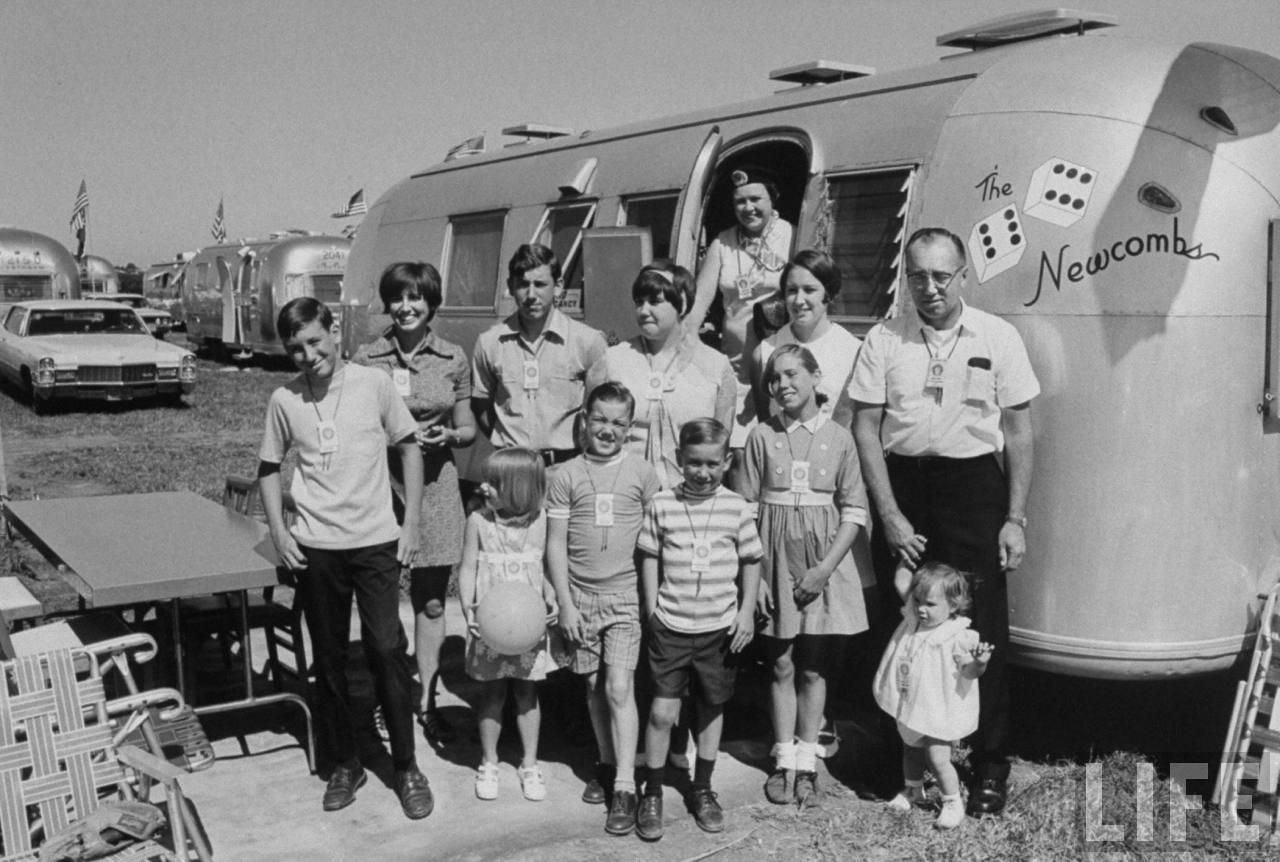 Bob Newcomb with his 12-member family in Hershey, PA.
Sidenote: Can I just say that I have NO idea how 12 people could coexist for any extended amount of time in a trailer. My family only numbered 5 and speaking for the kids, I know we regularly contemplated pulverizing each other when we “camped.” Newcombs, hat’s off to the lot of you, indeed.
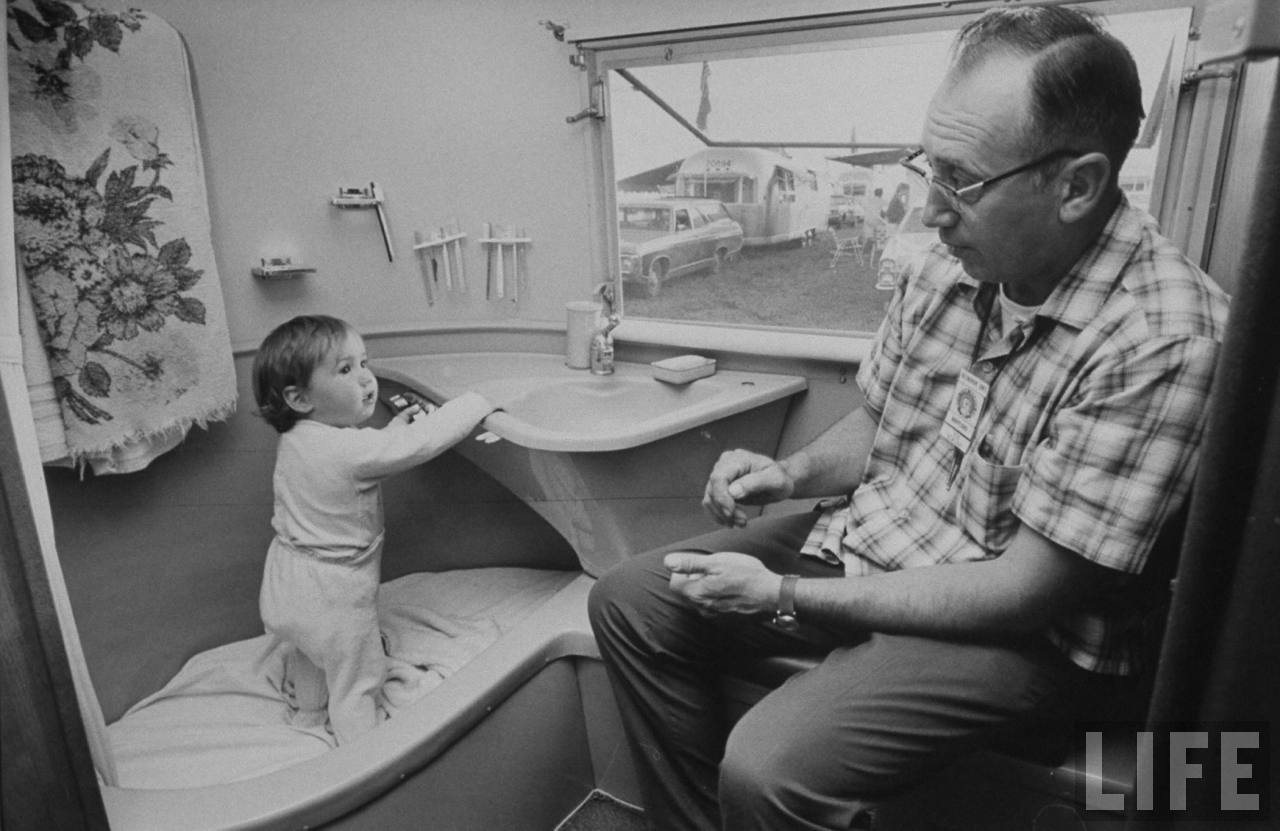 Baby Newcomb in her bathtub bed!
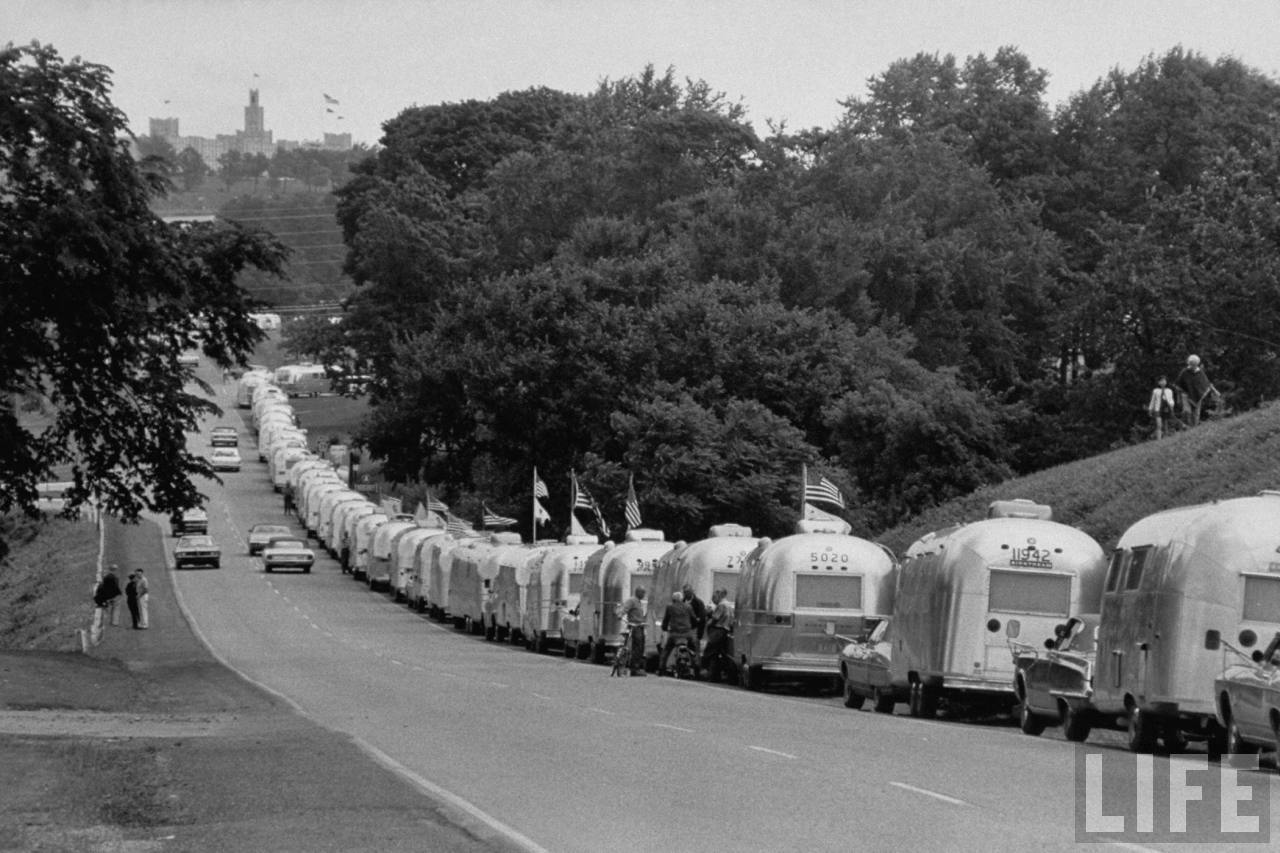 The Wally Byam Caravan Club converging upon Hershey, PA. The club, named for the founder of the Airstream Trailer Company, still exists — and caravans — to this day.
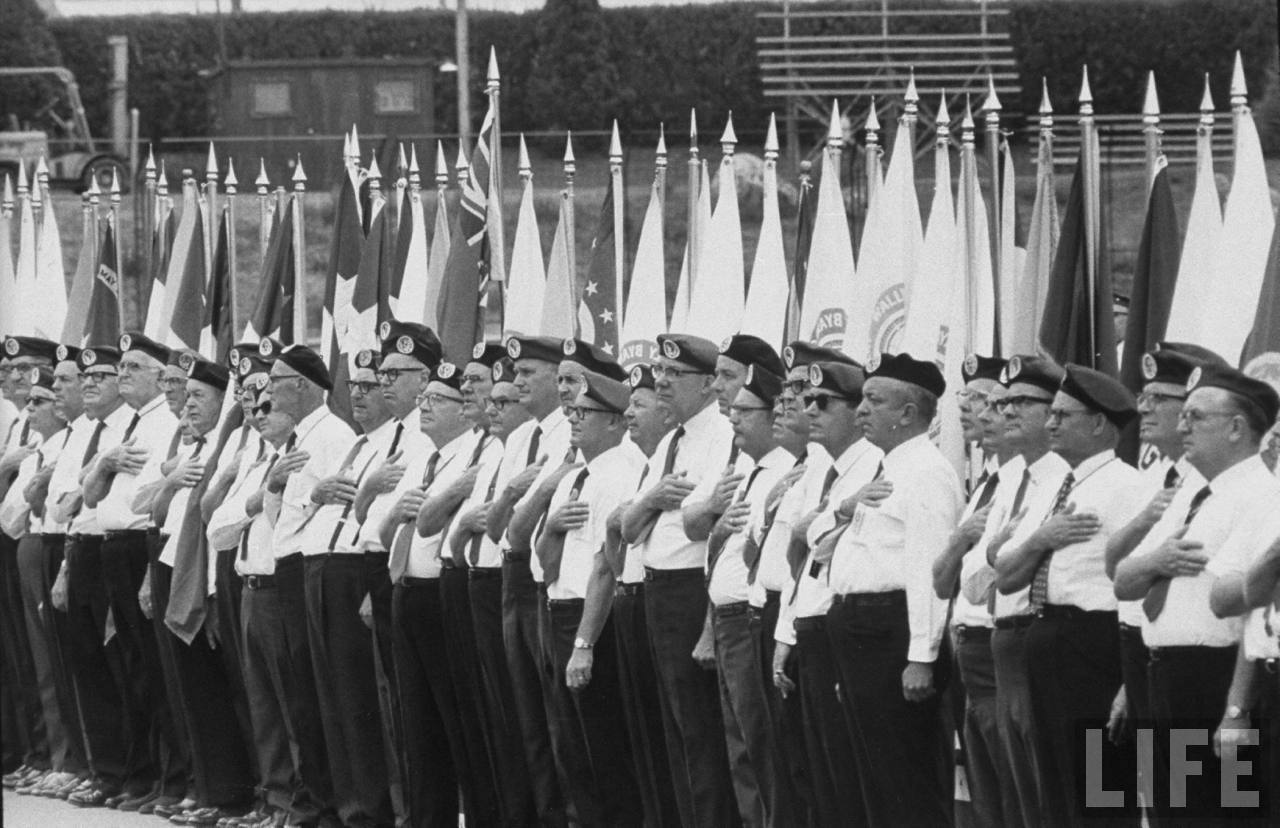 Airstream owners and Caravan Club members, saluting the flag.
All images via the Life Archive.
Rabbit Hole || Summer in the Vogue Archives
26/06/2012 § 4 Comments
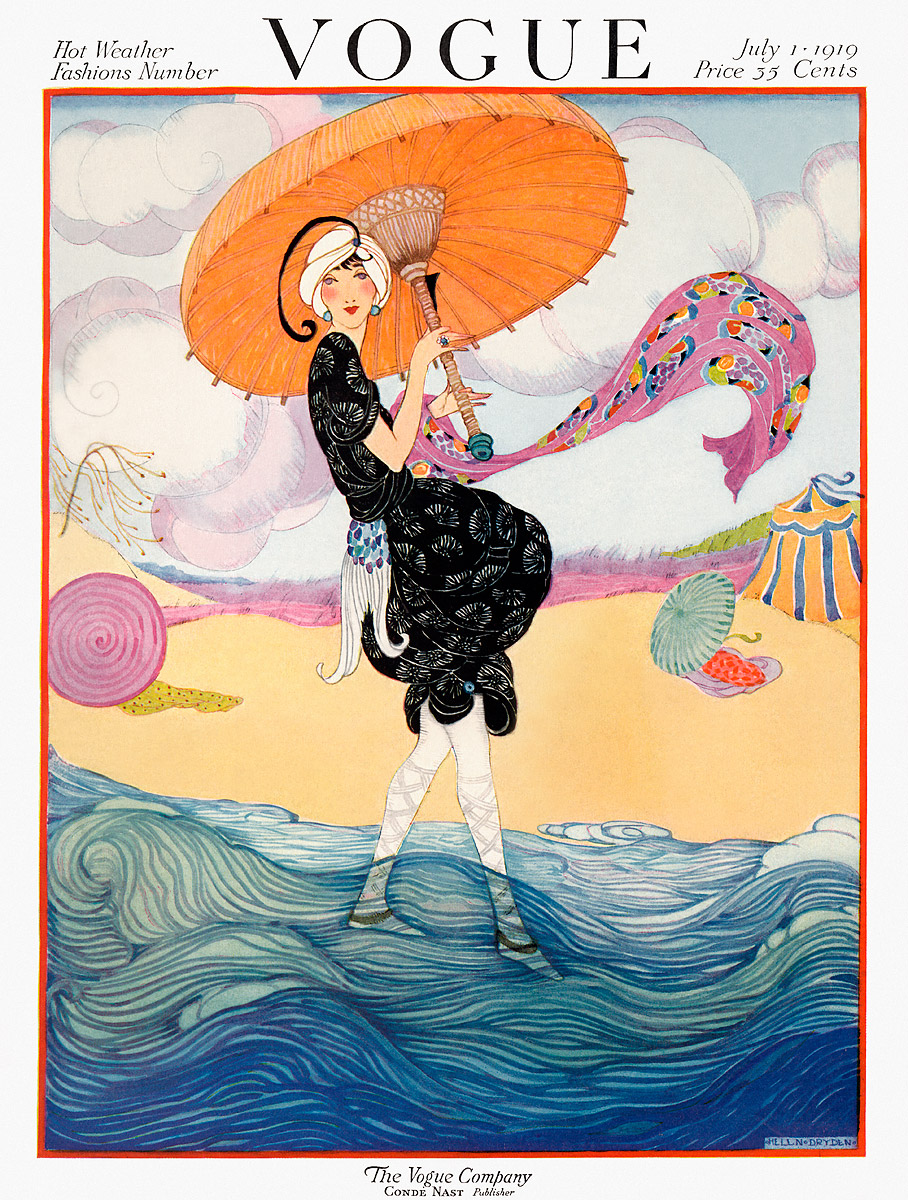 July 1919, illustration by Helen Dryden.
Similar to the recent release of vintage beach fashion images from Vogue Spain that I highlighted a few weeks back, US Vogue has also decided to open up their vast archive to give us a look at summer fashions dating back to 1899. Containing some very famous and iconic images, you know I couldn’t resist. I selected a few of my favorites, but be sure to head over to Vogue to see them all.
These images have me looking forward to my planned
trip to Ft. Tilden this weekend, definitely…
 July 1928, photograph by George Hoyningen-Huene.
 July 1930, photograph by George Hoyningen-Huene.
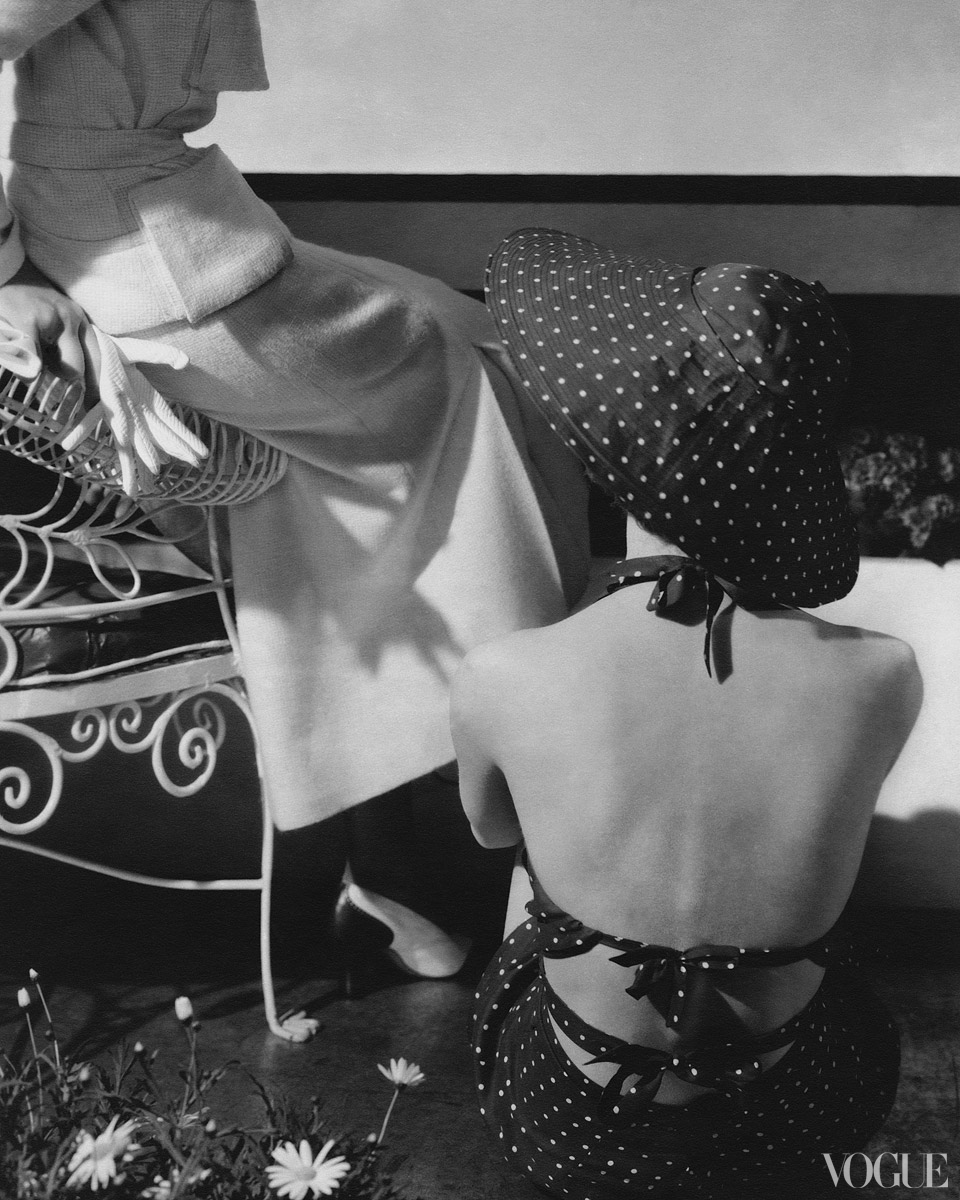 May 1933, photograph by Edward Steichen.
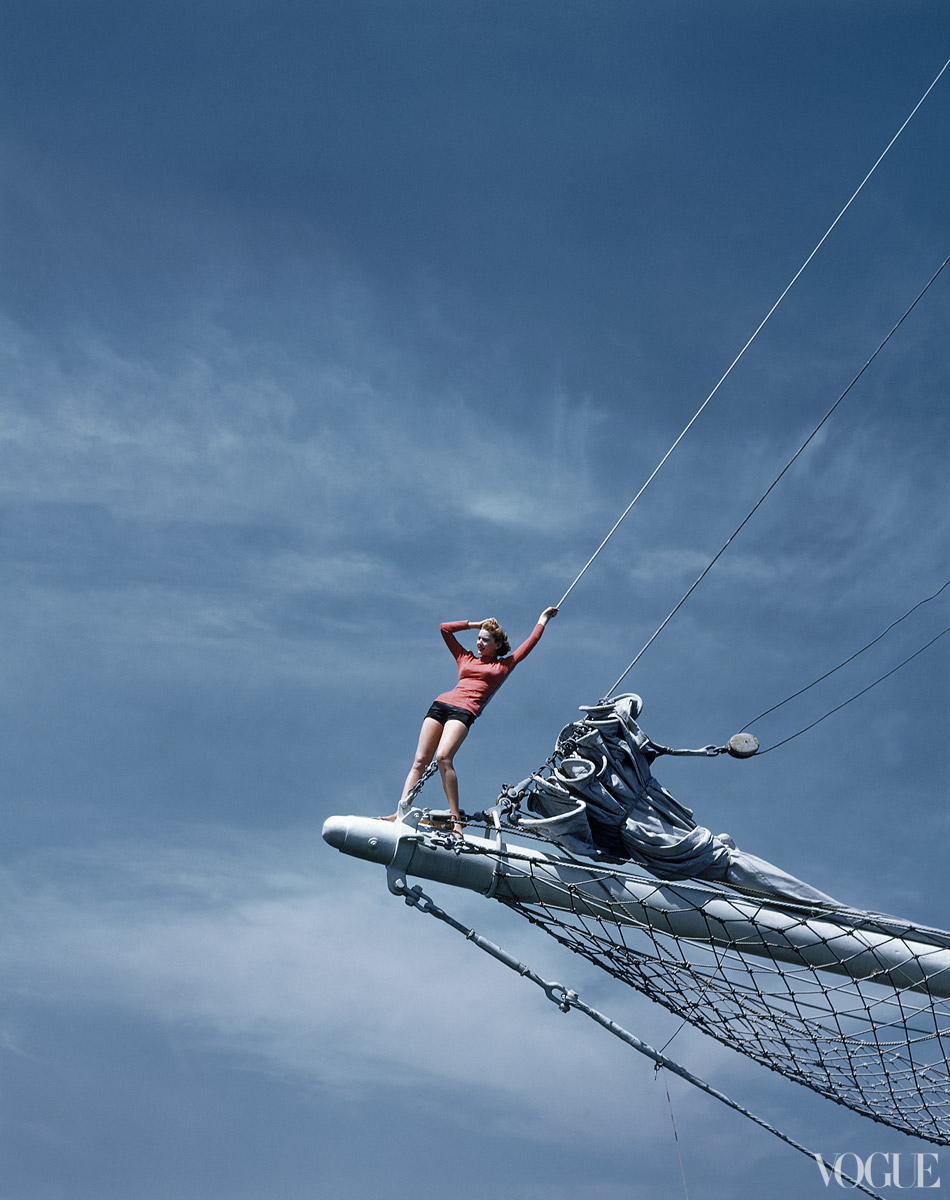 July 1940, photograph by Toni Frissell.
 May 1941, photograph by Horst P. Horst.
 June 1949, photograph by Clifford Coffin.
 December 1952, photograph by Richard Rutledge.
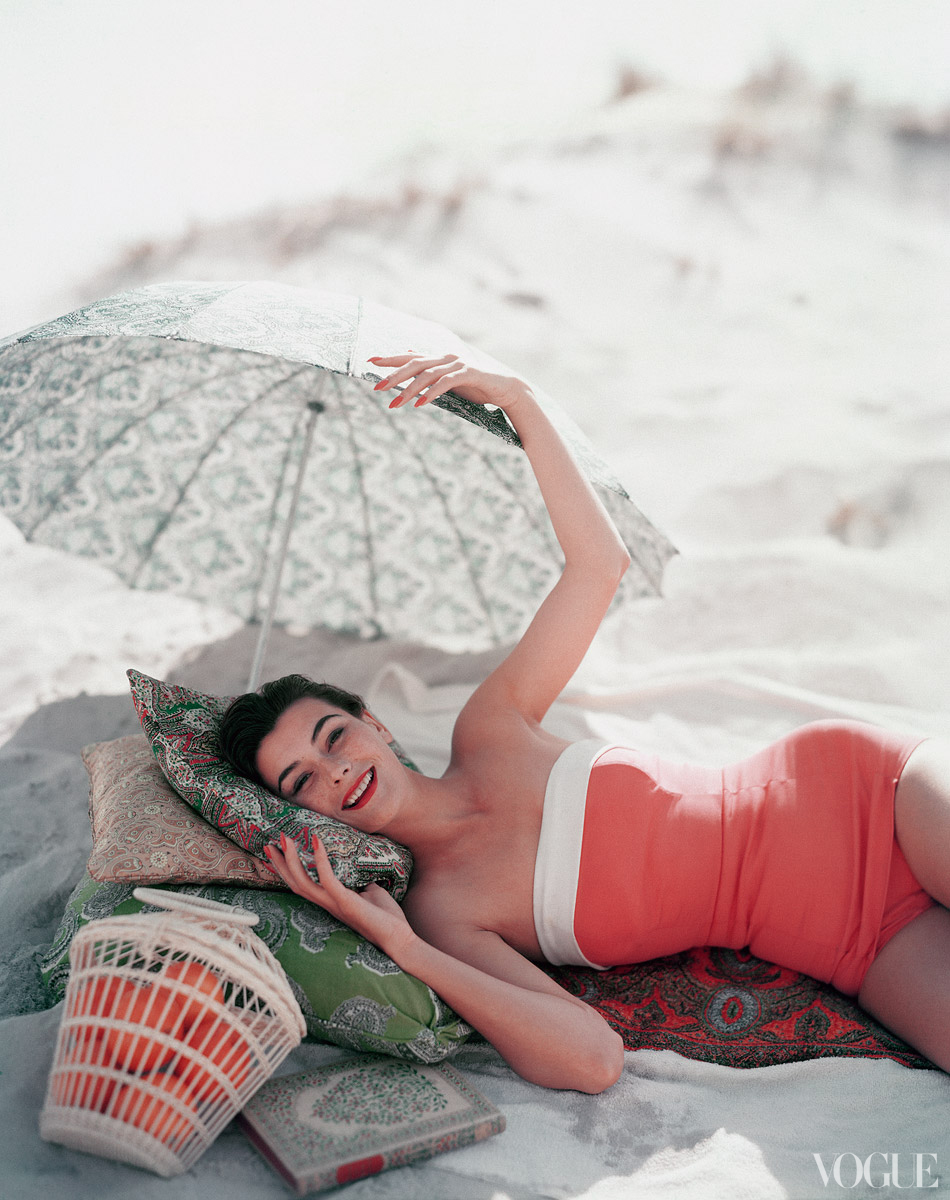 July 1954, photograph by Karen Radkai.
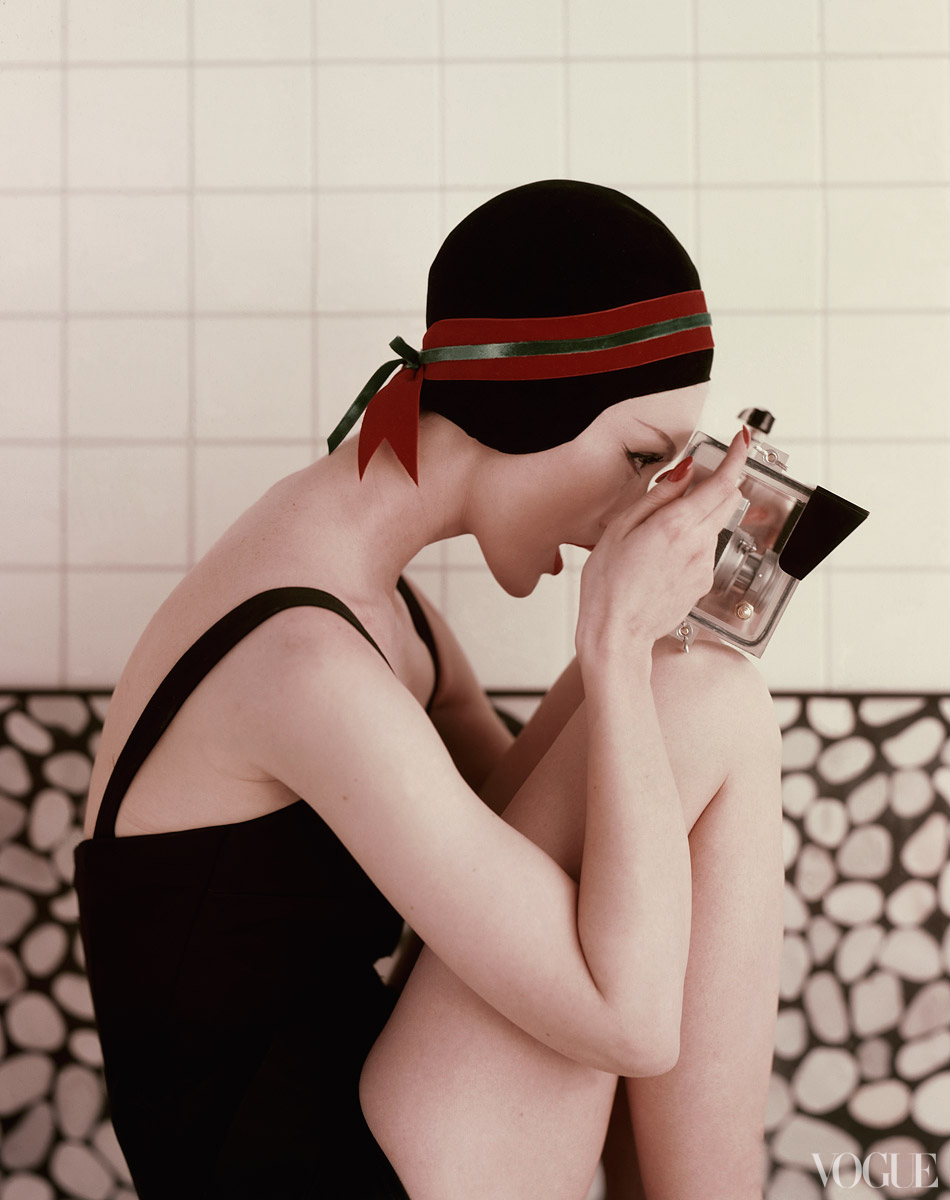 January 1956, photograph by Richard Rutledge.
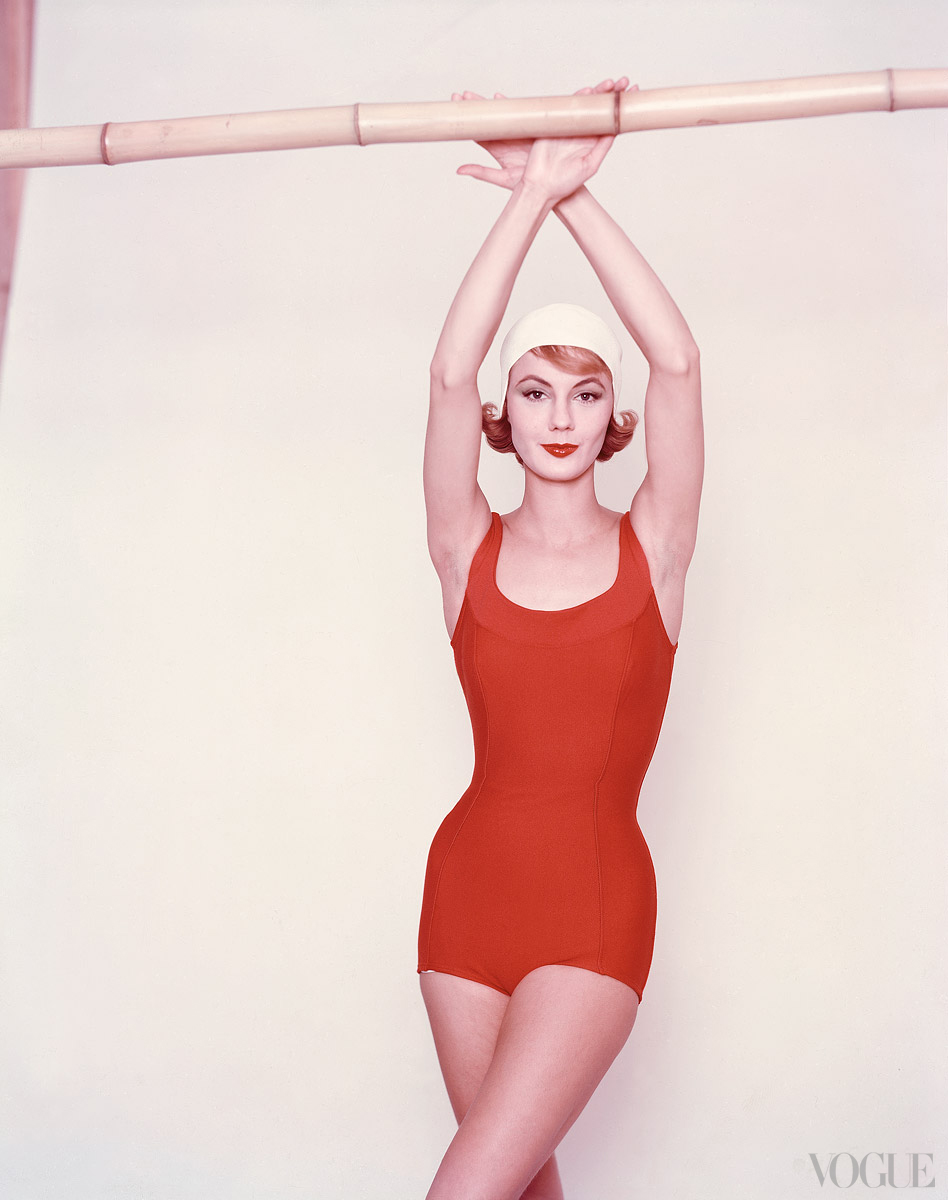 January 1958, photograph by Richard Rutledge.
 January 1959, photograph by Jerry Schatzberg.
 January 1959, photograph by Tom Palumbo.
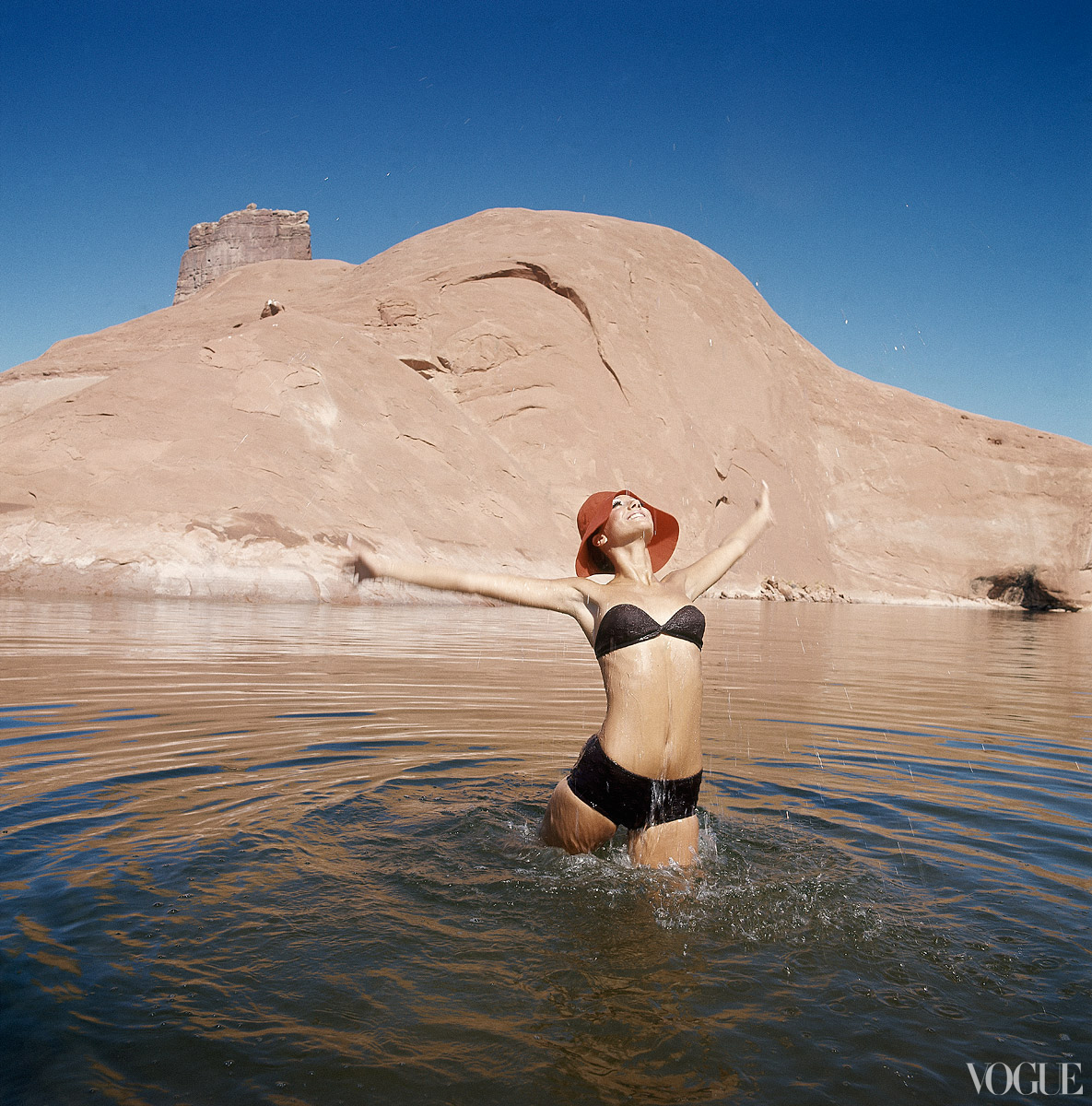 January 1966, photograph by John Cowan.
 June 1976, photograph by Arthur Elgort.
 June 1991, photograph by Patrick Demarchelier.
Hop futher down the rabbit hole here.
All images via Vogue.
Drawing Dad
15/06/2012 § 7 Comments

In honor of Father’s Day, a little something I found in the Life Archives…
One morning in 1949, the Kindergarten class of Ms. Doris Morcom at Sedgwick Elementary School in West Hartford, Connecticut, all drew portraits of their dads from memory for an upcoming Fathers’ Night at the school…and here we can compare the portraits with the subjects themselves, in photos taken by Al Fenn. Aside from some startling accuracies, I love how these photos also give us a look at men’s style as the 1940s were giving way to the 1950s.
If you’d like to read the original article, which appeared in the December 26, 1949 issue of Life Magazine, you can find it here.
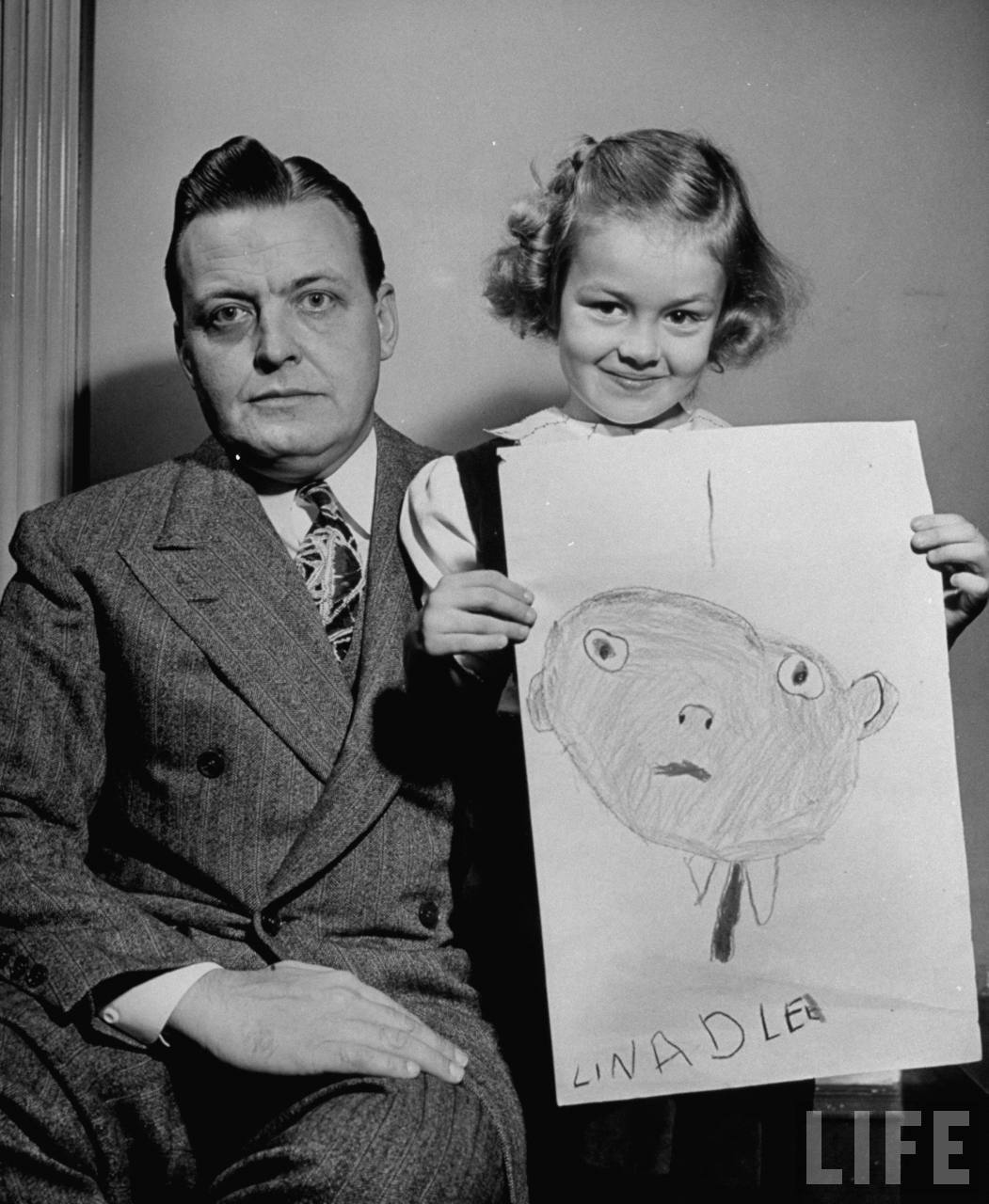
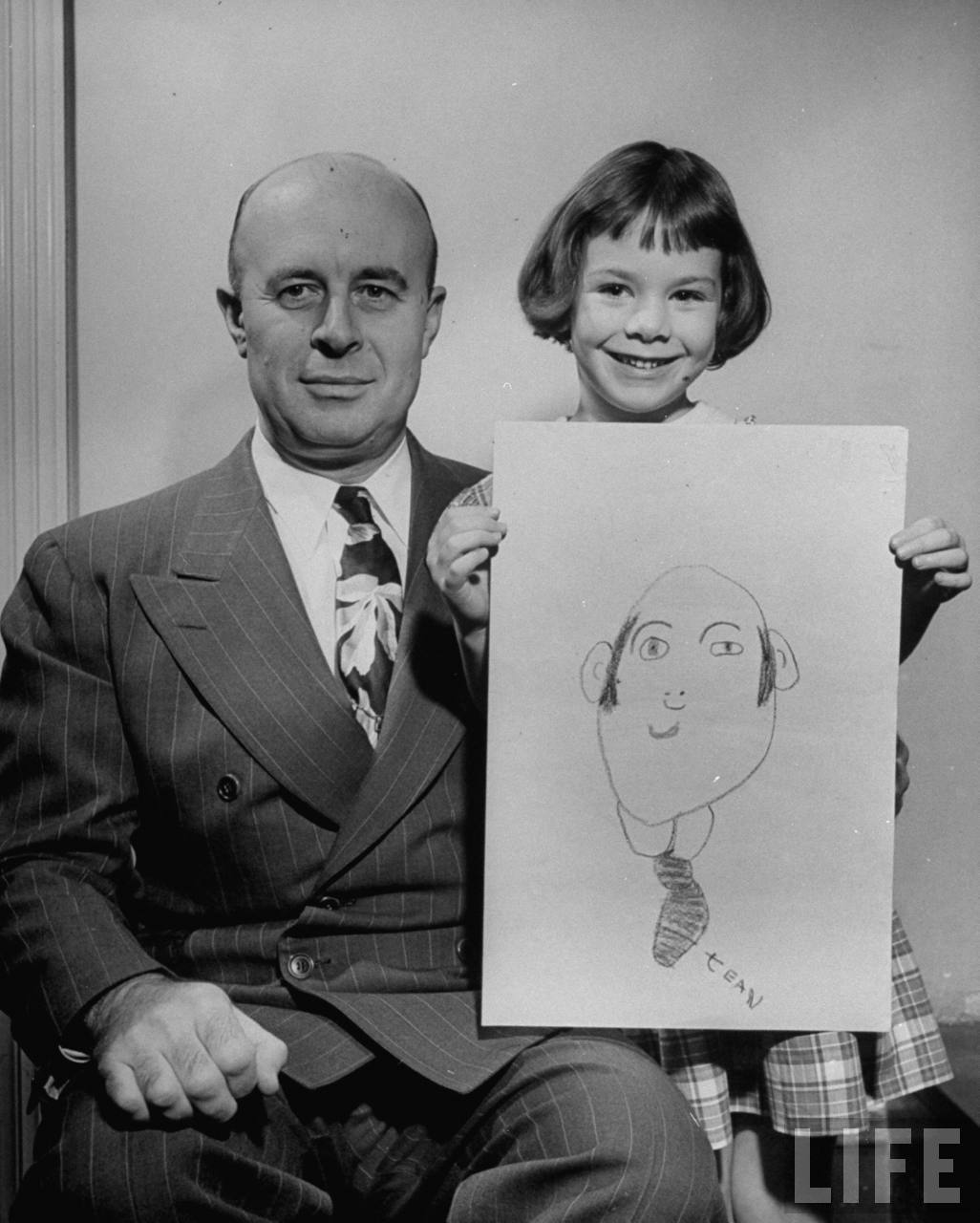


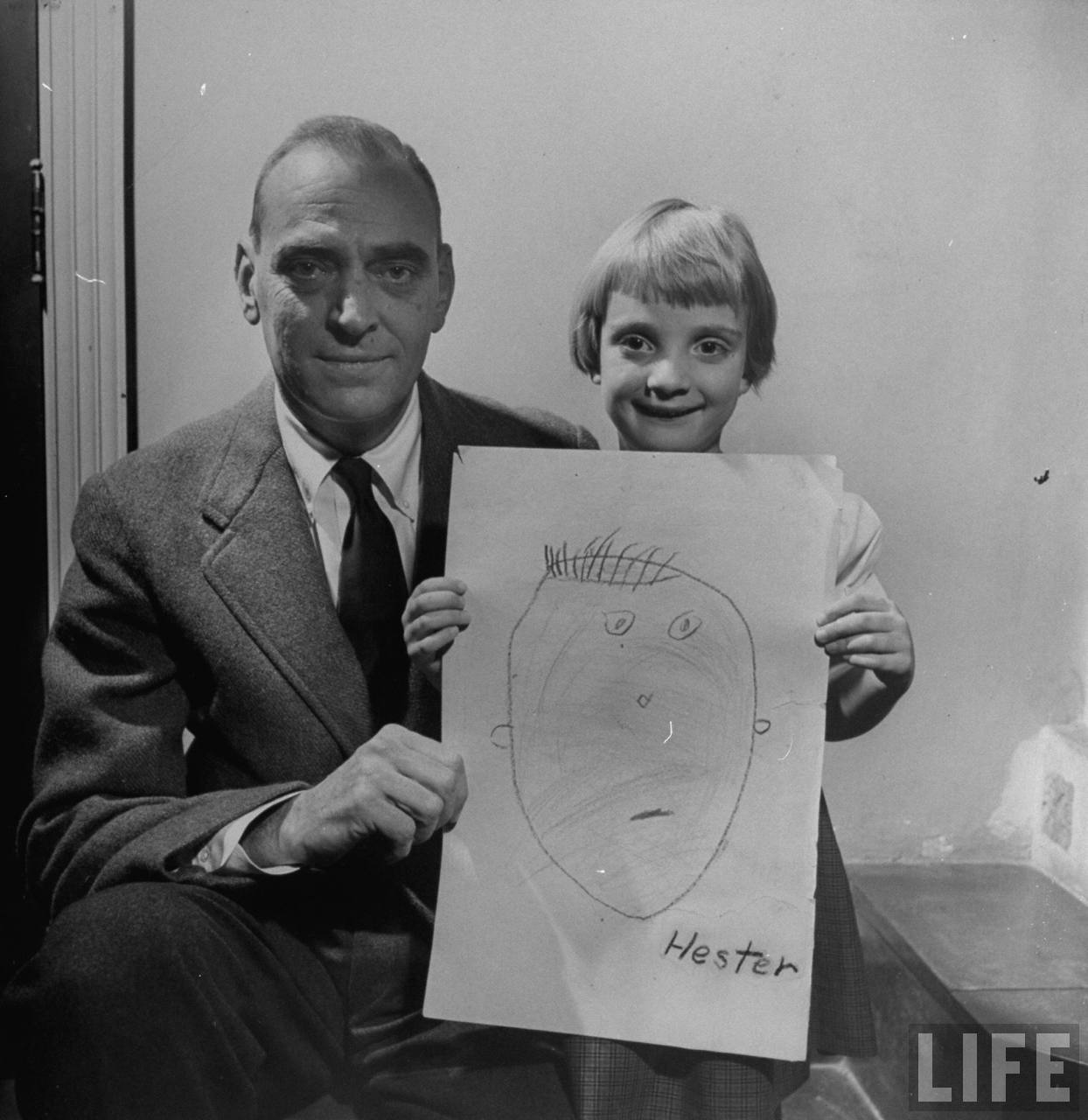
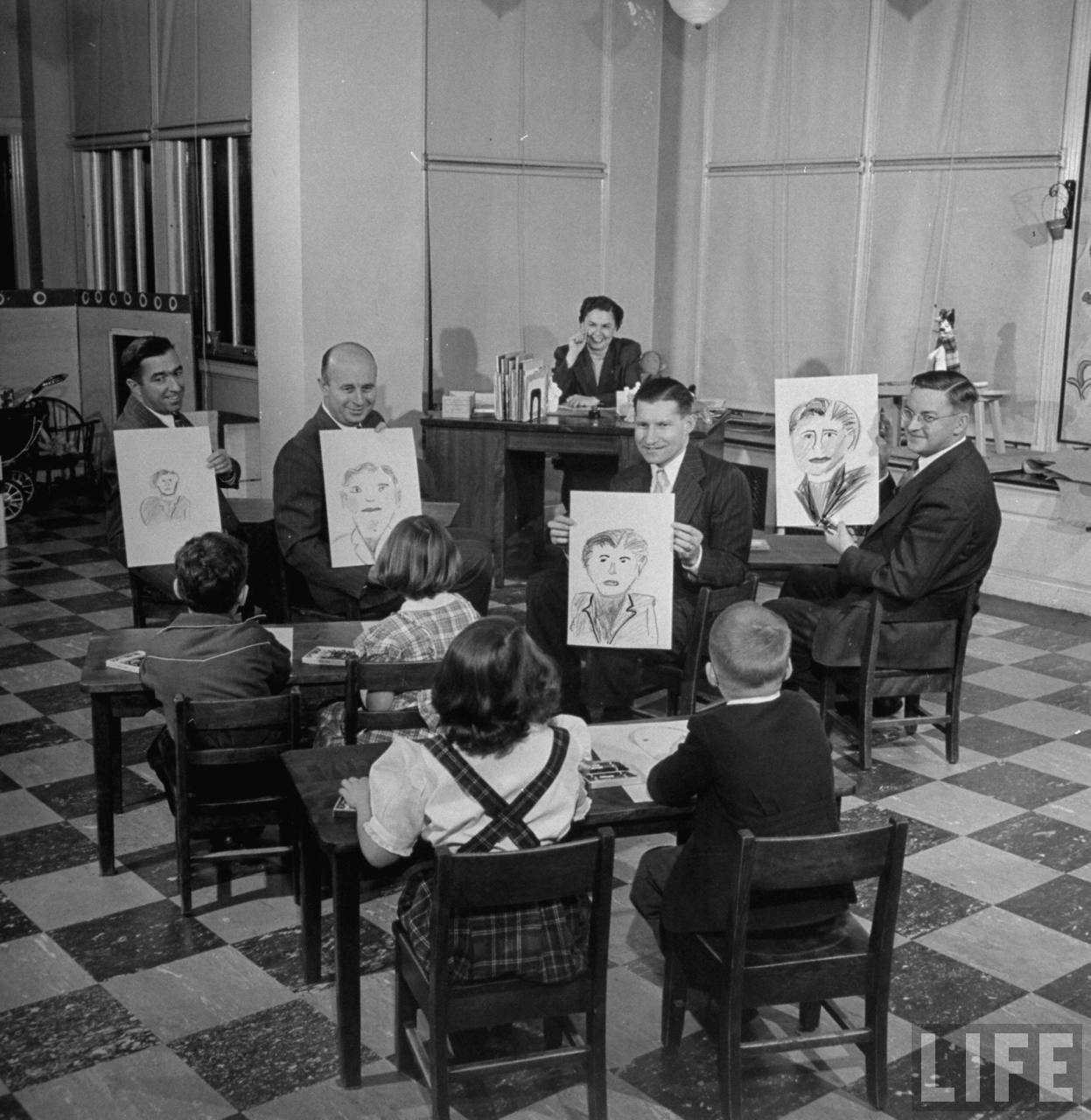 For fun, the fathers drew Ms. Morcom for their children.
Happy Father’s Day!
All images via the Life Archives.
Woman of the Hour: Margaret Bourke-White
14/06/2012 § Leave a comment

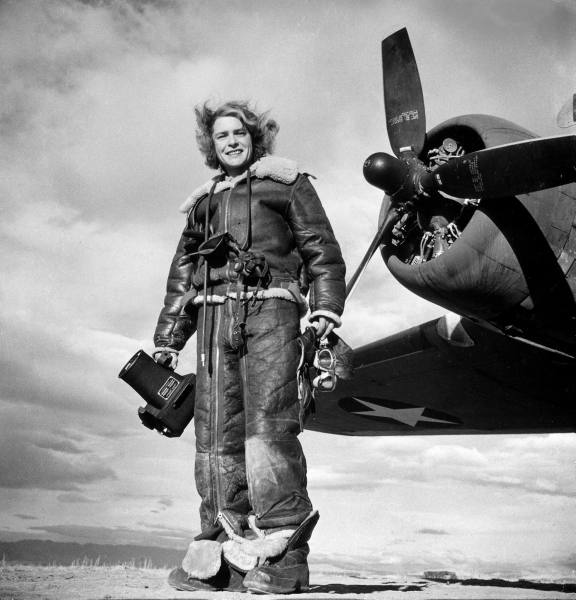
Today is the birthday of photographer Margaret Bourke-White. Born in 1904 in the Bronx, Bourke-White was one of four original LIFE Magazine staff photographers and an accomplished photojournalist. She holds a number of notable “firsts” to her name — my favorites include the fact that she was the first woman war correspondent and was the first woman allowed to fly on combat missions (both during WWII) — and created an exceptional, varied body of work.
I frequently come across Bourke-White’s photos and portraits in the LIFE Archives, but the one you see above is one that I hadn’t seen before today. She stands on the scaffolding of the still under-construction Chrysler Building in 1931. She is 27. She hasn’t yet been to war. With her slickly bobbed hair, leather jacket and massive camera, she is outfitted for an adventure. The look on her face tells you she won’t stop until she finds one. I love this picture. Full stop. But I also love pictures like the one below, of Bourke-White in Algeria in 1943, in front of the Flying Fortress bomber in which the photographed the US attack on Tunis.
If you’d like to see some of Bourke-White’s most iconic work, the LIFE blog has put together a lovely portfolio in honor of her birthday. It’s a must-see if you admire this amazing photographer as much as I do. Find it here.
 Images via Time/LIFE Inc.
A Day at the Races: Belmont Park in the 1910s
08/06/2012 § 3 Comments

In case you hadn’t heard, I’ll Have Another has withdrawn from the Belmont Stakes in New York this weekend due to a tendon injury. I’m a bit sad that the chestnut 3 year-old colt won’t be making a run at becoming the first Triple Crown winner since Affirmed in 1978, but of course it is for the best.
Since I’m left without a horse to back – I’ll Have Another actually won me a pretty penny on Derby Day – I decided to see if I couldn’t find us some photos from race days past at Belmont Park. The Library of Congress delivered in a major way with wonderful images dated between 1910 and 1915 of the track, Mr. August Belmont, Jr. and his wife, a couple of lady Roosevelts and anonymous racegoers dressed in their finest. I love how some of these look like the streetstyle photography so popular today. Perhaps we should get Scott Schuman a time machine…
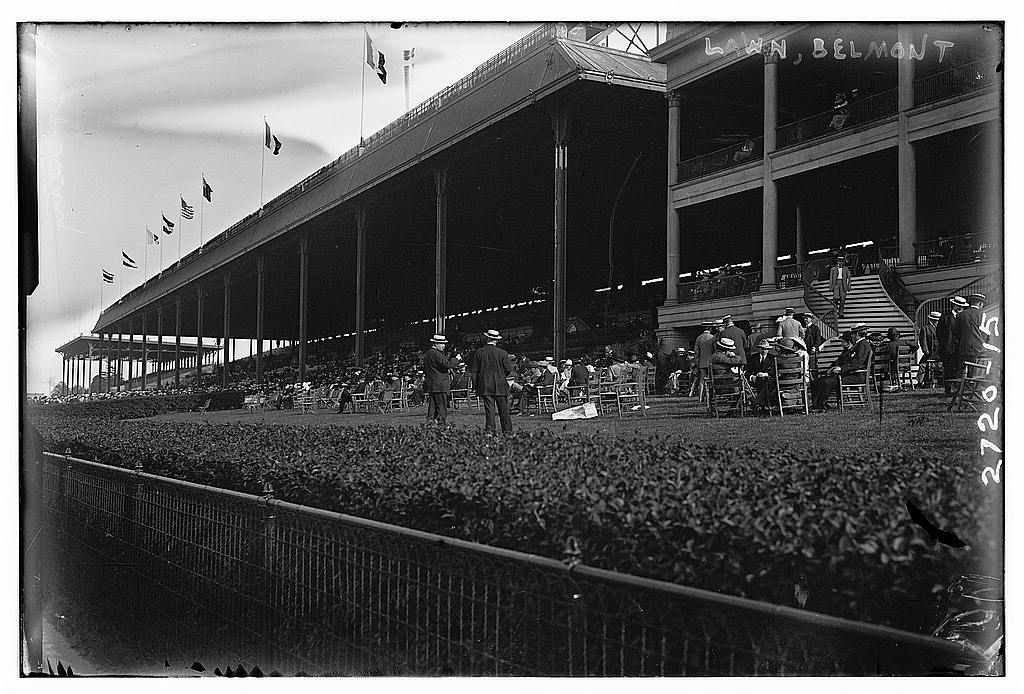
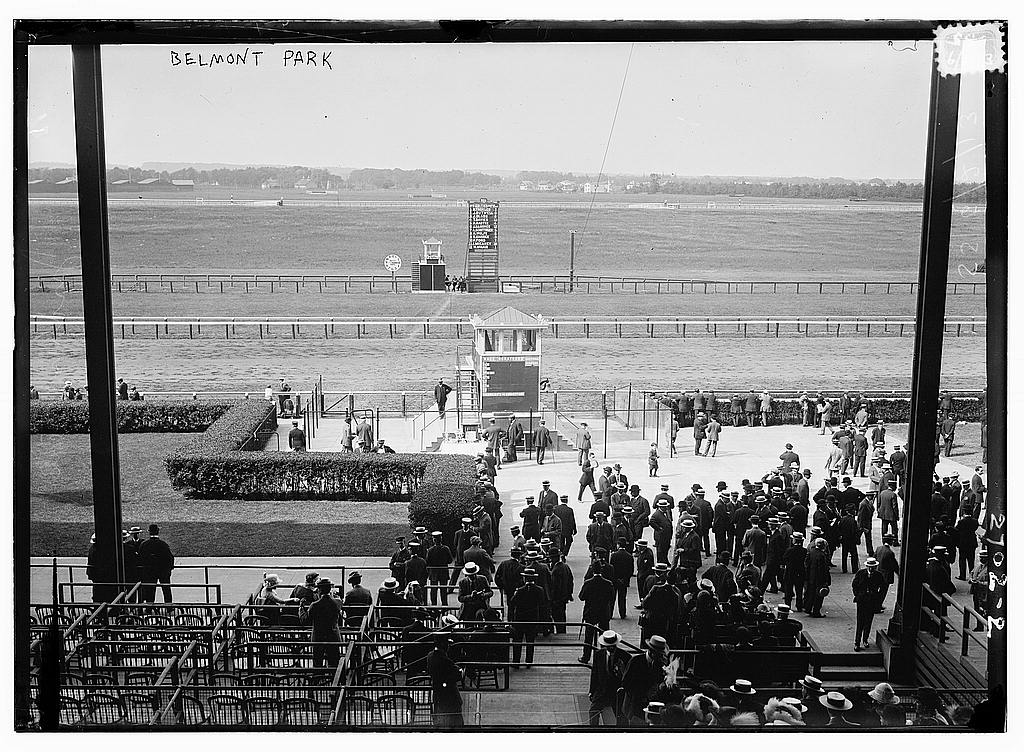

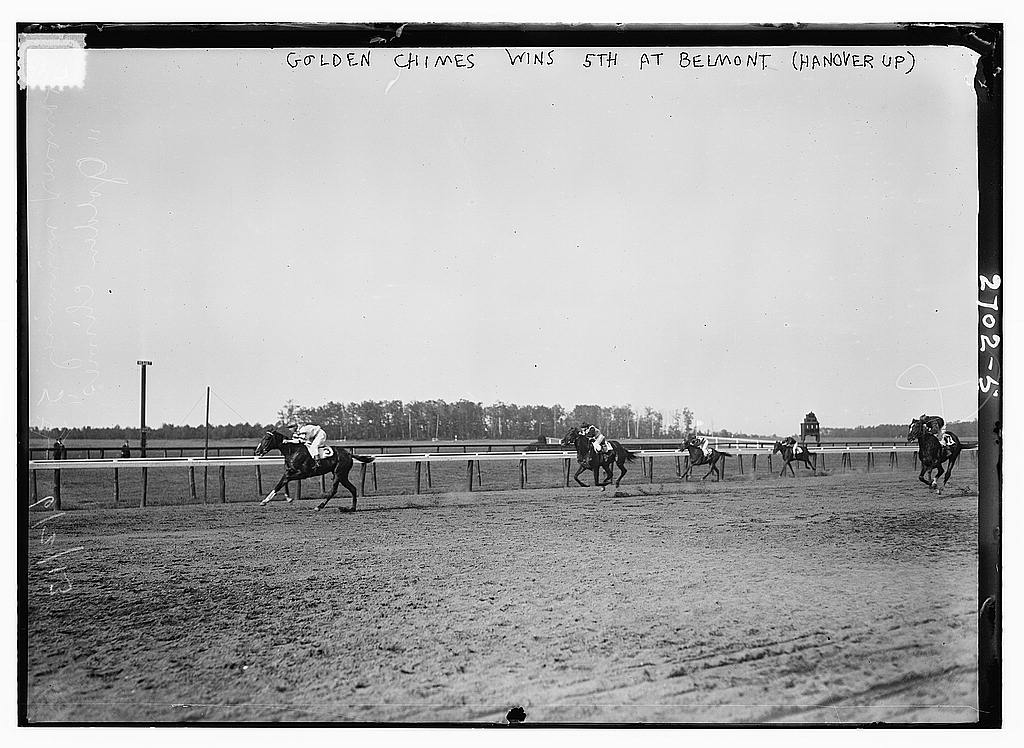
 A sea of straw boaters…

 Paul Drennan Cravath (of Cravath, Swaine & Moore, for the law nerds)
with August Belmont, Jr.
 Mrs. August Belmont, wearing a rather rad hat.


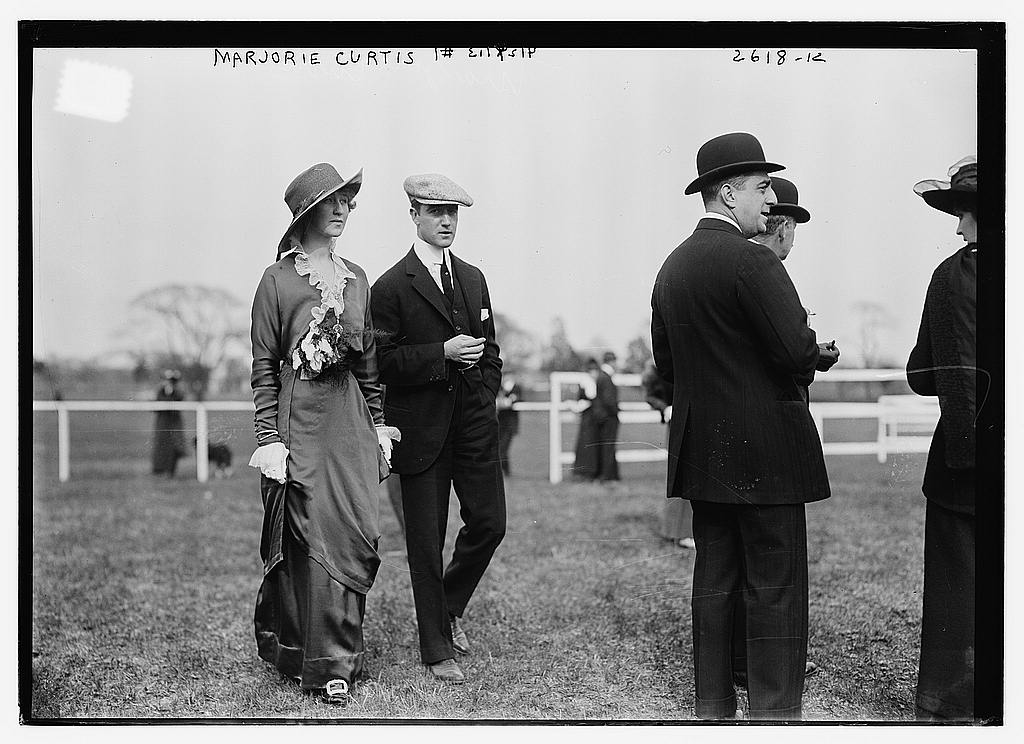


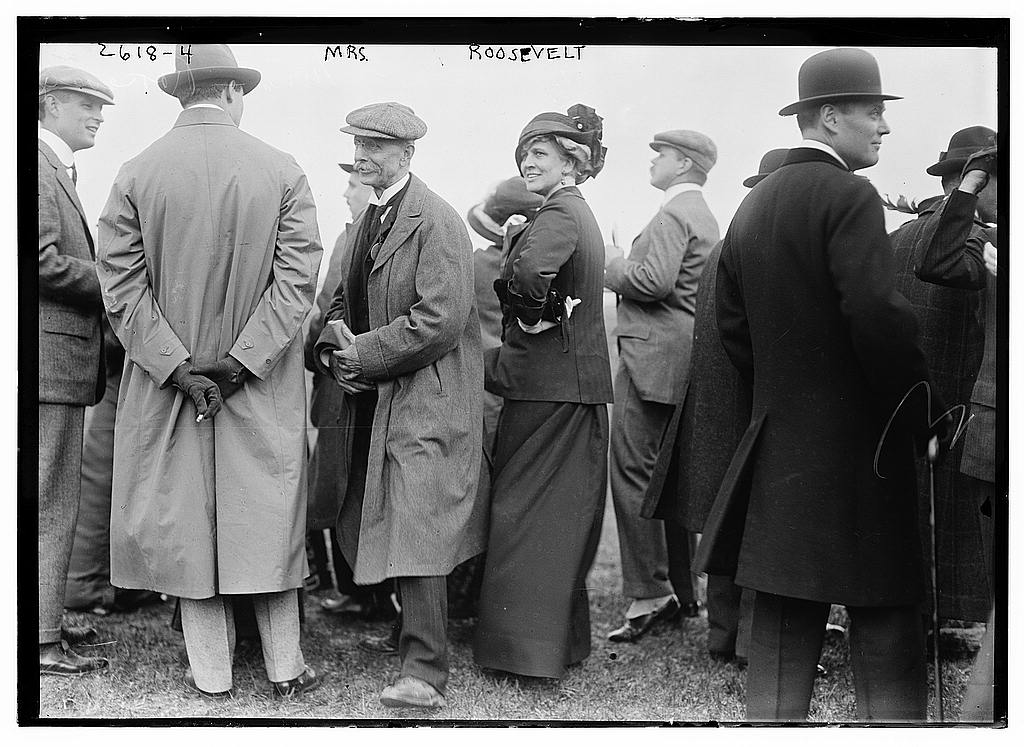 Mrs. Edith Roosevelt
(Mrs. Theodore Roosevelt and former First Lady)
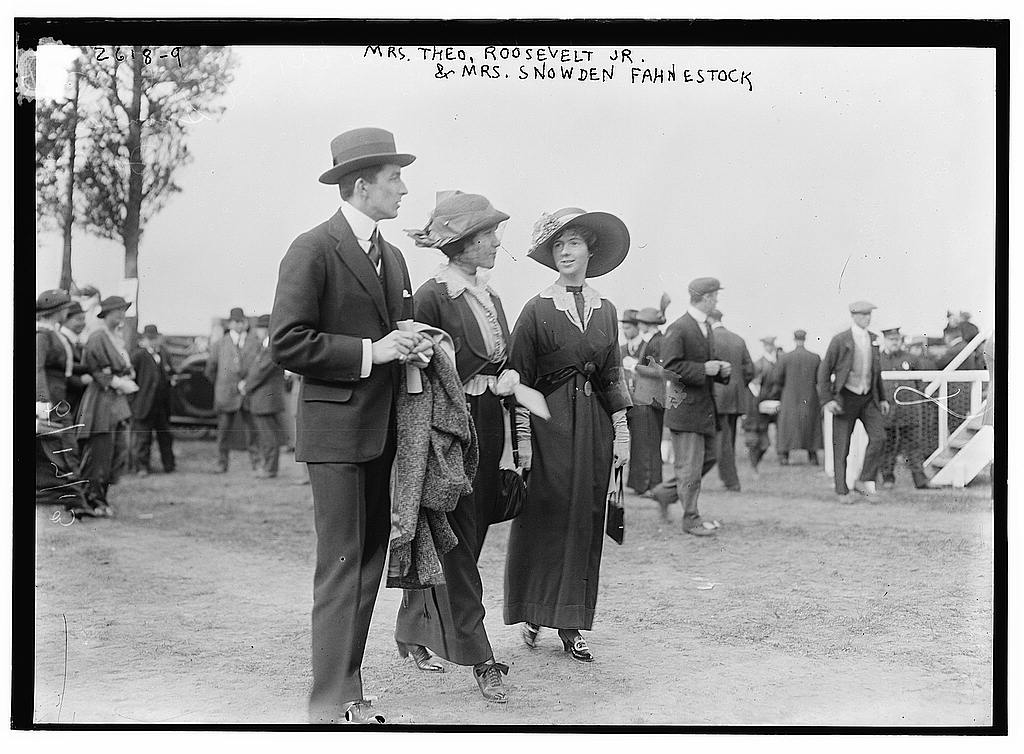 Eleanor Butler “Bunny” Alexander-Roosevelt
(Mrs. Theodore Roosevelt, Jr.)
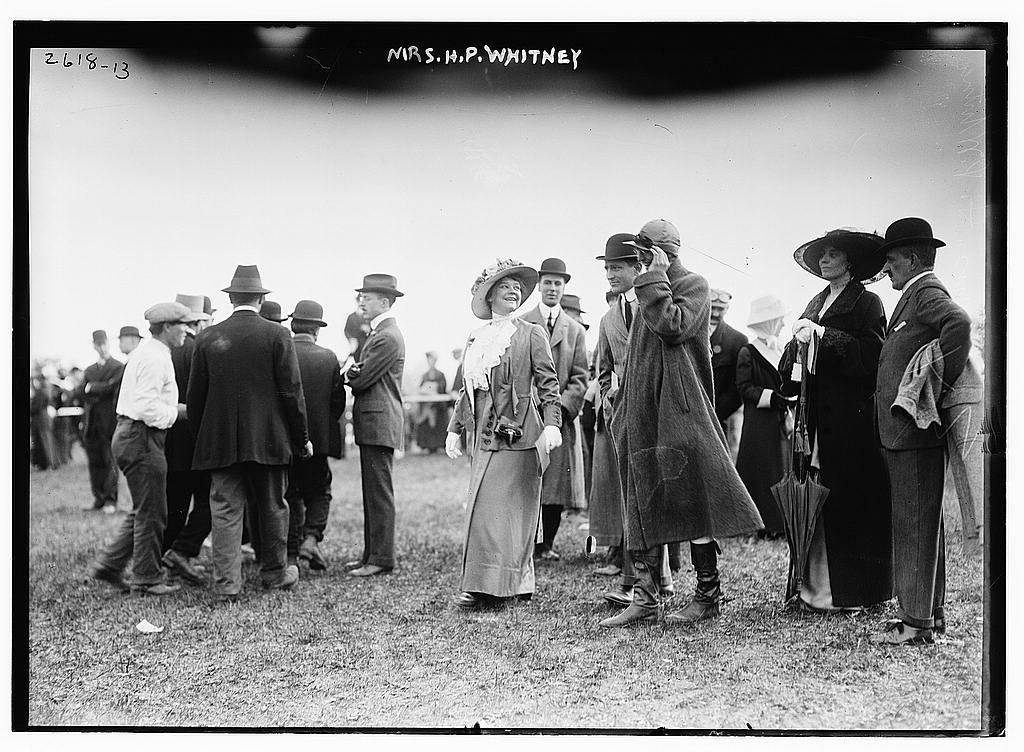 I feel as though this picture must be labeled incorrectly.
This woman looks nothing like Gertrude Vanderbilt Whitney, or is it me?

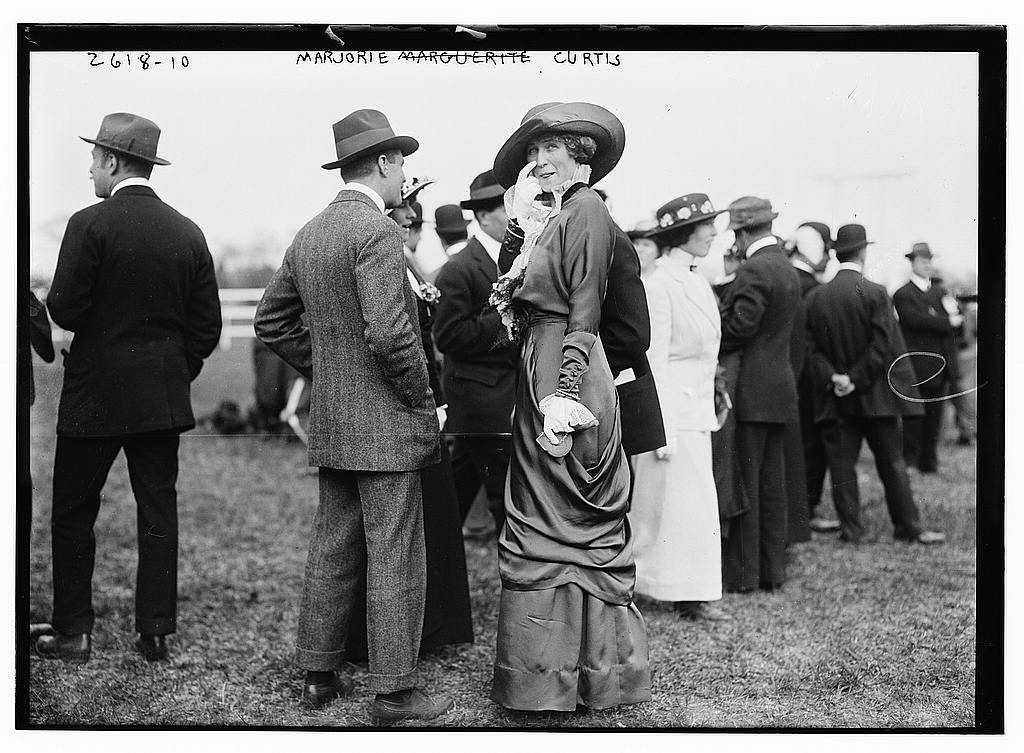

All images via The Library of Congress.
 Quite Continental